ADVERTISEMENT

Teachers urge GSIS to grant P20,000 calamity aid for disaster-hit government workers

Published Dec 18, 2025 04:28 pm
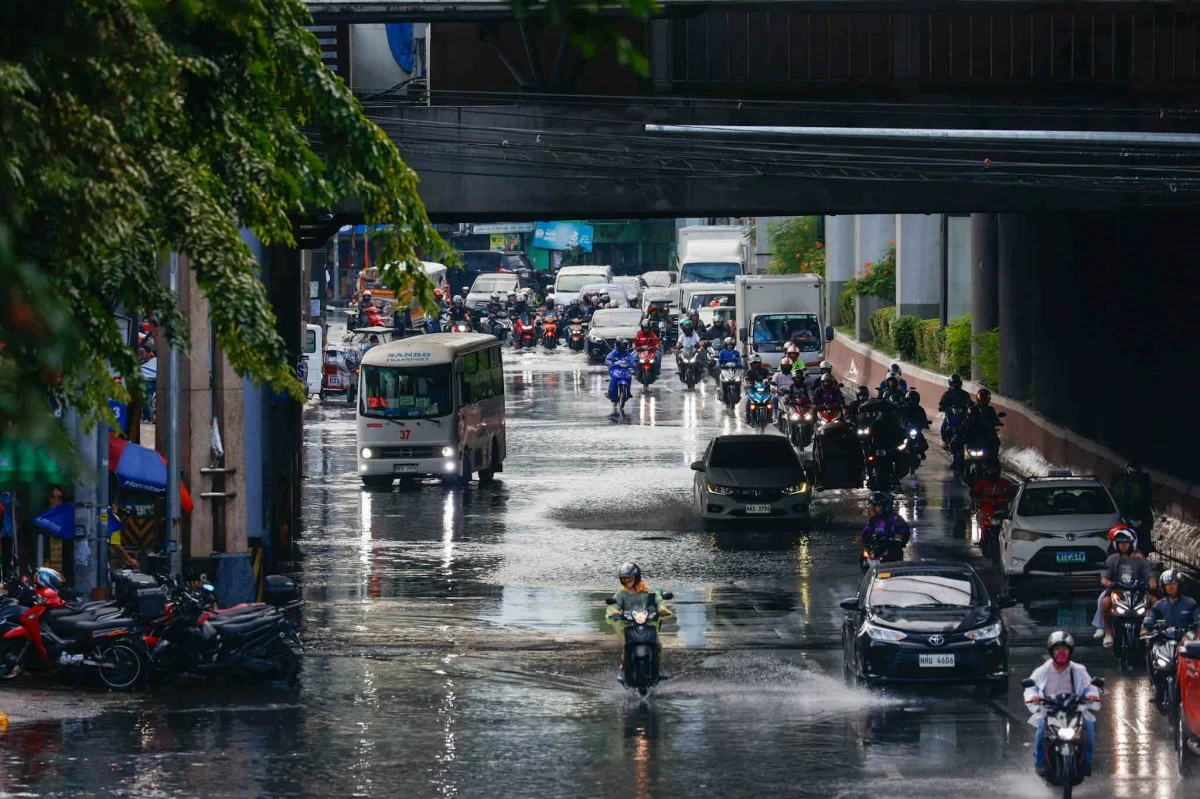
Teachers and government employees call on the Government Service Insurance System (GSIS) to grant P20,000 calamity aid to members affected by recent typhoons, flooding, and earthquakes, citing widespread damage to homes and livelihoods nationwide. (Manila Bulletin / file)
A group of teachers has urged the Government Service Insurance System (GSIS) to release a P20,000 calamity aid to government workers, including public school teachers, affected by recent typhoons, flooding, and earthquakes.
The Alliance of Concerned Teachers (ACT) Philippines, backed by the All Government Employees (GE) Unity, filed a formal petition before the GSIS on December 17 calling for the release of P20,000 in calamity aid for all GSIS members affected by recent typhoons, flooding, and earthquakes.
ACT said the petition was signed by thousands of government employees nationwide and came after a series of disasters that struck 59 of the country’s 82 provinces, including the onslaught of Typhoons Crising, Dante, Emong, Nando, Opong, Uwan, and Tino, as well as multiple earthquakes and widespread flooding.
ACT Chairperson Ruby Bernardo said many government workers are facing severe damage to their homes and belongings as the year ends, even as they continue to report for public service.
“Marami sa atin ang magpapasko na tuklap o nilipad ang bubong, wasak o giba ang dingding o pader, at nalubog o inanod ng baha ang mga kagamitan (Many of us will spend Christmas with roofs peeled off or blown away, walls shattered or collapsed, and belongings submerged or swept away by floods),” Bernardo said, stressing that public school teachers, health workers, and other government employees remain on duty despite personal losses.
ACT argued that loans and payment moratoriums are insufficient, saying these measures only worsen the debt burden of workers already struggling with low wages and repeated calamities.
The group maintained that direct cash assistance is urgently needed to help affected GSIS members recover before the Christmas season and the start of the new year.
In the education sector alone, ACT said around 126,000 teachers and education workers were affected by Typhoons Uwan and Tino, with damage reported to classrooms, learning materials, and personal property.
“With low salaries and back-to-back disasters, many government workers are being pushed deeper into financial distress. Immediate cash aid is a necessity, not a privilege. It is a crucial time for GSIS to give back to its members and uphold its mandate to provide social security benefits,” Bernardo said.
ACT also pointed out that GSIS, as one of the country’s top-earning government-owned and -controlled corporations (GOCCs), has both the financial capacity and obligation to extend timely assistance to its members during calamities.
The petition is supported by various organizations under All GE Unity, including the Alliance of Health Workers, Filipino Nurses United, the Confederation for Unity, Recognition and Advancement of Government Employees, and Kawani Laban sa Kontraktwalisasyon.
ACT called on the GSIS to act swiftly and approve the P20,000 calamity aid for all affected members, describing it as a critical lifeline for public servants who continue to perform their duties despite widespread devastation. 

Related Tags

GSIS calamity aid P20 000 calamity assistance disaster-hit government workers public school teachers calamity aid Alliance of Concerned Teachers GSIS government employees disaster assistance typhoon-affected GSIS members
ADVERTISEMENT
.most-popular .layout-ratio{ padding-bottom: 79.13%; } @media (min-width: 768px) and (max-width: 1024px) { .widget-title { font-size: 15px !important; } }

{{ articles_filter_1561_widget.title }}

.most-popular .layout-ratio{ padding-bottom: 79.13%; } @media (min-width: 768px) and (max-width: 1024px) { .widget-title { font-size: 15px !important; } }

{{ articles_filter_1562_widget.title }}

.most-popular .layout-ratio{ padding-bottom: 79.13%; } @media (min-width: 768px) and (max-width: 1024px) { .widget-title { font-size: 15px !important; } }

{{ articles_filter_1563_widget.title }}

{{ articles_filter_1564_widget.title }}

.mb-article-details { position: relative; } .mb-article-details .article-body-preview, .mb-article-details .article-body-summary{ font-size: 17px; line-height: 30px; font-family: "Libre Caslon Text", serif; color: #000; } .mb-article-details .article-body-preview iframe , .mb-article-details .article-body-summary iframe{ width: 100%; margin: auto; } .read-more-background { background: linear-gradient(180deg, color(display-p3 1.000 1.000 1.000 / 0) 13.75%, color(display-p3 1.000 1.000 1.000 / 0.8) 30.79%, color(display-p3 1.000 1.000 1.000) 72.5%); position: absolute; height: 200px; width: 100%; bottom: 0; display: flex; justify-content: center; align-items: center; padding: 0; } .read-more-background a{ color: #000; } .read-more-btn { padding: 17px 45px; font-family: Inter; font-weight: 700; font-size: 18px; line-height: 16px; text-align: center; vertical-align: middle; border: 1px solid black; background-color: white; } .hidden { display: none; }
function initializeAllSwipers() { // Get all hidden inputs with cms_article_id document.querySelectorAll('[id^="cms_article_id_"]').forEach(function (input) { const cmsArticleId = input.value; const articleSelector = '#article-' + cmsArticleId + ' .body_images'; const swiperElement = document.querySelector(articleSelector); if (swiperElement && !swiperElement.classList.contains('swiper-initialized')) { new Swiper(articleSelector, { loop: true, pagination: false, navigation: { nextEl: '#article-' + cmsArticleId + ' .swiper-button-next', prevEl: '#article-' + cmsArticleId + ' .swiper-button-prev', }, }); } }); } setTimeout(initializeAllSwipers, 3000); const intersectionObserver = new IntersectionObserver( (entries) => { entries.forEach((entry) => { if (entry.isIntersecting) { const newUrl = entry.target.getAttribute("data-url"); if (newUrl) { history.pushState(null, null, newUrl); let article = entry.target; // Extract metadata const author = article.querySelector('.author-section').textContent.replace('By', '').trim(); const section = article.querySelector('.section-info ').textContent.replace(' ', ' '); const title = article.querySelector('.article-title h1').textContent; // Parse URL for Chartbeat path format const parsedUrl = new URL(newUrl, window.location.origin); const cleanUrl = parsedUrl.host + parsedUrl.pathname; // Update Chartbeat configuration if (typeof window._sf_async_config !== 'undefined') { window._sf_async_config.path = cleanUrl; window._sf_async_config.sections = section; window._sf_async_config.authors = author; } // Track virtual page view with Chartbeat if (typeof pSUPERFLY !== 'undefined' && typeof pSUPERFLY.virtualPage === 'function') { try { pSUPERFLY.virtualPage({ path: cleanUrl, title: title, sections: section, authors: author }); } catch (error) { console.error('ping error', error); } } // Optional: Update document title if (title && title !== document.title) { document.title = title; } } } }); }, { threshold: 0.1 } ); function showArticleBody(button) { const article = button.closest("article"); const summary = article.querySelector(".article-body-summary"); const body = article.querySelector(".article-body-preview"); const readMoreSection = article.querySelector(".read-more-background"); // Hide summary and read-more section summary.style.display = "none"; readMoreSection.style.display = "none"; // Show the full article body body.classList.remove("hidden"); } document.addEventListener("DOMContentLoaded", () => { let loadCount = 0; // Track how many times articles are loaded const offset = [1, 2, 3, 4, 5, 6, 7, 8, 9, 10]; // Offset values const currentUrl = window.location.pathname.substring(1); let isLoading = false; // Prevent multiple calls if (!currentUrl) { console.log("Current URL is invalid."); return; } const sentinel = document.getElementById("load-more-sentinel"); if (!sentinel) { console.log("Sentinel element not found."); return; } function isSentinelVisible() { const rect = sentinel.getBoundingClientRect(); return ( rect.top < window.innerHeight && rect.bottom >= 0 ); } function onScroll() { if (isLoading) return; if (isSentinelVisible()) { if (loadCount >= offset.length) { console.log("Maximum load attempts reached."); window.removeEventListener("scroll", onScroll); return; } isLoading = true; const currentOffset = offset[loadCount]; window.loadMoreItems().then(() => { let article = document.querySelector('#widget_1690 > div:nth-last-of-type(2) article'); intersectionObserver.observe(article) loadCount++; }).catch(error => { console.error("Error loading more items:", error); }).finally(() => { isLoading = false; }); } } window.addEventListener("scroll", onScroll); });

Sign up by email to receive news.