






Manila Bulletin
 Business
The Economy
Philippines trails Southeast Asian peers as Chinese tourists stay away
Business
The Economy
Philippines trails Southeast Asian peers as Chinese tourists stay away
Business
The Economy
Philippines trails Southeast Asian peers as Chinese tourists stay away
Philippines trails Southeast Asian peers as Chinese tourists stay away
By Derco Rosal
Published Dec 18, 2025 04:18 pm


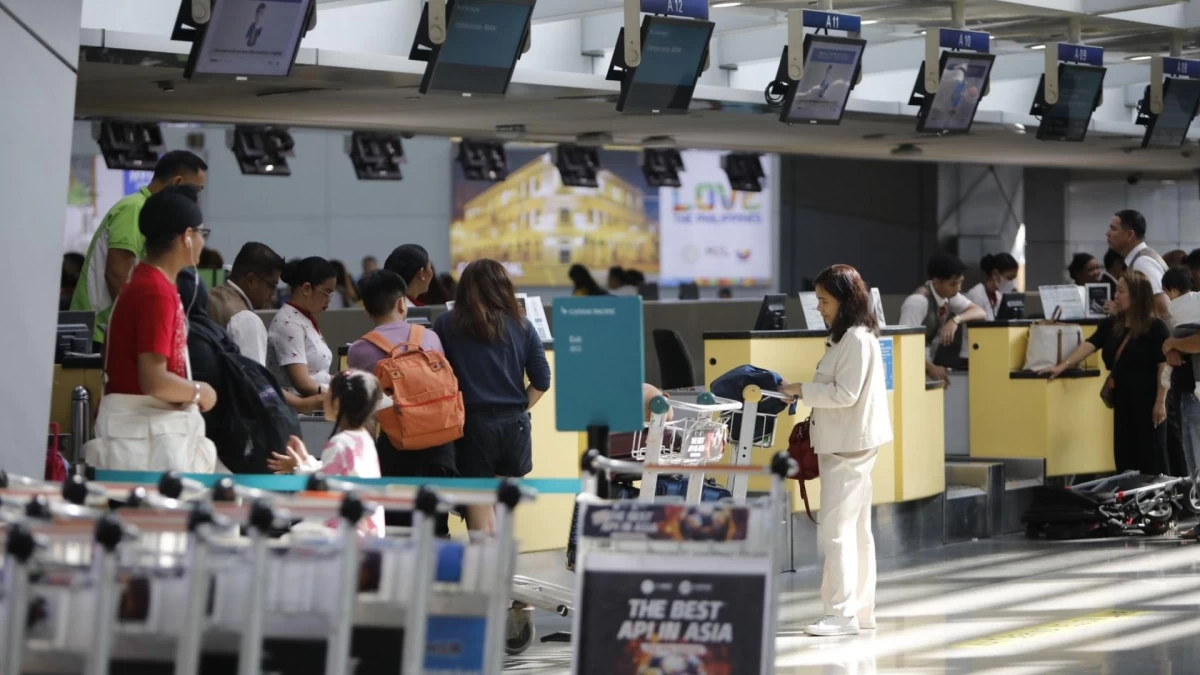
(NNIC photo)
The Philippines is trailing its Southeast Asian neighbors in attracting the return of Chinese travelers, with arrivals from the world’s second-largest economy collapsing to a single-digit share of total visitors this year.
Chinese arrivals reached just over 310,000 in 2024, representing 18 percent of levels seen in 2019, according to a Dec. 18 commentary from the ASEAN+3 Macroeconomic Research Office. The slump has reduced China’s share of the Philippine international tourism market to five percent, down from nearly 25 percent before the pandemic.
“Among Association of Southeast Asian Nations peers, the Philippines has experienced the weakest recovery in Chinese arrivals,” AMRO said.
The sluggish rebound in the Chinese market contributed to a broader shortfall in the country’s tourism goals. Total foreign visitor arrivals reached 5.9 million in 2024, remaining 28 percent below pre-pandemic peaks.
AMRO noted that the Philippines struggled with regional competitiveness even before the health crisis; its 8.2 million visitors in 2019 were dwarfed by Malaysia’s 26 million and Thailand’s 40 million.
While international volume remains “slower than expected,” a surge in local travel and higher per-visitor spending provided a buffer for the industry.
Domestic tourism expenditure rose to ₱3.2 trillion last year, surpassing 2019 levels and accounting for 75 percent of total tourism activity. Inbound tourism earnings climbed to ₱760.5 billion, a 27 percent increase over 2019 figures, which AMRO attributed to travelers staying longer and having higher confidence in local service offerings.
Manila has recently moved to address the shortfall by resuming its e-Visa program for Chinese nationals. However, AMRO warned that policy shifts alone may not be enough to bridge the gap with regional rivals.
The research firm urged the government to tackle "major bottlenecks" by improving transport connectivity across airports and seaports, while upgrading basic utilities like water and waste management to ensure long-term sustainability.
Digital infrastructure also remains a hurdle. AMRO recommended enhancing broadband access and booking systems to improve the overall safety and experience for foreign travelers.