ADVERTISEMENT

CADENA's blockchain edge: Pro-consumer reform

Published Dec 18, 2025 12:01 am  |  Updated Dec 17, 2025 04:44 pm
The Citizen Access and Disclosure of Expenditures for National Accountability (CADENA) Act, or Senate Bill No. 1506, was approved on third and final reading by the Philippine Senate. The vote was unanimous, with 17 senators voting in the affirmative, no negative votes, and no abstentions last Monday, Dec. 15, 2025.
Its official title, Cutting Red Tape to Enhance National Competition Act, reflects the primary aim to protect Filipino consumers from artificially high prices, supply manipulation, and market inefficiencies. But what makes the proposed law especially forward-looking is its embrace of blockchain technology to secure transparency and accountability across the supply chain. This combination of structural reform and technological innovation offers a compelling case for swift enactment.
For decades, Filipino consumers have borne the brunt of opaque supply chains, price spikes, and bottlenecks that defy explanation. Whether the product is rice, onions, sugar, fuel, or essential medicine, the story is familiar: inventories vanish, middlemen multiply, and retail prices soar. Regulators often struggle to trace where distortions begin because records are fragmented, delayed, or vulnerable to manipulation. CADENA directly ad-dresses this by requiring immutable, verifiable, and real-time documentation of transactions—from importation and warehousing to transport and retail.
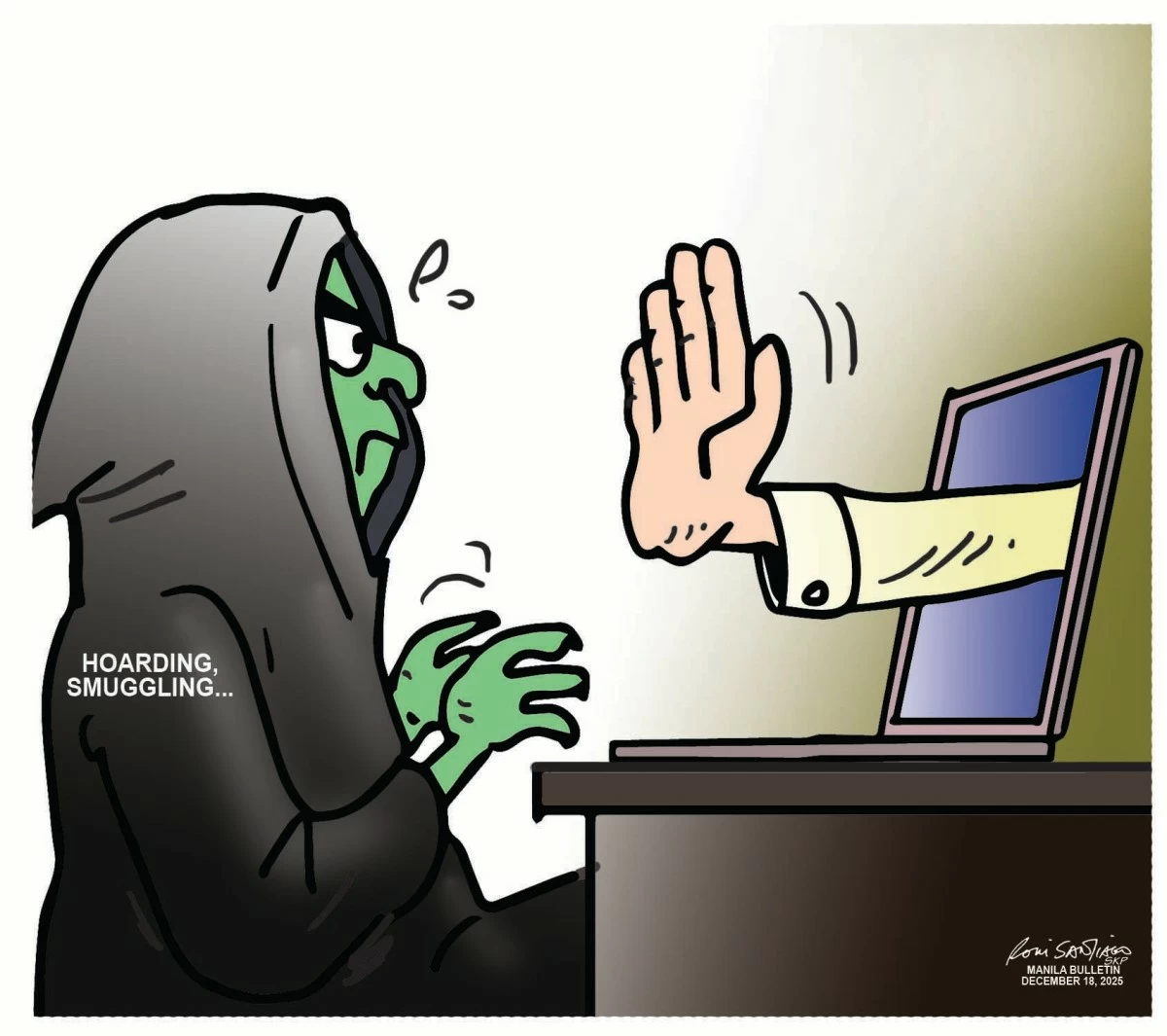
This blockchain-enabled transparency is a game-changer. Unlike traditional databases, blockchain allows multiple stakeholders—government agencies, producers, traders, retailers, and even consumers—to view an incorruptible record of product movement. Once information is logged, it cannot be altered without detection. This significantly reduces opportunities for hoarding, smuggling, collusion, and price-fixing. It empowers authorities to respond quickly when anomalies emerge, and it reassures the public that oversight is based not on guesswork but on precise, tamper-proof data.
For ordinary Filipino families, this means greater price stability and fewer shocks triggered by artificial scarcity. When supply chains are visible, abuses become harder to hide. When red tape is cut through digital automation, goods move faster and more efficiently. And when markets operate on reliable information, consumers benefit from fairer competition and lower costs.
The bill’s technology-driven provisions are also poised to invigorate the country’s competitiveness. A transparent supply chain boosts investor confidence by minimizing uncertainty and signaling that the Philip-pines is serious about modernizing its regulatory environment. Small and medium enterprises—often the first casualties of opaque processes and entrenched monopolies—stand to gain from a level playing field supported by digital tools. With blockchain reducing paperwork and administrative delays, SMEs can allocate more re-sources toward production, innovation, and value creation.
On the macroeconomic front, CADENA aligns squarely with the country’s development agenda. The Philip-pines cannot afford inefficiencies that raise logistics costs and hamper productivity. By incorporating block-chain technology, CADENA positions the Philippines alongside global pioneers in digital governance. It institutionalizes a culture of transparency that strengthens the integrity of markets, enhances food and energy security, and ensures that economic growth is broad-based and inclusive.
President Marcos Jr.’s decision to prioritize this legislation affirms the administration’s commitment to reducing the cost of living, curbing bureaucratic dysfunction, and embracing modern technologies that improve the lives of ordinary Filipinos. It is a recognition that structural problems require structural solutions—and that digital tools, intelligently deployed, can help dismantle barriers that have long burdened consumers.
At its heart, CADENA is more than a competition policy. It is a pro-consumer, pro-innovation, and pro-growth framework that uses technology not for its novelty but for its necessity. As Congress deliberates on the measure, it must seize this opportunity to enshrine transparency as a national standard.
Passing CADENA is not only sound economics. It is a decisive step toward a fairer, more efficient, and future-ready Philippines.

Related Tags

CADENA ACT
ADVERTISEMENT
.most-popular .layout-ratio{ padding-bottom: 79.13%; } @media (min-width: 768px) and (max-width: 1024px) { .widget-title { font-size: 15px !important; } }

{{ articles_filter_1561_widget.title }}

.most-popular .layout-ratio{ padding-bottom: 79.13%; } @media (min-width: 768px) and (max-width: 1024px) { .widget-title { font-size: 15px !important; } }

{{ articles_filter_1562_widget.title }}

.most-popular .layout-ratio{ padding-bottom: 79.13%; } @media (min-width: 768px) and (max-width: 1024px) { .widget-title { font-size: 15px !important; } }

{{ articles_filter_1563_widget.title }}

{{ articles_filter_1564_widget.title }}

.mb-article-details { position: relative; } .mb-article-details .article-body-preview, .mb-article-details .article-body-summary{ font-size: 17px; line-height: 30px; font-family: "Libre Caslon Text", serif; color: #000; } .mb-article-details .article-body-preview iframe , .mb-article-details .article-body-summary iframe{ width: 100%; margin: auto; } .read-more-background { background: linear-gradient(180deg, color(display-p3 1.000 1.000 1.000 / 0) 13.75%, color(display-p3 1.000 1.000 1.000 / 0.8) 30.79%, color(display-p3 1.000 1.000 1.000) 72.5%); position: absolute; height: 200px; width: 100%; bottom: 0; display: flex; justify-content: center; align-items: center; padding: 0; } .read-more-background a{ color: #000; } .read-more-btn { padding: 17px 45px; font-family: Inter; font-weight: 700; font-size: 18px; line-height: 16px; text-align: center; vertical-align: middle; border: 1px solid black; background-color: white; } .hidden { display: none; }
function initializeAllSwipers() { // Get all hidden inputs with cms_article_id document.querySelectorAll('[id^="cms_article_id_"]').forEach(function (input) { const cmsArticleId = input.value; const articleSelector = '#article-' + cmsArticleId + ' .body_images'; const swiperElement = document.querySelector(articleSelector); if (swiperElement && !swiperElement.classList.contains('swiper-initialized')) { new Swiper(articleSelector, { loop: true, pagination: false, navigation: { nextEl: '#article-' + cmsArticleId + ' .swiper-button-next', prevEl: '#article-' + cmsArticleId + ' .swiper-button-prev', }, }); } }); } setTimeout(initializeAllSwipers, 3000); const intersectionObserver = new IntersectionObserver( (entries) => { entries.forEach((entry) => { if (entry.isIntersecting) { const newUrl = entry.target.getAttribute("data-url"); if (newUrl) { history.pushState(null, null, newUrl); let article = entry.target; // Extract metadata const author = article.querySelector('.author-section').textContent.replace('By', '').trim(); const section = article.querySelector('.section-info ').textContent.replace(' ', ' '); const title = article.querySelector('.article-title h1').textContent; // Parse URL for Chartbeat path format const parsedUrl = new URL(newUrl, window.location.origin); const cleanUrl = parsedUrl.host + parsedUrl.pathname; // Update Chartbeat configuration if (typeof window._sf_async_config !== 'undefined') { window._sf_async_config.path = cleanUrl; window._sf_async_config.sections = section; window._sf_async_config.authors = author; } // Track virtual page view with Chartbeat if (typeof pSUPERFLY !== 'undefined' && typeof pSUPERFLY.virtualPage === 'function') { try { pSUPERFLY.virtualPage({ path: cleanUrl, title: title, sections: section, authors: author }); } catch (error) { console.error('ping error', error); } } // Optional: Update document title if (title && title !== document.title) { document.title = title; } } } }); }, { threshold: 0.1 } ); function showArticleBody(button) { const article = button.closest("article"); const summary = article.querySelector(".article-body-summary"); const body = article.querySelector(".article-body-preview"); const readMoreSection = article.querySelector(".read-more-background"); // Hide summary and read-more section summary.style.display = "none"; readMoreSection.style.display = "none"; // Show the full article body body.classList.remove("hidden"); } document.addEventListener("DOMContentLoaded", () => { let loadCount = 0; // Track how many times articles are loaded const offset = [1, 2, 3, 4, 5, 6, 7, 8, 9, 10]; // Offset values const currentUrl = window.location.pathname.substring(1); let isLoading = false; // Prevent multiple calls if (!currentUrl) { console.log("Current URL is invalid."); return; } const sentinel = document.getElementById("load-more-sentinel"); if (!sentinel) { console.log("Sentinel element not found."); return; } function isSentinelVisible() { const rect = sentinel.getBoundingClientRect(); return ( rect.top < window.innerHeight && rect.bottom >= 0 ); } function onScroll() { if (isLoading) return; if (isSentinelVisible()) { if (loadCount >= offset.length) { console.log("Maximum load attempts reached."); window.removeEventListener("scroll", onScroll); return; } isLoading = true; const currentOffset = offset[loadCount]; window.loadMoreItems().then(() => { let article = document.querySelector('#widget_1690 > div:nth-last-of-type(2) article'); intersectionObserver.observe(article) loadCount++; }).catch(error => { console.error("Error loading more items:", error); }).finally(() => { isLoading = false; }); } } window.addEventListener("scroll", onScroll); });

Sign up by email to receive news.