






Manila Bulletin
 Philippines
National
Vision screening now mandatory for kindergarten under DepEd's new program
Philippines
National
Vision screening now mandatory for kindergarten under DepEd's new program
Philippines
National
Vision screening now mandatory for kindergarten under DepEd's new program
Vision screening now mandatory for kindergarten under DepEd's new program
Angara leads nationwide rollout of National Vision Screening Program
Published Dec 17, 2025 05:19 pm


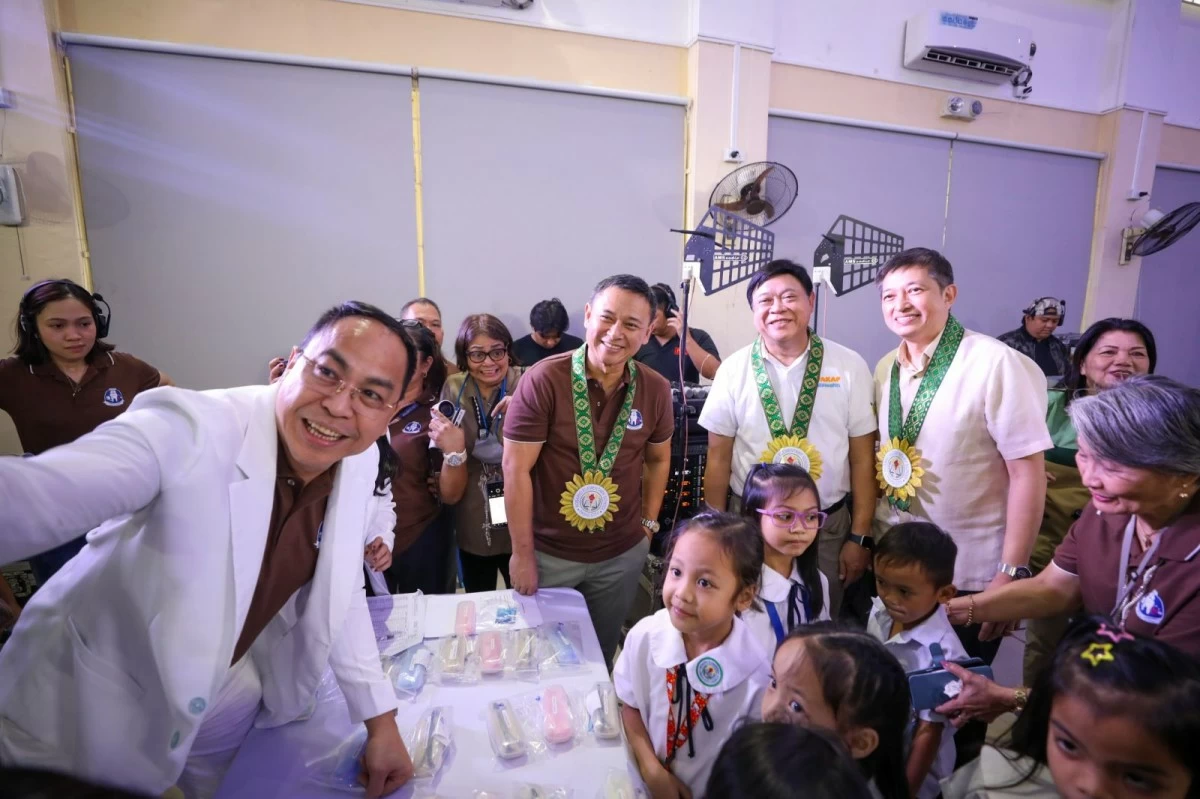
DepEd Secretary Sonny Angara led the national launch of the National Vision Screening Program in Pasig City, institutionalizing regular vision screening for kindergarten learners nationwide and providing prescription eyeglasses to selected children with vision impairments. (DepEd photo)
Vision screening is now mandatory for kindergarten learners nationwide as the Department of Education (DepEd) on Wednesday, December 17, rolled out its new National Vision Screening Program (NVSP)—a preventive health initiative aimed at detecting eye problems early and preventing them from becoming barriers to learning.
DepEd Secretary Sonny Angara led the nationwide launch of the NVSP, placing preventive health care at the center of early learning as DepEd begins regular vision checks for kindergarten learners across the country.
Angara, the principal author of Republic Act No. 11358, or the National Vision Screening Act, said the program advances early intervention to prevent undetected eye problems from becoming barriers to learning.
“Noong ipinasa natin ang Universal Health Care law (Republic Act No. 11223), malinaw ang layunin natin na dapat kapag sinabing PhilHealth, hindi lang ito para sa gamutan kapag may sakit na (When we passed the Universal Health Care law [Republic Act No. 11223], our goal was clear: when we say PhilHealth, it should not only mean treatment when one is already sick),” Angara said during the national launch at Rosario Elementary School in Pasig City.
He added that the initiative supports the education agenda of President Marcos by treating health and education as shared responsibilities and prioritizing practical support for young learners.
“Nandiyan ito para tumulong na hindi na magkasakit pa. Iyan ang preventive health care na gusto nating maramdaman ng bawat Pilipino (It should also be there to help prevent illness. That is the preventive health care we want every Filipino to experience),” he added.
The NVSP institutionalizes regular vision screening under the School Health Program, focusing on the early detection of refractive errors, amblyopia, and other vision disorders that can affect reading skills, comprehension, classroom participation, and overall academic performance if left unaddressed.
During the event, selected learners previously identified with vision impairments received prescription eyeglasses, underscoring the program’s emphasis on timely and concrete interventions rather than screening alone.
The initiative is supported by PhilHealth through its Yaman ng Kalusugan (YAKAP) program, which integrates preventive services such as vision screening and early intervention into community-based health packages. This complements DepEd’s learner-centered health initiatives, including the Clinics for Learners’ Access to School-health Services (CLASS+), which aim to bring essential health services closer to students.
DepEd also formalized its partnership with the Integrated Philippine Association of Optometrists, Inc. (IPAO) through the ceremonial signing of a Memorandum of Understanding.
The agreement strengthens referral pathways from schools to licensed optometrists and expands access to professional eye examinations, corrective interventions, and prescription eyeglasses, including those covered by PhilHealth’s Optometric Benefit Package.
Angara emphasized that preventive health measures introduced early in schooling are critical to improving learning outcomes and reducing avoidable education gaps that begin in the first years of formal education.
Led by DepEd’s Bureau of Learner Support Services–School Health Division, the NVSP is being implemented in close coordination with PhilHealth, IPAO, the University of the Philippines–Philippine Eye Research Institute (UP-PERI), and local government units.
DepEd said the program will be rolled out nationwide through its regional and division offices, in partnership with local governments and health institutions, to ensure that vision screening becomes a routine and sustainable component of learner health services in public schools.