ADVERTISEMENT

Rome opens long-awaited Colosseum subway station, with displays of unearthed artifacts

Published Dec 17, 2025 10:51 am
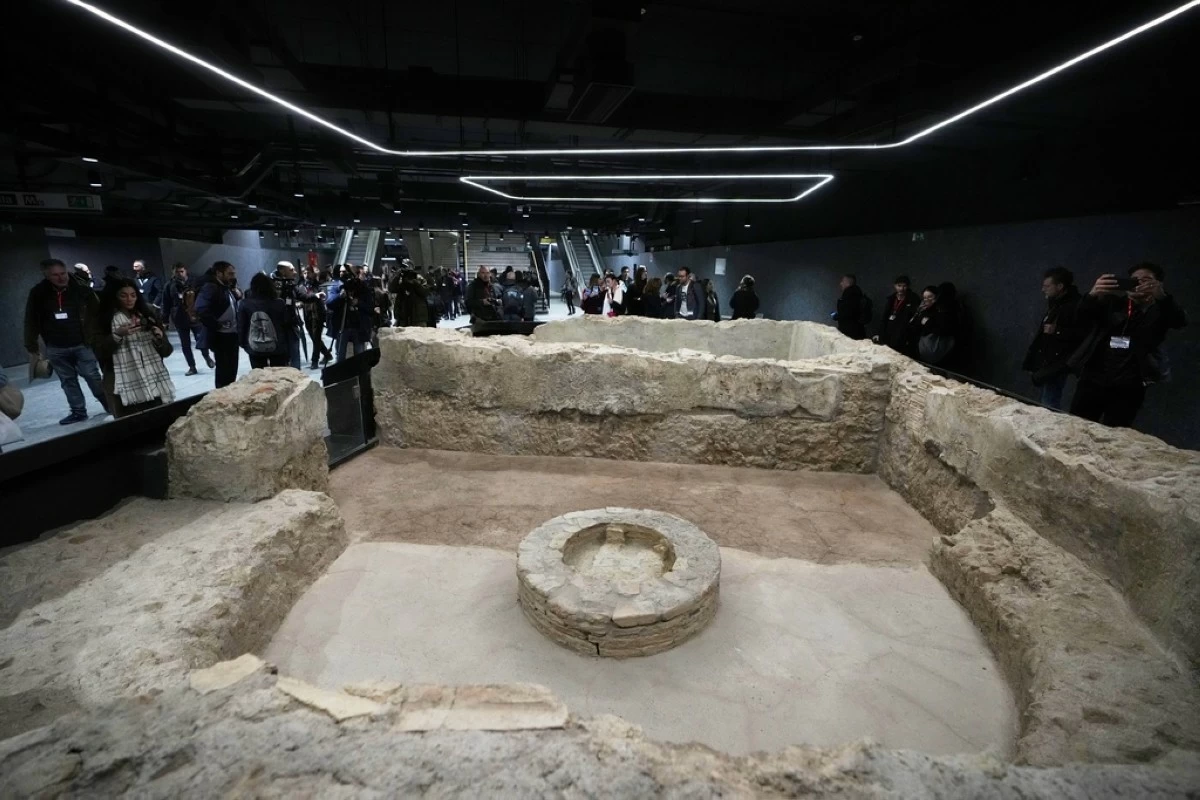
Ancient Roman finds backing to the 2nd century BC are on display in the 'Colosseo' new subway station, designed as a museum to showcase the archaeological finds uncovered during its construction, in Rome, Tuesday, Dec. 16, 2025. (AP Photo/Alessandra Tarantino)
ROME (AP) — Rome opened two subway stations on Tuesday — one deep beneath the Colosseum — that mix the modernity of high-tech transport with artifacts from an ancient era.
Commuters and tourists entering the station beside the iconic amphitheater can view displays of ceramic vases and plates, stone wells and suspended buckets, as well as the ruins of a cold plunge pool and thermal bath from a first-century dwelling. Screens show the excavation process — serving both to delight archaeology enthusiasts, and justify why it has taken so long to open the station.
The multibillion-euro Metro C subway line has been in the works for two decades but has been slowed by bureaucratic and funding delays and, crucially, the archaeological excavations necessary, given the underground ruins of imperial Roman and medieval civilizations in its way.
“The challenge was ... building it under such a large amount of groundwater and at the same time preserving all the archaeological finds that we found during the excavation, and all this while preserving everything that is above,” said Marco Cervone, construction manager for the consortium building the subway line, led by Webuild.
The total cost of the line’s 31 stations — three-quarters of which are now operational — will reach around 7 billion euros ($8.3 billion) and be completed by 2035, according to the press office of the city-owned company that has contracted the works.
Rome was inaugurating another station on Tuesday, Porta Metronia, located one stop away from the one beside the Colosseum and likewise at a depth of 30 meters (around 100 feet).
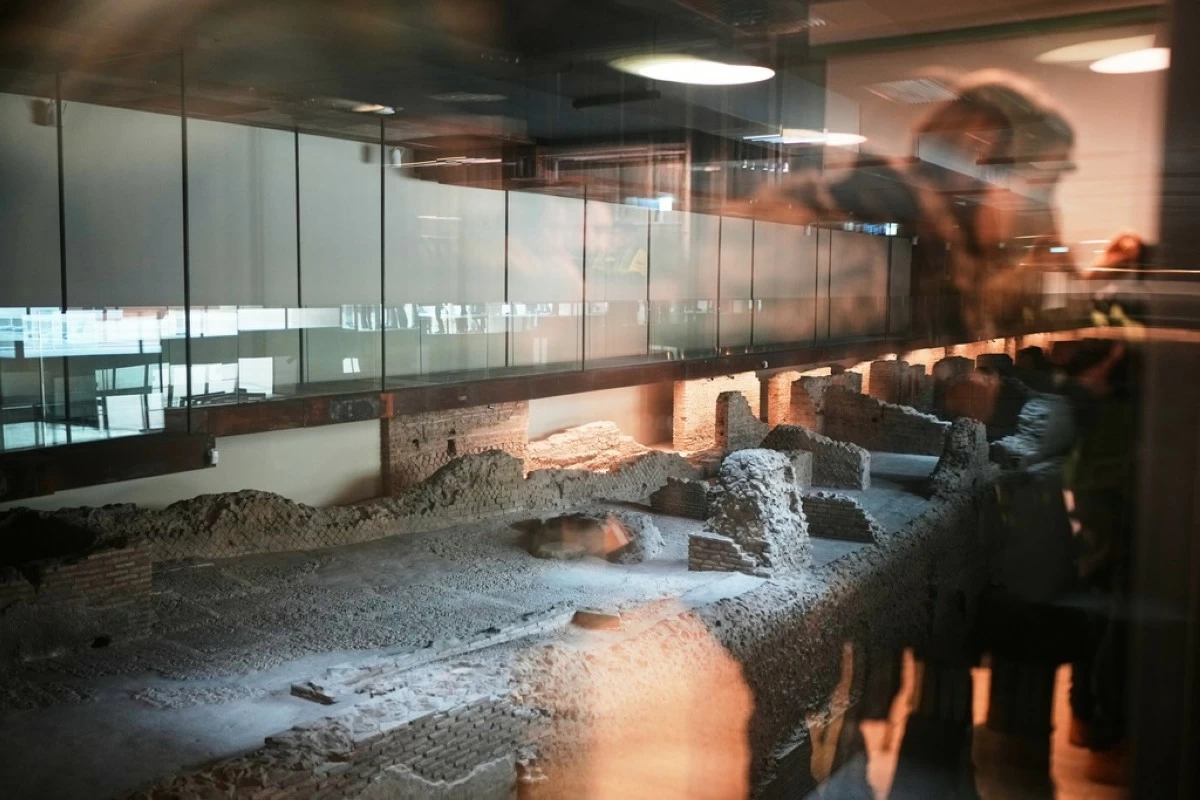
A view of the remains of Roman barracks built around the 2nd century AD under the emperor Trajan, visible in the Porta Metronia new subway station designed as a museum to showcase the archaeological finds uncovered during its construction, in Rome, Tuesday, Dec. 16, 2025. (AP Photo/Alessandra Tarantino)
It features a nearly 80-meter (260-foot) military barracks dating to the start of the second century, found at a depth between 7 and 12 meters (22 and 39 feet), according to Simona Moretta, the scientific director of the excavation.
“Surety that it was a military building is given by the fact that the entrances to the rooms are not facing each other, but are offset, so that the soldiers could leave the rooms and get in line without colliding in the corridor,” the archaeologist told reporters.
Soldiers would either have been part of the emperor's guard or stationed there for city security, she added.
There's also a home with well-preserved frescoes and mosaics. A museum within the station will be opened in the future, Moretta said.
Digging near the center of Rome means coming in the contact with three millennia of civilizations built atop one another. So far, the consortium building Line C has found more than 500,000 artifacts, according to WeBuild.
In order to work in the delicate archaeological area, the company has employed techniques including freezing the ground to stabilize soil, as well as so-called sacrificial diaphragms — concrete walls built perpendicular to perimeter walls that are demolished as excavation advances.
As the subway line continues onward past the Colosseum, it will run underneath more of the world’s most important cultural heritage sites — Trajan’s Column and the Basilica of Maxentius, the largest building in the Roman Forum — as well as some of Rome’s prized Renaissance palaces, churches and the Vatican.
The next stop along the line is Piazza Venezia, the veritable heart of Rome's center. Subway cars will arrive at a depth of 48 meters (157 feet) when it opens in 2033, Cervone said.
Once completed, Line C will run a total of 29 kilometers (18 miles), of which 20 kilometers (12 miles) will be underground, and carry up to 800,000 passengers daily.
Tourists planning to visit the Colosseum and other sites in Rome’s historic center will be able to bypass the eternal city’s notoriously snarled surface traffic — made even worse in recent years by the construction projects themselves.

Related Tags

WORLDNEWS
ADVERTISEMENT
.most-popular .layout-ratio{ padding-bottom: 79.13%; } @media (min-width: 768px) and (max-width: 1024px) { .widget-title { font-size: 15px !important; } }

{{ articles_filter_1561_widget.title }}

.most-popular .layout-ratio{ padding-bottom: 79.13%; } @media (min-width: 768px) and (max-width: 1024px) { .widget-title { font-size: 15px !important; } }

{{ articles_filter_1562_widget.title }}

.most-popular .layout-ratio{ padding-bottom: 79.13%; } @media (min-width: 768px) and (max-width: 1024px) { .widget-title { font-size: 15px !important; } }

{{ articles_filter_1563_widget.title }}

{{ articles_filter_1564_widget.title }}

.mb-article-details { position: relative; } .mb-article-details .article-body-preview, .mb-article-details .article-body-summary{ font-size: 17px; line-height: 30px; font-family: "Libre Caslon Text", serif; color: #000; } .mb-article-details .article-body-preview iframe , .mb-article-details .article-body-summary iframe{ width: 100%; margin: auto; } .read-more-background { background: linear-gradient(180deg, color(display-p3 1.000 1.000 1.000 / 0) 13.75%, color(display-p3 1.000 1.000 1.000 / 0.8) 30.79%, color(display-p3 1.000 1.000 1.000) 72.5%); position: absolute; height: 200px; width: 100%; bottom: 0; display: flex; justify-content: center; align-items: center; padding: 0; } .read-more-background a{ color: #000; } .read-more-btn { padding: 17px 45px; font-family: Inter; font-weight: 700; font-size: 18px; line-height: 16px; text-align: center; vertical-align: middle; border: 1px solid black; background-color: white; } .hidden { display: none; }
function initializeAllSwipers() { // Get all hidden inputs with cms_article_id document.querySelectorAll('[id^="cms_article_id_"]').forEach(function (input) { const cmsArticleId = input.value; const articleSelector = '#article-' + cmsArticleId + ' .body_images'; const swiperElement = document.querySelector(articleSelector); if (swiperElement && !swiperElement.classList.contains('swiper-initialized')) { new Swiper(articleSelector, { loop: true, pagination: false, navigation: { nextEl: '#article-' + cmsArticleId + ' .swiper-button-next', prevEl: '#article-' + cmsArticleId + ' .swiper-button-prev', }, }); } }); } setTimeout(initializeAllSwipers, 3000); const intersectionObserver = new IntersectionObserver( (entries) => { entries.forEach((entry) => { if (entry.isIntersecting) { const newUrl = entry.target.getAttribute("data-url"); if (newUrl) { history.pushState(null, null, newUrl); let article = entry.target; // Extract metadata const author = article.querySelector('.author-section').textContent.replace('By', '').trim(); const section = article.querySelector('.section-info ').textContent.replace(' ', ' '); const title = article.querySelector('.article-title h1').textContent; // Parse URL for Chartbeat path format const parsedUrl = new URL(newUrl, window.location.origin); const cleanUrl = parsedUrl.host + parsedUrl.pathname; // Update Chartbeat configuration if (typeof window._sf_async_config !== 'undefined') { window._sf_async_config.path = cleanUrl; window._sf_async_config.sections = section; window._sf_async_config.authors = author; } // Track virtual page view with Chartbeat if (typeof pSUPERFLY !== 'undefined' && typeof pSUPERFLY.virtualPage === 'function') { try { pSUPERFLY.virtualPage({ path: cleanUrl, title: title, sections: section, authors: author }); } catch (error) { console.error('ping error', error); } } // Optional: Update document title if (title && title !== document.title) { document.title = title; } } } }); }, { threshold: 0.1 } ); function showArticleBody(button) { const article = button.closest("article"); const summary = article.querySelector(".article-body-summary"); const body = article.querySelector(".article-body-preview"); const readMoreSection = article.querySelector(".read-more-background"); // Hide summary and read-more section summary.style.display = "none"; readMoreSection.style.display = "none"; // Show the full article body body.classList.remove("hidden"); } document.addEventListener("DOMContentLoaded", () => { let loadCount = 0; // Track how many times articles are loaded const offset = [1, 2, 3, 4, 5, 6, 7, 8, 9, 10]; // Offset values const currentUrl = window.location.pathname.substring(1); let isLoading = false; // Prevent multiple calls if (!currentUrl) { console.log("Current URL is invalid."); return; } const sentinel = document.getElementById("load-more-sentinel"); if (!sentinel) { console.log("Sentinel element not found."); return; } function isSentinelVisible() { const rect = sentinel.getBoundingClientRect(); return ( rect.top < window.innerHeight && rect.bottom >= 0 ); } function onScroll() { if (isLoading) return; if (isSentinelVisible()) { if (loadCount >= offset.length) { console.log("Maximum load attempts reached."); window.removeEventListener("scroll", onScroll); return; } isLoading = true; const currentOffset = offset[loadCount]; window.loadMoreItems().then(() => { let article = document.querySelector('#widget_1690 > div:nth-last-of-type(2) article'); intersectionObserver.observe(article) loadCount++; }).catch(error => { console.error("Error loading more items:", error); }).finally(() => { isLoading = false; }); } } window.addEventListener("scroll", onScroll); });

Sign up by email to receive news.