ADVERTISEMENT

Rare orchid once presumed extinct found in the Philippines; study confirms new distribution record

Published Dec 17, 2025 04:56 pm
A rare orchid once thought extinct has been rediscovered in the Philippines, expanding its known range beyond Borneo and highlighting the country’s rich biodiversity.
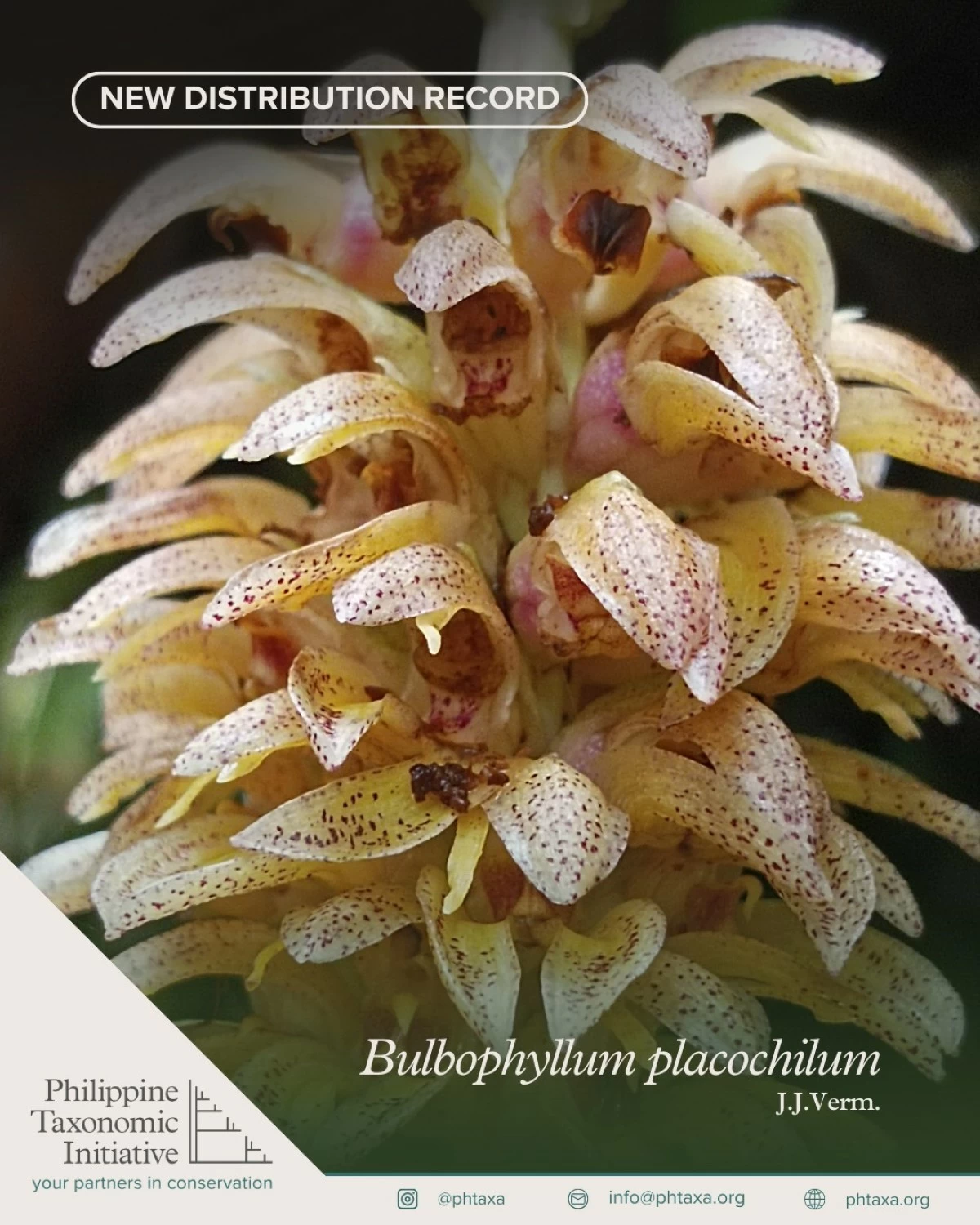
Bulbophyllum placochilum J.J. Verm., a rare orchid species once believed to be extinct and previously known only from Borneo, has now been confirmed to occur in the Philippines, marking a significant expansion of its known geographic range.
In a recently published study, researchers documented populations of Bulbophyllum placochilum in Mt. Malinao in Albay, as well as in South Cotabato and Misamis Oriental. The findings establish the species’ presence across Luzon and Mindanao, placing the Philippine archipelago firmly within its natural distribution.
The orchid is an elevation-restricted species, occurring at heights of about 1,100 to 1,700 meters above sea level. Field observations reveal that it grows on dead branches in open-canopy forests and also thrives in deeply shaded, mossy forests, highlighting its preference for cool, montane environments.
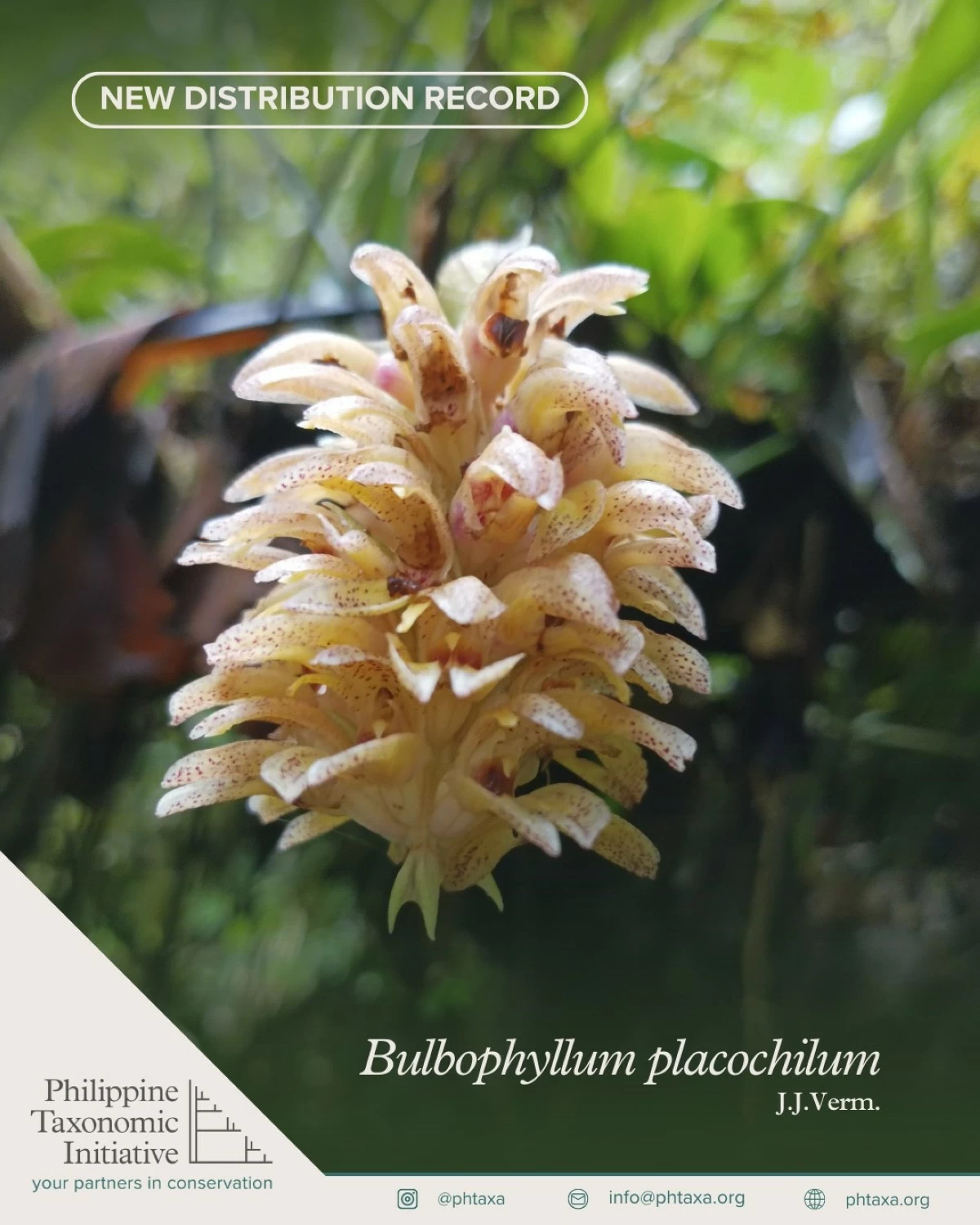
Scientists confirm a new Philippine distribution record for Bulbophyllum placochilum, a rare montane orchid now proposed for IUCN Vulnerable status.
Bulbophyllum placochilum is distinguished by its uniquely flattened lip—a key feature referenced in its name, derived from the Greek words plakos (flat) and cheilos (lip). The study also provides an amended species description, including the first-ever account of its fruit, described as a glabrous, obovoid red capsule with persistent senescent floral parts.
Despite the expanded range, researchers warned that the species remains at risk. Due to its limited and fragmented populations, B. placochilum has been proposed for classification as Vulnerable under the 2024 International Union for Conservation of Nature (IUCN) criteria.
The discovery resulted from collaborative research led by scientists from the Philippine Taxonomic Initiative, Inc., the University of the Philippines Los Baños, and Ateneo de Manila University. The paper also presents an updated taxonomic key to Philippine species of Bulbophyllum section Altisceptrum, recognizing B. placochilum as the fourth additional species recorded in the section.
A distribution record refers to a documented report of where a particular species has been observed or collected. It provides evidence of the species’ geographic range or occurrence and serves as an official reference used by taxonomists, biologists, and biodiversity databases to track and update knowledge of a species’ known distribution.
READ MORE:
https://www.nparks.gov.sg/sbg/research/publications/gardens'-bulletin-singapore/-/media/sbg/gardens-bulletin/gbs_77_02_y2025/77_02_08_y2025_v77p2_gbs_pg235.pdf?fbclid=IwZXh0bgNhZW0CMTAAYnJpZBExemNzc3JCSHNpcTlzejZlbnNydGMGYXBwX2lkEDIyMjAzOTE3ODgyMDA4OTIAAR4nJ9GwxQAMmjS5rnz0qALio7TqvhxVp4NES4zREr_lb-cmWsME3nWN5GSBVA_aem_1cY2fk1OODKFxy_ai6cP1Q

Related Tags

rare orchid Philippines Bulbophyllum placochilum orchid species once presumed extinct new distribution record Philippines Philippine orchids discovery endemic and rare plants Philippines Philippine biodiversity research
ADVERTISEMENT
.most-popular .layout-ratio{ padding-bottom: 79.13%; } @media (min-width: 768px) and (max-width: 1024px) { .widget-title { font-size: 15px !important; } }

{{ articles_filter_1561_widget.title }}

.most-popular .layout-ratio{ padding-bottom: 79.13%; } @media (min-width: 768px) and (max-width: 1024px) { .widget-title { font-size: 15px !important; } }

{{ articles_filter_1562_widget.title }}

.most-popular .layout-ratio{ padding-bottom: 79.13%; } @media (min-width: 768px) and (max-width: 1024px) { .widget-title { font-size: 15px !important; } }

{{ articles_filter_1563_widget.title }}

{{ articles_filter_1564_widget.title }}

.mb-article-details { position: relative; } .mb-article-details .article-body-preview, .mb-article-details .article-body-summary{ font-size: 17px; line-height: 30px; font-family: "Libre Caslon Text", serif; color: #000; } .mb-article-details .article-body-preview iframe , .mb-article-details .article-body-summary iframe{ width: 100%; margin: auto; } .read-more-background { background: linear-gradient(180deg, color(display-p3 1.000 1.000 1.000 / 0) 13.75%, color(display-p3 1.000 1.000 1.000 / 0.8) 30.79%, color(display-p3 1.000 1.000 1.000) 72.5%); position: absolute; height: 200px; width: 100%; bottom: 0; display: flex; justify-content: center; align-items: center; padding: 0; } .read-more-background a{ color: #000; } .read-more-btn { padding: 17px 45px; font-family: Inter; font-weight: 700; font-size: 18px; line-height: 16px; text-align: center; vertical-align: middle; border: 1px solid black; background-color: white; } .hidden { display: none; }
function initializeAllSwipers() { // Get all hidden inputs with cms_article_id document.querySelectorAll('[id^="cms_article_id_"]').forEach(function (input) { const cmsArticleId = input.value; const articleSelector = '#article-' + cmsArticleId + ' .body_images'; const swiperElement = document.querySelector(articleSelector); if (swiperElement && !swiperElement.classList.contains('swiper-initialized')) { new Swiper(articleSelector, { loop: true, pagination: false, navigation: { nextEl: '#article-' + cmsArticleId + ' .swiper-button-next', prevEl: '#article-' + cmsArticleId + ' .swiper-button-prev', }, }); } }); } setTimeout(initializeAllSwipers, 3000); const intersectionObserver = new IntersectionObserver( (entries) => { entries.forEach((entry) => { if (entry.isIntersecting) { const newUrl = entry.target.getAttribute("data-url"); if (newUrl) { history.pushState(null, null, newUrl); let article = entry.target; // Extract metadata const author = article.querySelector('.author-section').textContent.replace('By', '').trim(); const section = article.querySelector('.section-info ').textContent.replace(' ', ' '); const title = article.querySelector('.article-title h1').textContent; // Parse URL for Chartbeat path format const parsedUrl = new URL(newUrl, window.location.origin); const cleanUrl = parsedUrl.host + parsedUrl.pathname; // Update Chartbeat configuration if (typeof window._sf_async_config !== 'undefined') { window._sf_async_config.path = cleanUrl; window._sf_async_config.sections = section; window._sf_async_config.authors = author; } // Track virtual page view with Chartbeat if (typeof pSUPERFLY !== 'undefined' && typeof pSUPERFLY.virtualPage === 'function') { try { pSUPERFLY.virtualPage({ path: cleanUrl, title: title, sections: section, authors: author }); } catch (error) { console.error('ping error', error); } } // Optional: Update document title if (title && title !== document.title) { document.title = title; } } } }); }, { threshold: 0.1 } ); function showArticleBody(button) { const article = button.closest("article"); const summary = article.querySelector(".article-body-summary"); const body = article.querySelector(".article-body-preview"); const readMoreSection = article.querySelector(".read-more-background"); // Hide summary and read-more section summary.style.display = "none"; readMoreSection.style.display = "none"; // Show the full article body body.classList.remove("hidden"); } document.addEventListener("DOMContentLoaded", () => { let loadCount = 0; // Track how many times articles are loaded const offset = [1, 2, 3, 4, 5, 6, 7, 8, 9, 10]; // Offset values const currentUrl = window.location.pathname.substring(1); let isLoading = false; // Prevent multiple calls if (!currentUrl) { console.log("Current URL is invalid."); return; } const sentinel = document.getElementById("load-more-sentinel"); if (!sentinel) { console.log("Sentinel element not found."); return; } function isSentinelVisible() { const rect = sentinel.getBoundingClientRect(); return ( rect.top < window.innerHeight && rect.bottom >= 0 ); } function onScroll() { if (isLoading) return; if (isSentinelVisible()) { if (loadCount >= offset.length) { console.log("Maximum load attempts reached."); window.removeEventListener("scroll", onScroll); return; } isLoading = true; const currentOffset = offset[loadCount]; window.loadMoreItems().then(() => { let article = document.querySelector('#widget_1690 > div:nth-last-of-type(2) article'); intersectionObserver.observe(article) loadCount++; }).catch(error => { console.error("Error loading more items:", error); }).finally(() => { isLoading = false; }); } } window.addEventListener("scroll", onScroll); });

Sign up by email to receive news.