







Louvre workers vote to extend a strike as the museum partially reopens
Published Dec 17, 2025 11:09 pm


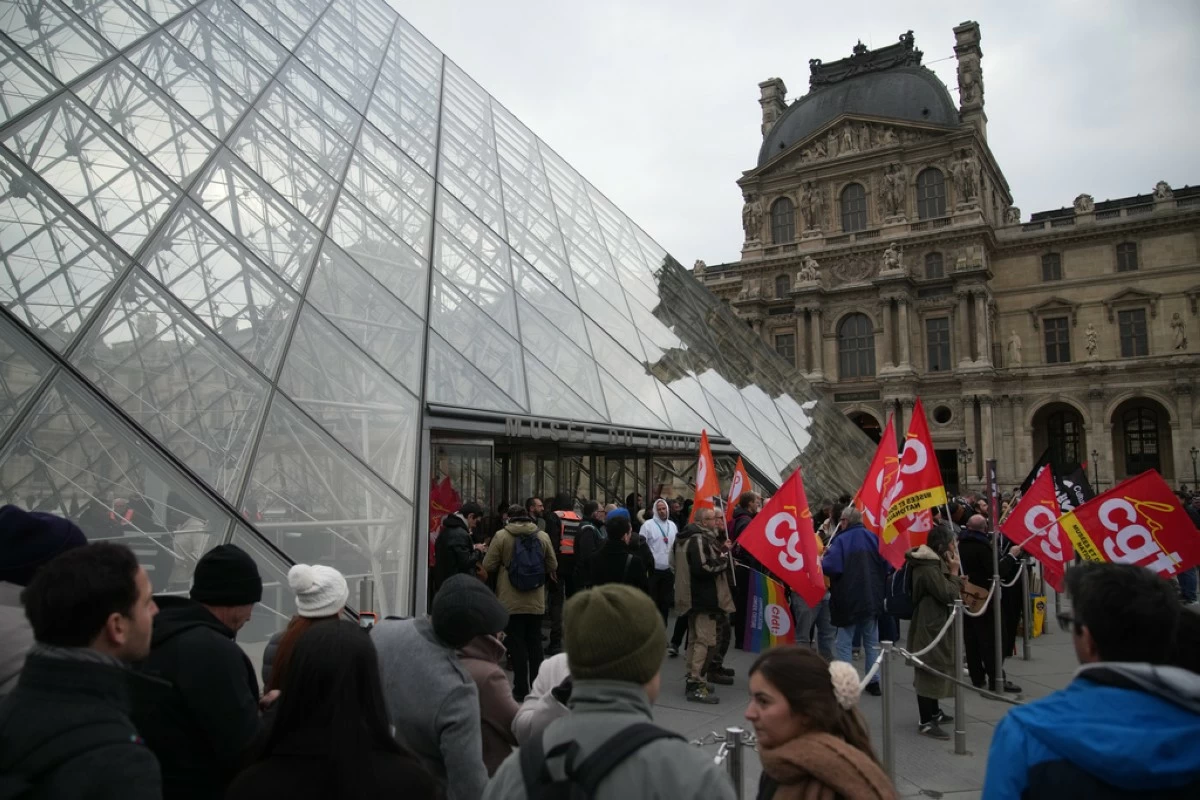
Unionists demonstrate at the entrance of the Louvre museum after employees have voted to extend a strike that has disrupted operations at the world's most visited museum, Wednesday, Dec. 17, 2025 in Paris. (AP Photo/Christophe Ena)
PARIS — Employees at the Louvre Museum voted to extend a strike that has disrupted operations at the world’s most visited museum, though the venue partially opened Wednesday to allow visitors to enjoy its highlights.
The museum said visitors had access to a limited “masterpiece route” which includes Leonardo da Vinci’s "Mona Lisa” and the Venus de Milo.
“Due to a strike, some rooms in the Louvre Museum are ... closed," it said on social media. “We apologize for any inconvenience.”
Union workers are protesting chronic under-staffing, building deterioration and recent management decisions — pressures intensified by a brazen crown jewels heist in October that exposed serious security lapses.
The strike decision came during a morning general assembly, after workers adopted the walkout unanimously earlier this week. The museum was closed Tuesday for its weekly day off.
Culture Ministry officials held crisis talks with unions Monday and proposed to cancel a planned $6.7 million cut in 2026 funding, open new recruitment for gallery guards and visitor services and increase staff compensation. Union officials said the measures fell short.
Louvre President Laurence des Cars was scheduled to appear before the Senate’s culture committee Wednesday as lawmakers probe security failures at the museum.
Des Cars has acknowledged an “institutional failure” following the heist but has come under renewed scrutiny after admitting she only learned of a critical 2019 security audit after the robbery. France’s Court of Auditors and a separate administrative inquiry have since criticized delays in implementing a long-promised security overhaul.
The Culture Ministry announced emergency anti-intrusion measures last month and assigned Philippe Jost, who oversaw the Notre Dame restoration, to help reorganize the museum. The move was widely seen as a sign of mounting pressure on Louvre leadership.