







CAMPI: A quiet influence that shaped the auto industry
Published Dec 17, 2025 04:47 pm


DRIVING THOUGHTS

Car enthusiasts know CAMPI mainly as the force behind the Philippine International Motor Show (PIMS), the biennial automotive spectacle where gleaming new models, concept cars, and future mobility technologies take center stage. For most motorists, however, CAMPI—the Chamber of Automotive Manufacturers of the Philip-pines, Inc.—has largely worked behind the scenes, quietly influencing policies that have shaped the country’s automotive landscape for three decades.
Some motorists may remember CAMPI’s presence – led by its president then, Beth Lee, in the mid-2000s, when the Supreme Court upheld the government’s ban on imported used vehicles. At the time, mostly right-hand-drive units were flooding the market, undercutting locally manufactured vehicles and brand-new imports. In 2004, used vehicles accounted for a staggering 61 percent of total registrations with the Land Transportation Office. By 2006, when the High Court affirmed Executive Order 156, that tide began to turn—thanks in large part to CAMPI’s sustained advocacy against smuggling and unfair competition.
Fewer people realize that CAMPI also helped make brand-new cars more affordable for Filipino buyers. In the early 2000s, automobiles were still treated as luxury goods, taxed heavily based on engine displacement. Bigger engines meant higher taxes, pushing prices beyond the reach of many consumers and stifling industry growth. CAMPI lobbied for a shift to a price-based excise tax system, arguing that rational taxation was key to development. The result was Republic Act 9224, passed in 2003, which lowered vehicle prices and set the industry on a clearer growth path.
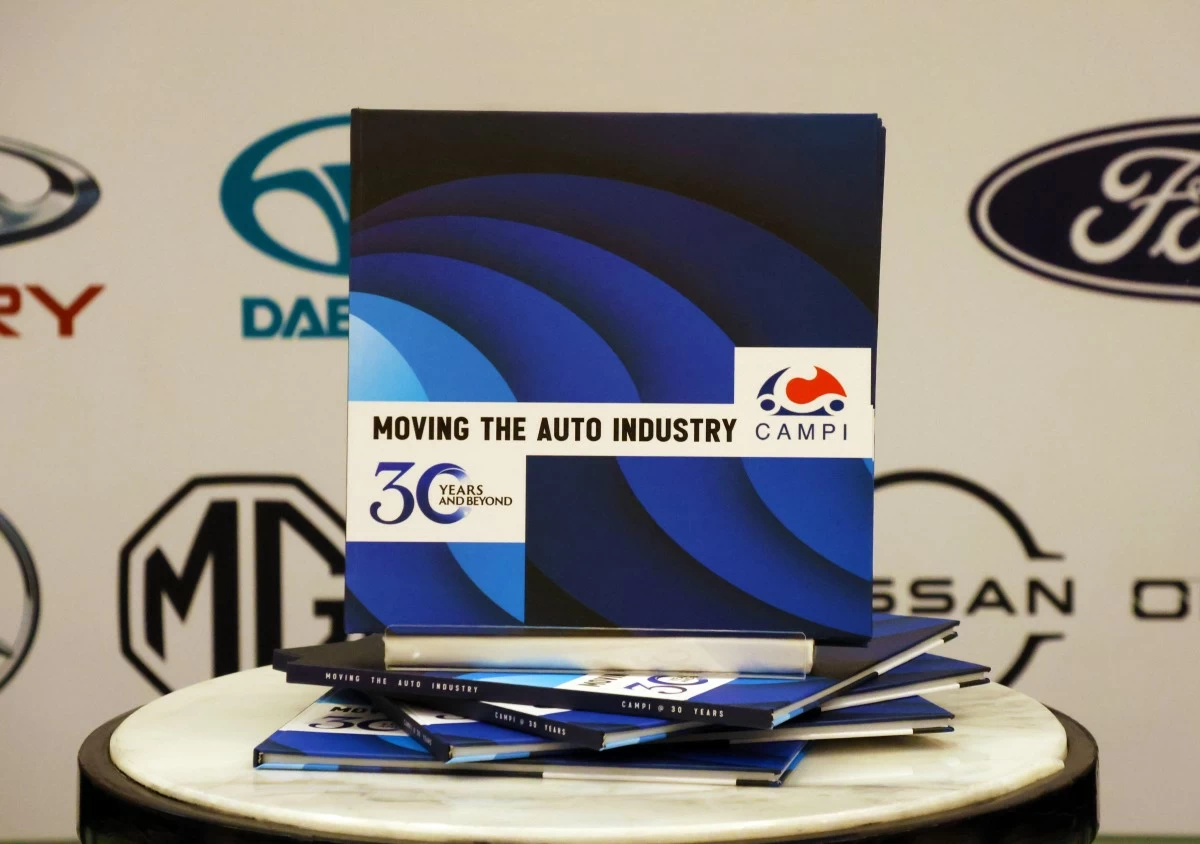
These are some of the not-so-well known achievements of CAMPI, which are featured in a coffee table book – Moving the auto industry – which the organization launched recently as part of its 30th anniversary celebration. CAMPI president, lawyer Rommel Gutierrez had chosen to pursue the book project to document the organization’s role in helping shape the local industry. With him in the book project were Jas Nagera from Toyota Motor Philippines, and Yvonne Linchangco, from Isuzu Philippines Corp., who provided valuable information on the organization’s history. Interviews with Jose Chavez Alvarez, chairman emeritus, and past presidents Vicente Mills and Beth Lee added more details to the achievements of the organization’s 30-year history.
CAMPI was established on May 16, 1995, by 11 automotive industry leaders at a time when the local auto sec-tor was emerging from the turbulence of the late 1980s. Import restrictions, economic instability, and dollar shortages had crippled vehicle manufacturing. Recognizing the need for a unified industry voice, José Chaves Alvarez became CAMPI’s founding chairman, with Vicente T. Mills Jr. as its first president.
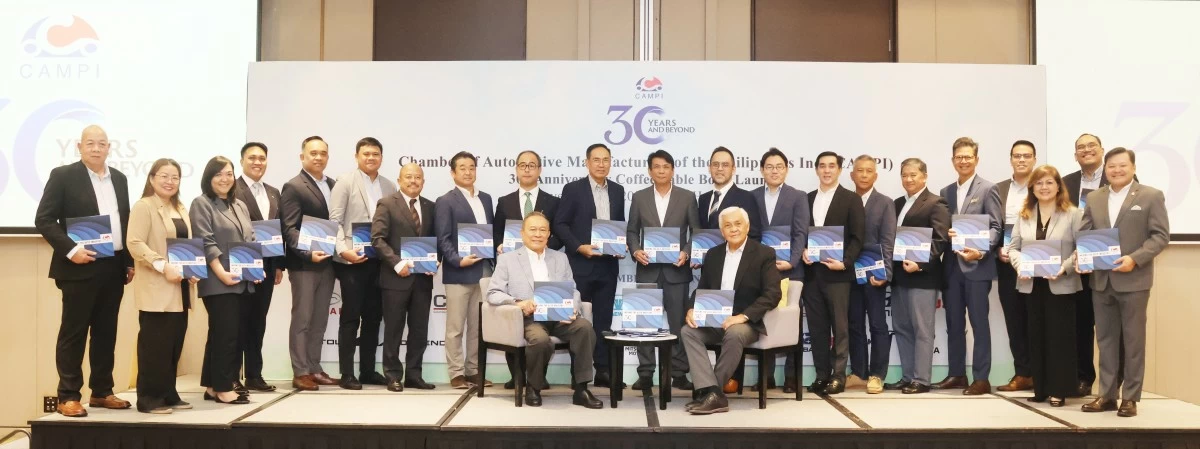
CAMPI BOOK LAUNCHING — CAMPI Chairman Emeritus Hon. Jose Chaves Alvarez (seated, left), former CAMPI President Vicente Mills Jr. (seated, right), and current CAMPI President Rommel Gutierrez (standing 10th from left) with CAMPI Board of Trustees and members of the executive committee, at the book launching.
“When CAMPI was just starting out, the goal was simple—bring all the players to the table,” Alvarez re-called. That unity proved crucial. CAMPI became the industry’s bridge to government, helping shape the Motor Vehicle Development Program (MVDP) and its various iterations, from the mid-1990s through the Comprehensive Motor Vehicle Development Program of 2010.
By the early 2000s, CAMPI had evolved from a coordinating body into a strategic policy partner. It was deeply involved in crafting standards on safety, emissions, and trade harmonization, and in aligning the Philippine auto industry with ASEAN integration. According to Mills, “We shifted from just being an association to be-coming a strategic partner in policy-making.”
One of CAMPI’s most visible contributions was the launch of PIMS in 2007 under then president Elizabeth “Beth” Lee. More than a motor show, PIMS became a statement: that the Philippine automotive industry be-longed on the regional—and global—map. Presidents of the Philippines graced its opening ceremonies, under-scoring the sector’s economic importance.
Lee’s presidency also marked a decisive victory against used vehicle imports. Following the 2006 Supreme Court ruling, CAMPI worked closely with government agencies to close loopholes, strengthen enforcement, and reverse market distortion. By 2010, used vehicles accounted for just 25 percent of registrations, while legitimate new vehicle sales rose to 75 percent. That same year, industry sales hit a record 168,490 units.
Under current president lawyer Rommel Gutierrez, CAMPI has expanded its advocacy beyond policy protection to consumer education and sustainability. The group supported the Philippine Lemon Law, launched anti-counterfeit campaigns, and actively promotes road safety. It has also embraced the shift toward electrification, supporting the Electric Vehicle Industry Act and engaging government on EV incentives and standards.
Today, CAMPI represents an industry with ₱120 billion in investments, 500,000 jobs, 15 assembly plants, and about ₱30 billion in annual tax contributions. Its membership now includes not only traditional manufacturers but also new-energy players—proof that the organization remains relevant amid rapid technological change.
CAMPI’s story is not one of loud pronouncements, but of steady, persistent work—policy by policy, regulation by regulation. Thirty years on, its quiet influence is evident every time a Filipino drives a safer, more affordable, and more modern vehicle on Philippine roads.
“This coffee table book is more than just a compilation of images and timelines — it is a celebration of our shared achievements as an industry. Over the past 30 years, CAMPI has witnessed transformative changes in policy, technology, and market behavior. This commemorative book allows us to honor the challenges we overcame, the partnerships we strengthened, and the progress that continues to move the Philippine automotive industry forward,” Gutierrez emphasized. Gutierrez served as CAMPI president since 2012 to present.