






Manila Bulletin
 Philippines
National
AFP: PH Navy quietly guarding Filipino fishermen in WPS under long-standing directive
Philippines
National
AFP: PH Navy quietly guarding Filipino fishermen in WPS under long-standing directive
Philippines
National
AFP: PH Navy quietly guarding Filipino fishermen in WPS under long-standing directive
AFP: PH Navy quietly guarding Filipino fishermen in WPS under long-standing directive
Published Dec 17, 2025 12:25 pm
|
Updated Dec 17, 2025 01:59 pm


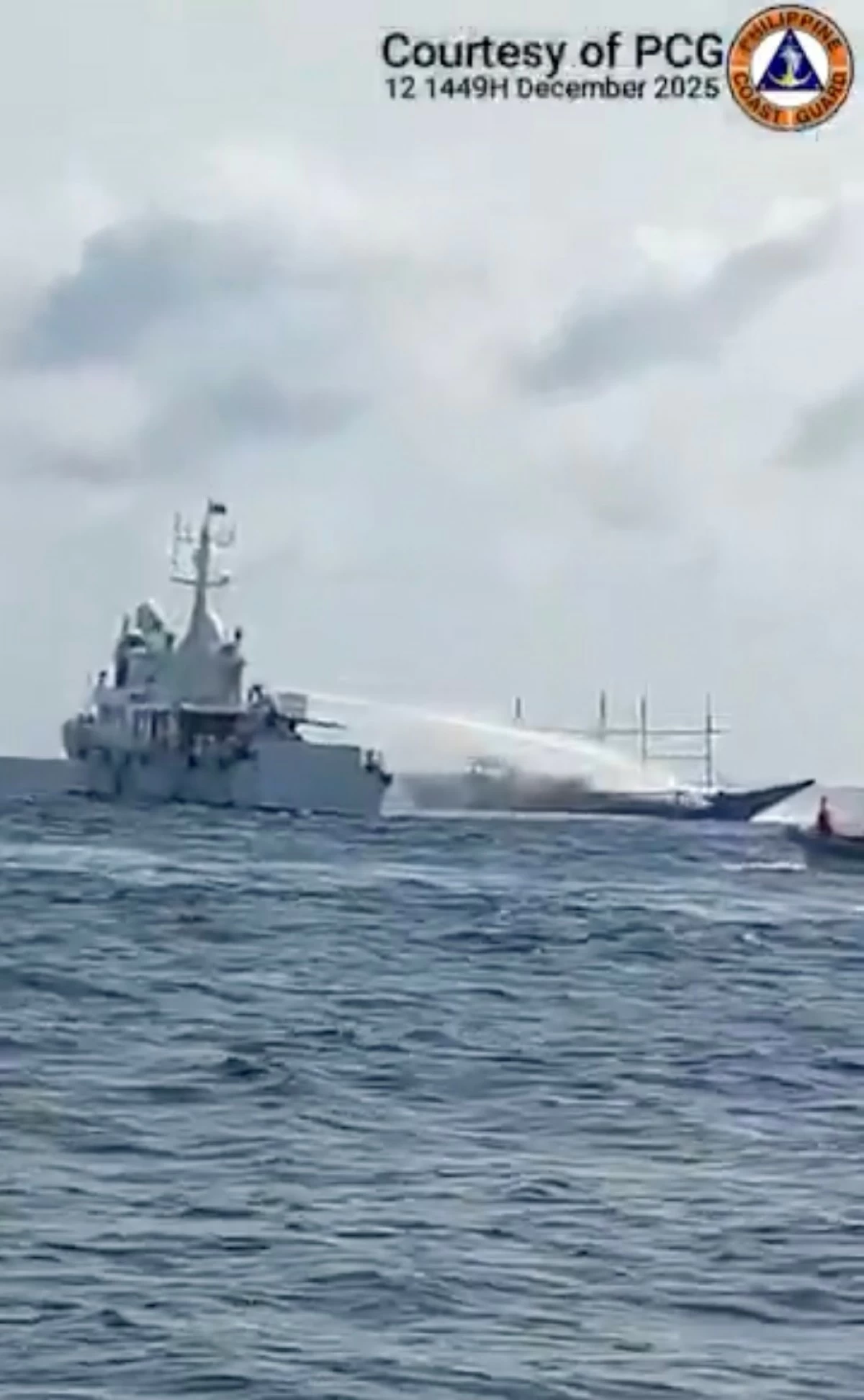
A China Coast Guard vessel fires a water cannon at a much-smaller Filipino fishing boat near Escoda Shoal in the West Philippine Sea on Dec. 12, 2025. Three fishermen were hurt in the incident. (Courtesy of Philippine Coast Guard)
The Philippine Navy (PN) has long been providing security for Filipino fishermen in the West Philippine Sea (WPS) even before President Marcos Jr. directed the Philippine Coast Guard (PCG) to boost protection amid China’s continued presence in the area, Armed Forces of the Philippines (AFP) Chief Gen. Romeo Brawner Jr. said on Wednesday, Dec. 17.
Brawner said the PN’s role is part of a broader and sustained “whole-of-nation” approach to counter what the AFP describes as China’s “illegal, coercive, aggressive, and deceptive” or ICAD activities at sea.
“This has been our directive even before the President issued his guidance. The Philippine Navy has been doing this for a long time already,” Brawner said when asked for a comment about Marcos’ directive to the PCG to deploy additional ships in strategic locations in the WPS to ensure the safety of Filipino fishermen as they cast their nets in traditional fishing grounds.
The military chief stressed that Chinese actions in the WPS are no longer viewed as gray zone operations, or actions below the threshold of traditional armed conflict, but are called “what they really are.”
“We no longer refer to these as gray zone activities. We call their actions for what they really are: illegal, coercive, aggressive, and deceptive. Our response remains a whole-of-nation approach which is why the PCG, BFAR [Bureau of Fisheries and Aquatic Resources], and the Philippine Navy are all involved,” Brawner said.
Under the setup, frontline support for fishermen is led by the Bureau of Fisheries and Aquatic Resources (BFAR) which directly accompanies fishing boats during their expeditions in the WPS to provide food, water, and fuel.
The PCG operates next to ensure maritime law enforcement and immediate response while the PN maintains a protective presence farther out.
“If you notice, whenever our fisherfolk sail, BFAR is closest to them. The Coast Guard follows, and not far away, the Philippine Navy is there, watching,” Brawner said.
He emphasized that while the PN may not always be visible, it remains on standby as part of a layered maritime security. He said the PN is working alongside the PCG and BFAR within clearly defined roles.
“We cannot say that the Philippine Navy is not there. What I want to emphasize is that all these agencies have their respective roles,” he said.
China continues to assert expansive claims in the WPS, an area well within the Philippines’ exclusive economic zone, despite the 2016 arbitral ruling that invalidated Beijing’s claims.
Last Dec. 12, three Filipino fishermen were injured when China Coast Guard (CCG) and maritime militia vessels fired water cannon, conducted dangerous maneuvers, and cut the anchor lines of their fishing boats near Escoda (Sabina) Shoal.