ADVERTISEMENT

Slight uptick seen in rice imports with new government guidelines on flexible tariffs

Published Dec 16, 2025 01:03 pm
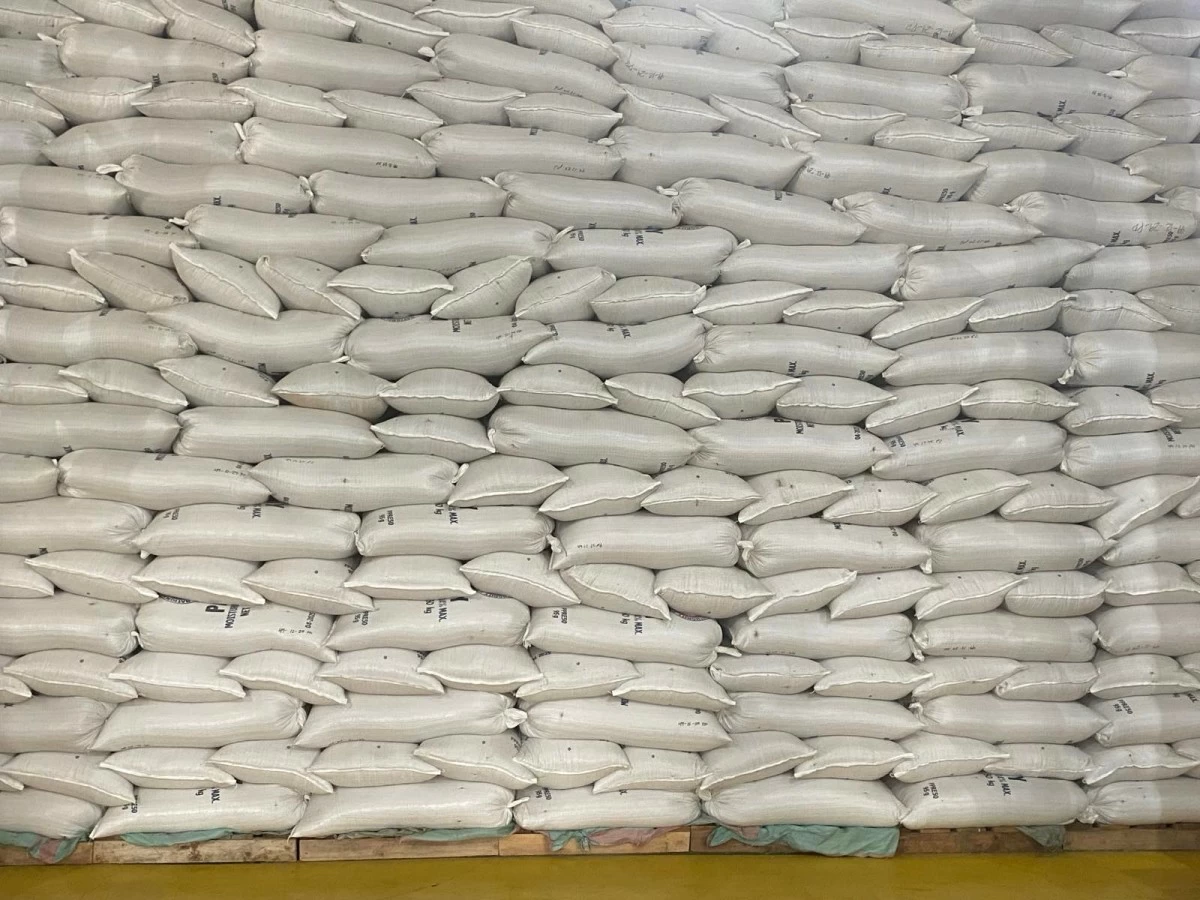
(Dexter Barro II/MANILA BULLETIN)
The country’s rice imports are expected to increase slightly by 100,000 metric tons (MT) to 300,000 MT next year as part of the government’s ongoing effort to limit purchases from abroad and help lift farmgate prices of palay, supported by a projected record-high harvest.
Meanwhile, the government’s economic managers have agreed to raise tariffs on rice imports from the current 15 percent to 20 percent by Jan. 1, 2026.
Agriculture Secretary Francisco Tiu Laurel said import volumes next year will likely range between 3.6 million MT and 3.8 million MT, a modest increase from this year’s projected total of 3.5 million MT. Imports this year are down from last year’s record-high of 4.81 million MT due to an import ban beginning in September.
The influx of cheaper foreign rice in the market was largely blamed for the sharp decline in farmgate prices of palay, severely limiting local farmers’ incomes.
Tiu Laurel said a policy to limit rice imports will remain in place next year through an industry-wide quantitative restriction (QR) of import volumes once the four-month import ban is lifted in January.
The Bureau of Plant Industry (BPI) is set to begin processing applications for sanitary and phytosanitary (SPS) import clearances to bring in only 500,000 MT of rice during the import window in the first two months. A bulk of 450,000 MT will be allotted to rice importers, with 50,000 MT reserved for government agencies in case market intervention is needed.
Tiu Laurel said all shipments must arrive in the country by mid-February to minimize potential impacts on palay prices at the start of the summer harvest. Rice imports during this window will be limited to 17 ports nationwide, including Manila, Batangas, Tacloban, Bacolod, Iligan, Cagayan de Oro, Davao, Zamboanga, Cebu, Iloilo, Capiz, Tagbilaran, Dumaguete, Subic, Calbayog, General Santos, and Tabaco.
The DA will issue specific allocations for the import windows in the first half of 2026, with the primary goal of limiting quantities to protect rice farmers.
“The importation will continue for the whole year. Now, its just a quantity, depending on the harvest season. Before harvest, the quantity should be small so that our palay can compete,” Tiu Laurel told reporters on Monday night, Dec. 15.
For the second half of the year, the Department of Agriculture (DA) plans to craft a new mechanism considering how much importers have purchased from local farmers. This mirrors the sugar industry scheme, which only allows traders who participate in voluntary purchases of locally produced raw sugar.
Tiu Laurel said these policies will initially rely on voluntary cooperation among stakeholders but will be institutionalized once the proposed Rice Industry and Consumer Empowerment (RICE) Act becomes law.
The United States Department of Agriculture (USDA) earlier estimated 5.5 million MT of rice would arrive in the country next year, but this is now unlikely. The DA’s import policy for 2026, along with anticipated import volumes, accounts for projected palay production of around 20.3 million MT—a record high, surpassing the 20.06 million MT achieved in 2023.
“Hopefully, we should achieve it because we have more irrigated lands. We'll have a better setup next year. So, we should attain that,” the DA Secretary said.
The agency had initially projected a record of around 20.46 million MT for this year but downgraded it to between 19.61 million MT and 19.89 million MT due to recent adverse weather.
Tiu Laurel also said the administration’s economic managers agreed to increase tariffs on rice imports to 20 percent from 15 percent by Jan. 1 next year. Malacañang will issue a formal announcement for the new rate.
“The tariff increase reflects several realities—the recent depreciation of the peso and the likelihood of higher global prices once the Philippines reenters the market,” he said.
The Economy and Development (ED) Council, chaired by President Ferdinand “Bongbong” Marcos Jr., approved last month a more gradual and flexible tariff adjustment on rice imports. Tariffs will be adjusted by five percentage points (ppt) per five-percent change in international palay prices, subject to a minimum of 15 percent and a maximum of 35 percent.
Higher tariffs will be imposed if global prices are low, while lower tariffs will apply when global prices rise.
ADVERTISEMENT
.most-popular .layout-ratio{ padding-bottom: 79.13%; } @media (min-width: 768px) and (max-width: 1024px) { .widget-title { font-size: 15px !important; } }

{{ articles_filter_1561_widget.title }}

.most-popular .layout-ratio{ padding-bottom: 79.13%; } @media (min-width: 768px) and (max-width: 1024px) { .widget-title { font-size: 15px !important; } }

{{ articles_filter_1562_widget.title }}

.most-popular .layout-ratio{ padding-bottom: 79.13%; } @media (min-width: 768px) and (max-width: 1024px) { .widget-title { font-size: 15px !important; } }

{{ articles_filter_1563_widget.title }}

{{ articles_filter_1564_widget.title }}

.mb-article-details { position: relative; } .mb-article-details .article-body-preview, .mb-article-details .article-body-summary{ font-size: 17px; line-height: 30px; font-family: "Libre Caslon Text", serif; color: #000; } .mb-article-details .article-body-preview iframe , .mb-article-details .article-body-summary iframe{ width: 100%; margin: auto; } .read-more-background { background: linear-gradient(180deg, color(display-p3 1.000 1.000 1.000 / 0) 13.75%, color(display-p3 1.000 1.000 1.000 / 0.8) 30.79%, color(display-p3 1.000 1.000 1.000) 72.5%); position: absolute; height: 200px; width: 100%; bottom: 0; display: flex; justify-content: center; align-items: center; padding: 0; } .read-more-background a{ color: #000; } .read-more-btn { padding: 17px 45px; font-family: Inter; font-weight: 700; font-size: 18px; line-height: 16px; text-align: center; vertical-align: middle; border: 1px solid black; background-color: white; } .hidden { display: none; }
function initializeAllSwipers() { // Get all hidden inputs with cms_article_id document.querySelectorAll('[id^="cms_article_id_"]').forEach(function (input) { const cmsArticleId = input.value; const articleSelector = '#article-' + cmsArticleId + ' .body_images'; const swiperElement = document.querySelector(articleSelector); if (swiperElement && !swiperElement.classList.contains('swiper-initialized')) { new Swiper(articleSelector, { loop: true, pagination: false, navigation: { nextEl: '#article-' + cmsArticleId + ' .swiper-button-next', prevEl: '#article-' + cmsArticleId + ' .swiper-button-prev', }, }); } }); } setTimeout(initializeAllSwipers, 3000); const intersectionObserver = new IntersectionObserver( (entries) => { entries.forEach((entry) => { if (entry.isIntersecting) { const newUrl = entry.target.getAttribute("data-url"); if (newUrl) { history.pushState(null, null, newUrl); let article = entry.target; // Extract metadata const author = article.querySelector('.author-section').textContent.replace('By', '').trim(); const section = article.querySelector('.section-info ').textContent.replace(' ', ' '); const title = article.querySelector('.article-title h1').textContent; // Parse URL for Chartbeat path format const parsedUrl = new URL(newUrl, window.location.origin); const cleanUrl = parsedUrl.host + parsedUrl.pathname; // Update Chartbeat configuration if (typeof window._sf_async_config !== 'undefined') { window._sf_async_config.path = cleanUrl; window._sf_async_config.sections = section; window._sf_async_config.authors = author; } // Track virtual page view with Chartbeat if (typeof pSUPERFLY !== 'undefined' && typeof pSUPERFLY.virtualPage === 'function') { try { pSUPERFLY.virtualPage({ path: cleanUrl, title: title, sections: section, authors: author }); } catch (error) { console.error('ping error', error); } } // Optional: Update document title if (title && title !== document.title) { document.title = title; } } } }); }, { threshold: 0.1 } ); function showArticleBody(button) { const article = button.closest("article"); const summary = article.querySelector(".article-body-summary"); const body = article.querySelector(".article-body-preview"); const readMoreSection = article.querySelector(".read-more-background"); // Hide summary and read-more section summary.style.display = "none"; readMoreSection.style.display = "none"; // Show the full article body body.classList.remove("hidden"); } document.addEventListener("DOMContentLoaded", () => { let loadCount = 0; // Track how many times articles are loaded const offset = [1, 2, 3, 4, 5, 6, 7, 8, 9, 10]; // Offset values const currentUrl = window.location.pathname.substring(1); let isLoading = false; // Prevent multiple calls if (!currentUrl) { console.log("Current URL is invalid."); return; } const sentinel = document.getElementById("load-more-sentinel"); if (!sentinel) { console.log("Sentinel element not found."); return; } function isSentinelVisible() { const rect = sentinel.getBoundingClientRect(); return ( rect.top < window.innerHeight && rect.bottom >= 0 ); } function onScroll() { if (isLoading) return; if (isSentinelVisible()) { if (loadCount >= offset.length) { console.log("Maximum load attempts reached."); window.removeEventListener("scroll", onScroll); return; } isLoading = true; const currentOffset = offset[loadCount]; window.loadMoreItems().then(() => { let article = document.querySelector('#widget_1690 > div:nth-last-of-type(2) article'); intersectionObserver.observe(article) loadCount++; }).catch(error => { console.error("Error loading more items:", error); }).finally(() => { isLoading = false; }); } } window.addEventListener("scroll", onScroll); });

Sign up by email to receive news.