







PIDS supports Low-Carbon Economy Act for climate resilience
Published Dec 16, 2025 02:51 pm


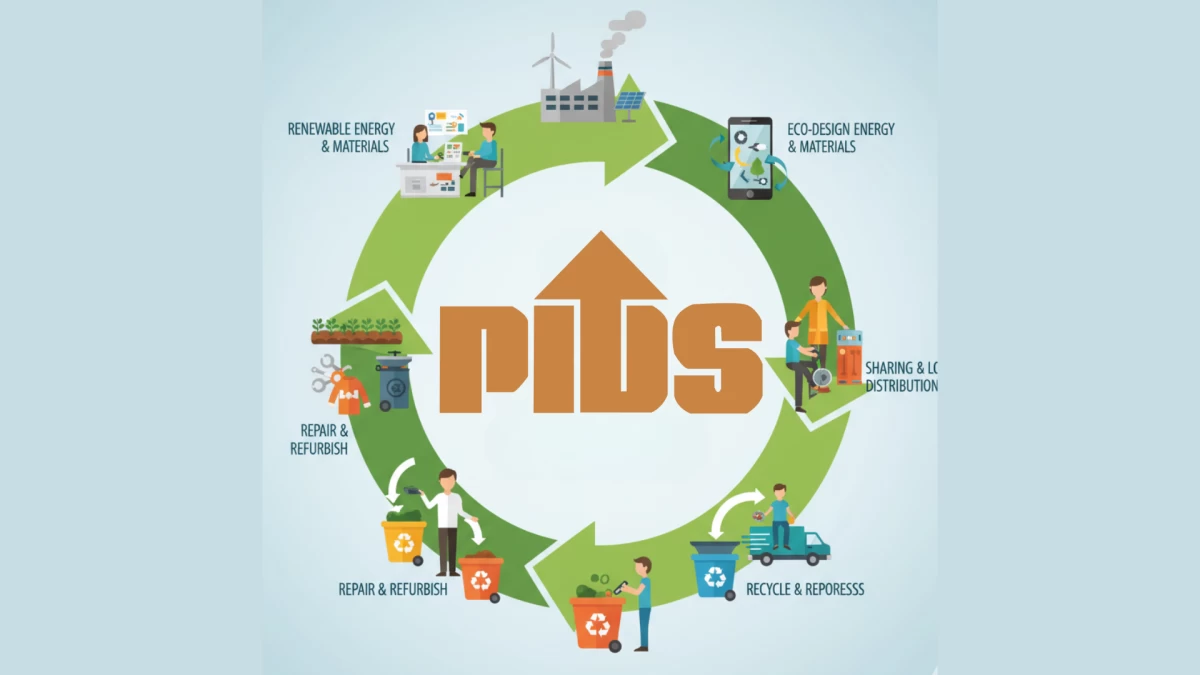
State-run policy think tank Philippine Institute for Development Studies (PIDS) is backing the Low-Carbon Economy Act, calling the country’s shift toward a low-carbon economy a crucial step for climate resilience and sustainable development.
In a Dec. 12 position paper, PIDS senior research fellow Sonny N. Domingo and research analyst Roselle F. Guadalupe said House Bill (HB) Nos. 2055, 2481, and 3685, collectively the Low-Carbon Economy Investment Act, offer forward-looking frameworks to boost investments in low-carbon initiatives through carbon pricing, decarbonization mechanisms, and climate governance reforms.
“These bills reinforce the Philippines’ nationally determined contribution (NDC) commitments under the Paris Agreement and support a just transition that balances economic growth with environmental integrity,” PIDS noted.
PIDS highlighted that the Philippines’ commitment to the United Nations Framework Convention on Climate Change (UNFCCC) is embodied in its NDC, which aims to cut and avoid 75 percent of emissions from 2020 to 2030, including 2.71-percent unconditional and 72.29-percent conditional commitments.
“The Philippine greenhouse gas inventory management and reporting system (PGHGIMRS), initially established under Executive Order (EO) No. 174, series of 2014, will be institutionalized under the leadership of the Climate Change Commission (CCC). Sectoral agencies, including the Department of Agriculture (DA), the Department of Energy (DOE), the Department of Environment and Natural Resources (DENR), and the Department of Transportation (DOTr), are designated to lead GHG inventories per sector, in collaboration with the Department of Science and Technology (DOST), the Department of Tourism (DOT), the Department of Public Works and Highways (DPWH), the Department of the Interior and Local Government (DILG), the Philippine Statistics Authority (PSA), local government units (LGUs), academe, the Department of Trade and Industry (DTI), and the Securities and Exchange Commission (SEC),” PIDS said.
As the lead agency, PIDS recommended that CCC submit an annual report on the status of GHG monitoring, while national and local government agencies follow proper standards for yearly recording and reporting. Sectoral and subnational annual reports should cover projections, assessments, and corrective measures and could be expanded to include climate change and disaster risk reduction and management (DRRM) updates.
“The proposed NDC Steering Committee, chaired by CCC, includes national agencies but lacks LGU and civil society organization (CSO)/sectoral representation,” the think tank noted, warning that this may limit inclusivity and local engagement. It also cautioned that overlapping bureaucratic platforms risk redundancy and called for clearer role delineation among institutions to prevent mandate overlap.
PIDS stressed that guidelines for allocating climate-related funds in the General Appropriations Act (GAA) should be established, with institutional plans and annual projections incorporated into the proposed reports. Local climate change action plans (LCCAPs) should be reviewed alongside LGUs’ local disaster risk reduction and management plans (LDRRMPs), comprehensive development plans (CDPs), and comprehensive land use plans (CLUPs) to ensure alignment and consistency.
The think tank added that institutionalizing climate change expenditure tagging (CCET), in coordination with CCC, the Department of Budget and Management (DBM), the DILG, and Office of Civil Defense (OCD), must harmonize spending for climate change mitigation and disaster risk management. It also recommended including the Department of Finance (DOF) and the Department of National Defense (DND) as oversight agencies to strengthen financial integrity and coordination.
PIDS further urged expanding the national integrated climate change database and information exchange system (NICCDIES) to include DRRM data and remain responsive with near real-time updates to ensure relevance and transparency.
“The bills prescribe multiple reporting requirements—PGHGIMRS GHG monitoring, CCET, NDC yearly report, possible sectoral and subnational reports, carbon trading status, UNFCCC report, enforcement and indemnification report, climate reinvestment fund report,” the think tank noted, stressing that these could be consolidated into a single comprehensive report with periodic updates, such as quarterly, to reduce overlap.
Effective sectoral and subnational implementation requires streamlined structures and robust capacity-building, PIDS added, noting that many LGUs still lack technical expertise, financial resources, and dedicated climate offices. Devolving additional climate functions under the Garcia-Mandanas ruling will require funding, technical assistance, and institutional support from CCC, the DBM, and the DILG to ensure meaningful local participation and sustained action.
“The provisions on decarbonization plans for covered enterprises encourage accountability, but thresholds and criteria for coverage must be clearly defined. Smaller enterprises that contribute to aggregate emissions may be overlooked unless sector-specific benchmarks or voluntary participation mechanisms are introduced,” PIDS said.
The think tank also recommended independent oversight and annual disclosure of fund allocations and performance for the decarbonization fund to prevent misuse and ensure that resources directly support measurable emission reductions and a just transition.
“The monitoring mechanisms, such as the monitoring, reporting, and verification (MRV) systems, are strong implementing mechanisms, yet their success depends on data quality, harmonized methodologies, and regular public disclosure,” PIDS noted, stressing that the bills should require open-access reporting to build public trust and enable civil society and academic participation in tracking progress.
Finally, PIDS emphasized that the bills should reinforce the principle of a just transition, ensuring that the shift to a low-carbon economy protects workers, communities, and industries most vulnerable to climate impacts and decarbonization. It urged integrating labor transition programs, skills retraining, and green jobs into the legislation to reduce displacement and promote inclusive growth.