






Manila Bulletin
 Philippines
Mindanao
Mangudadatu backs bill declaring Sultan Kudarat as coffee capital
Philippines
Mindanao
Mangudadatu backs bill declaring Sultan Kudarat as coffee capital
Philippines
Mindanao
Mangudadatu backs bill declaring Sultan Kudarat as coffee capital
Mangudadatu backs bill declaring Sultan Kudarat as coffee capital
Published Dec 16, 2025 11:57 am


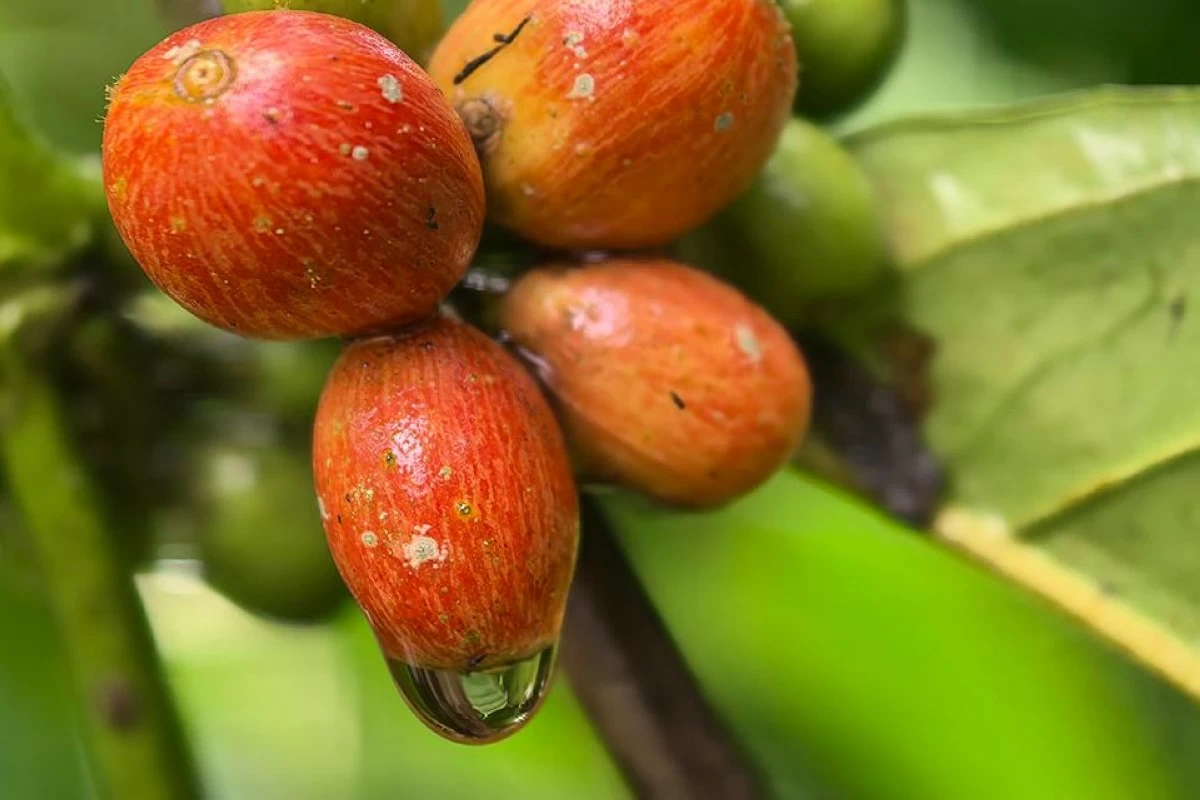
ROBUSTA cherries in Sultan Kudarat. (Keith Bacongco)
DAVAO CITY – Sultan Kudarat Gov. Datu Pax Ali Mangudadatu has vowed to boost the coffee industry in the province through strengthening the capacity of local farmers, crafting policies as well as providing vital infrastructures.
With these interventions, Mangudadatu believes that the province could achieve its goal of being officially recognized as the coffee capital of the Philippines.
In a press briefing, the governor is pushing for the passage of the pending bill in Congress, which seeks to establish the province as the coffee capital.
“The bill we are filing in Congress, through our representative, is geared towards making Sultan Kudarat officially as the coffee capital of the country. So that all programs of the national government will prioritize Sultan Kudarat when it comes to coffee, such as providing fertilizers or building farm-to-market roads,” Mangudadatu told reporters.
As the province is currently the top coffee producer in the country, the governor said that the government should provide all necessary support and upgrade existing facilities.
Mangudadatu particularly cited the need to put up more post-harvest facilities along with processing facilities.
Data from the Philippine Coffee Industry Roadmap 2021-2025 showed that least 35 percent or about 22,000 tons of the total coffee production in the country is from the Soccsksargen region in 2020.
About 85 percent of the region’s production come from the province of Sultan Kudarat while the rest are from Cotabato province, South Cotabato, Sarangani, and General Santos City.
The region has over 27,000 hectares of coffee plantation, at least 20,000 of which is in Sultan Kudarat.
Under House Bill 390, which was filed by Sultan Kudarat first district Rep. Princess Rihan Sakaluran, it seeks to establish a center that will prioritize cutting-edge research and address key production concerns such as post-harvest handling, pest and disco control, and soil health.
The bill also seeks to host capacity-building programs and technical training, while promoting collaboration between farmers, researchers, and industry players to uplift practices across the value chain.
Sakaluran noted that the measure also calls for the integration of advanced technologies and marketing innovations, alongside institutional linkages with government agencies, academia, and the private sector. “These strategies are essential for expanding domestic productivity and elevating the Philippines' coffee profile on the global stage.”
Mangudadatu said that the aim of officially declaring the province as coffee capital is part of the long-term plan of the provincial government.
He acknowledged the support from other legislators, even those who are not from the region, for pushing for strengthening of the coffee industry in the province.
Among those he cited was Sen. Panfilo Lacson who filed Senate Bill 1556 early this month that seeks to establish a Philippine national coffee industry development program.
The bill – Philippine National Coffee Industry Development Act of 2025 – seeks to establish a national framework that will accelerate the development of the coffee industry, create a National Coffee Board, strengthen every link of the value chain, improve the country's competitiveness, and reduce heavy reliance on imported coffee.
Mangudadatu believes that once enacted, it could help boost the coffee industry in Sultan Kudarat.
“It’s one thing that we have a law. It’s another thing when that law is executed and felt by our constituents,” he said.
While there are already existing programs and infrastructure in the local coffee industry, the governor believes that enacting a law to officially declare the province as coffee capital could provide more benefits to the local farmers.