

ADVERTISEMENT

How this teacher designed a headwrap for cancer patients

What is the story behind Kusog?

Published Dec 16, 2025 08:26 am

At A Glance

  • Kusog isn't about hiding hair loss. It's about not letting illness decide how you see yourself.
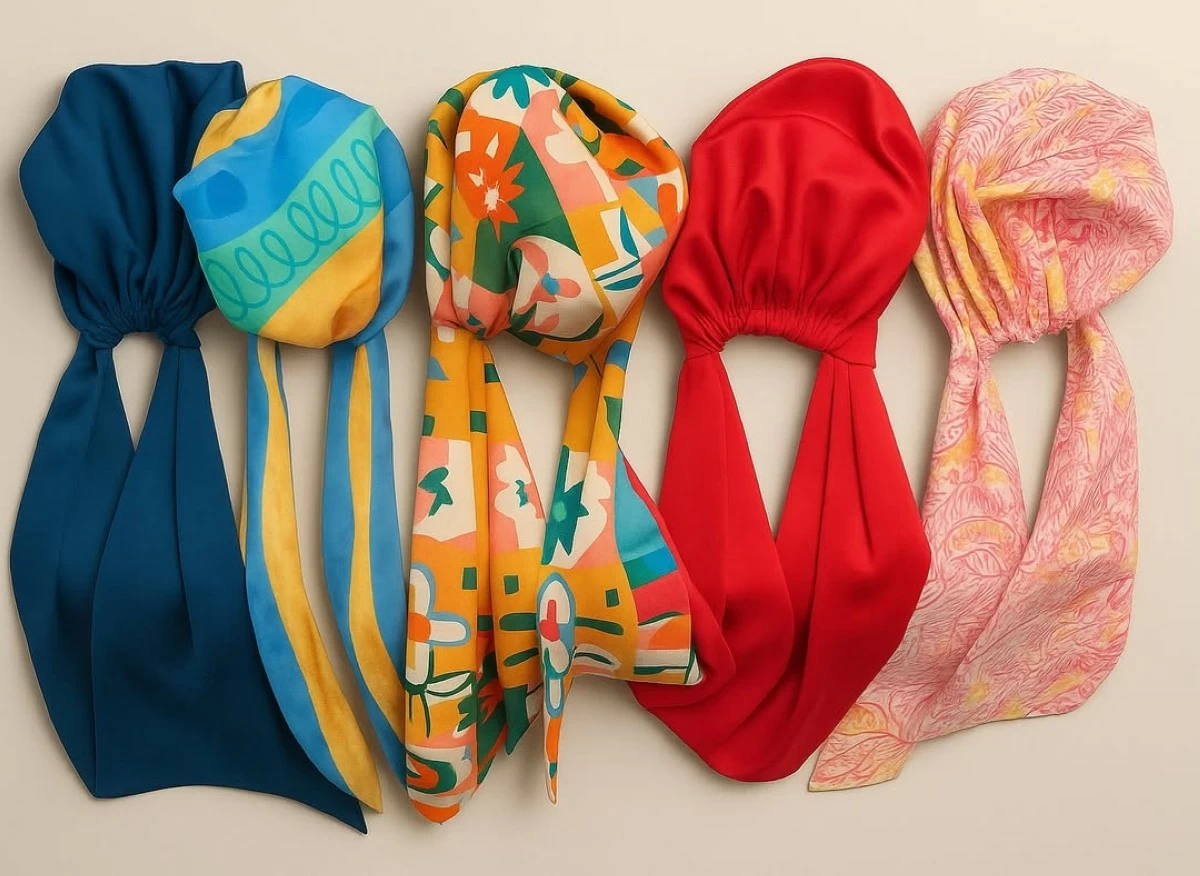
BOLD AND COLORFUL Celine designed these headwraps as a way to cope with her hairloss from chemotherapy.
The first time Celine Cornejo walked into my clinic, I noticed two things: her warm energy and her easy laugh. She was one of those patients who made the consultation feel like catching up with a friend. Over time, that’s exactly what she became—a long-time friend, and eventually, my kumare.
So when I learned about her diagnosis early this year, it hit differently. This wasn’t just another case. This was Celine—jolly, beautiful Celine—now facing Stage IV breast cancer with bone metastases.
She’s a mom of three and spent over a decade teaching preschool and creating educational YouTube videos as “Teacher Celine.” Then a routine check-up changed everything. The question that hit her hardest, she later shared, was the one any mother would ask: Will my kids grow up without me?
After the shock passed, she made a decision. She would share her journey publicly—not for sympathy, but because she thought it might help others going through the same thing. “I’m ready now,” she wrote during Breast Cancer Awareness Month. “I hope it helps me and others heal—emotionally, mentally, physically, and spiritually.”
Then she tied a scarf around her head and kept going.
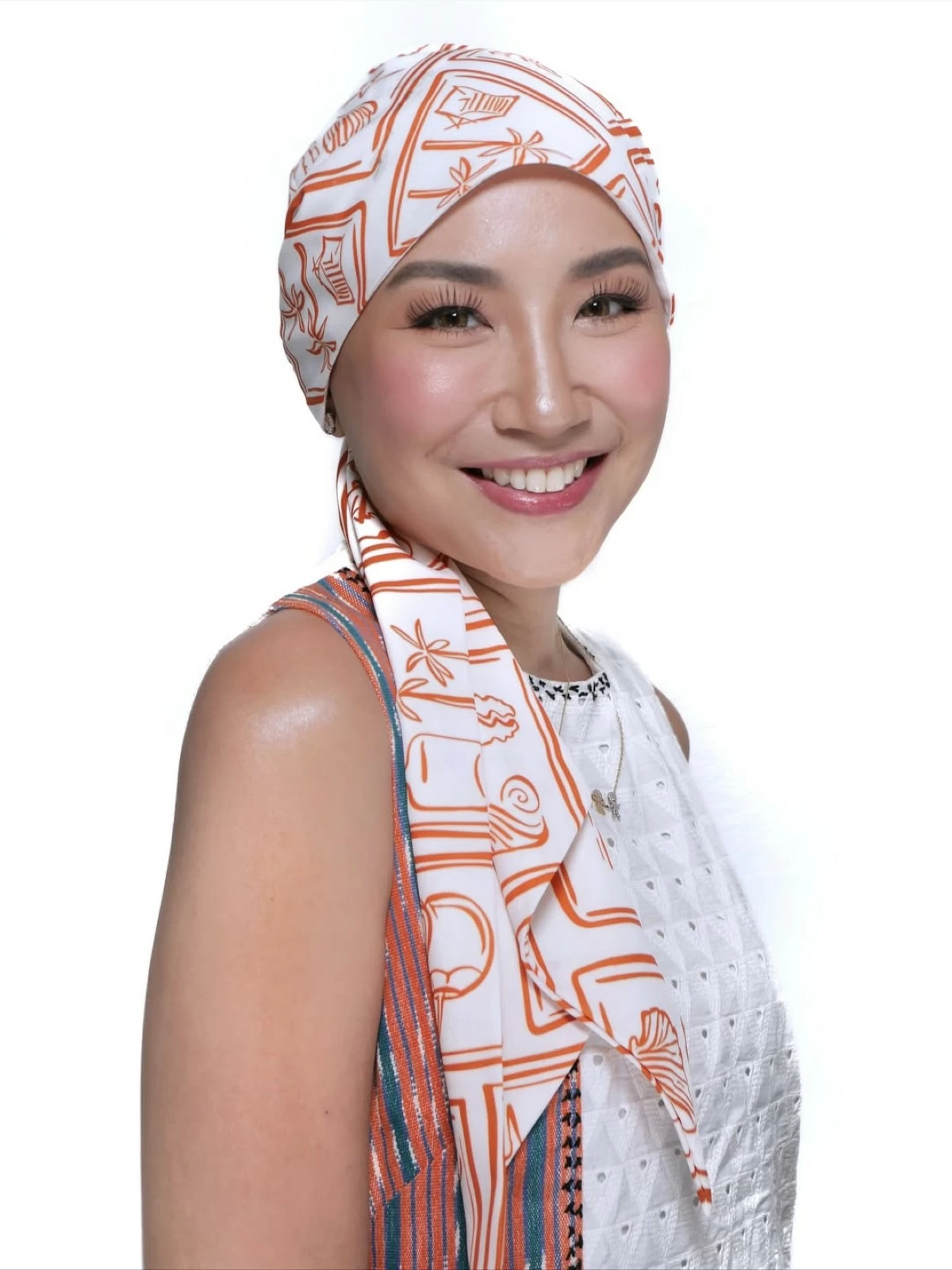
Celine Cornejo
Celine Cornejo
Why hair loss hits so hard
Here’s something worth knowing: For many cancer patients on chemotherapy, hair loss is the most dreaded side effect. Not the nausea. Not the exhaustion. The hair. Studies show that 58 percent of patients rank it as their top fear, and some have considered skipping treatment entirely because of it.
As a dermatologist, I’ve seen how much hair matters to a person’s sense of self. It’s not vanity. It’s identity. When it falls out, as it did for Celine during chemo, it can feel like losing part of who you are.
So instead of hiding, she adapted. She started wrapping her head in colorful scarves. It became a daily ritual. Her “armor,” she calls it—a way to face the day on her own terms.
How Kusog started
What began as a personal coping mechanism turned into something bigger. Friends noticed her headwraps. Followers asked where they could get one. So Celine launched Kusog, her own line of headwraps.
The name means “strength” in Cebuano. It fits.
“Born from pain turned into purpose,” she says. Each wrap, she adds, is “more than just fabric—it’s a symbol of strength for every woman fighting, healing, or finding herself again.”
On her Instagram (@kusog.ph), she posts tutorials on how to tie the wraps, shares stories from other women wearing them, and builds what’s become a small but growing community. There’s no pity in it. Just practicality and solidarity.
Small rituals, big impact
Celine once mentioned that on her worst chemo days, just tying her wrap and putting on lipstick helped her feel normal. A small act that said, I’m still here. I’m still me.
That stuck with me. In medicine, we spend so much time treating disease that we sometimes forget the person living inside it. Celine’s story is a reminder that healing isn’t only about scans and bloodwork. It’s also about dignity. About choosing how you show up, even when your body isn’t cooperating.
Knowing Celine the way I do, her humor, her faith, her stubborn optimism, I’m not surprised she turned her struggle into something that could help others. That’s just who she is.
Kusog isn’t about hiding hair loss. It’s about not letting illness decide how you see yourself.
And watching my kumare lead that charge? That makes me proud.

Related Tags

Health and Wellbeing celine cornejo
ADVERTISEMENT
.most-popular .layout-ratio{ padding-bottom: 79.13%; } @media (min-width: 768px) and (max-width: 1024px) { .widget-title { font-size: 15px !important; } }

{{ articles_filter_1561_widget.title }}

.most-popular .layout-ratio{ padding-bottom: 79.13%; } @media (min-width: 768px) and (max-width: 1024px) { .widget-title { font-size: 15px !important; } }

{{ articles_filter_1562_widget.title }}

.most-popular .layout-ratio{ padding-bottom: 79.13%; } @media (min-width: 768px) and (max-width: 1024px) { .widget-title { font-size: 15px !important; } }

{{ articles_filter_1563_widget.title }}

{{ articles_filter_1564_widget.title }}

.mb-article-details { position: relative; } .mb-article-details .article-body-preview, .mb-article-details .article-body-summary{ font-size: 17px; line-height: 30px; font-family: "Libre Caslon Text", serif; color: #000; } .mb-article-details .article-body-preview iframe , .mb-article-details .article-body-summary iframe{ width: 100%; margin: auto; } .read-more-background { background: linear-gradient(180deg, color(display-p3 1.000 1.000 1.000 / 0) 13.75%, color(display-p3 1.000 1.000 1.000 / 0.8) 30.79%, color(display-p3 1.000 1.000 1.000) 72.5%); position: absolute; height: 200px; width: 100%; bottom: 0; display: flex; justify-content: center; align-items: center; padding: 0; } .read-more-background a{ color: #000; } .read-more-btn { padding: 17px 45px; font-family: Inter; font-weight: 700; font-size: 18px; line-height: 16px; text-align: center; vertical-align: middle; border: 1px solid black; background-color: white; } .hidden { display: none; }
function initializeAllSwipers() { // Get all hidden inputs with cms_article_id document.querySelectorAll('[id^="cms_article_id_"]').forEach(function (input) { const cmsArticleId = input.value; const articleSelector = '#article-' + cmsArticleId + ' .body_images'; const swiperElement = document.querySelector(articleSelector); if (swiperElement && !swiperElement.classList.contains('swiper-initialized')) { new Swiper(articleSelector, { loop: true, pagination: false, navigation: { nextEl: '#article-' + cmsArticleId + ' .swiper-button-next', prevEl: '#article-' + cmsArticleId + ' .swiper-button-prev', }, }); } }); } setTimeout(initializeAllSwipers, 3000); const intersectionObserver = new IntersectionObserver( (entries) => { entries.forEach((entry) => { if (entry.isIntersecting) { const newUrl = entry.target.getAttribute("data-url"); if (newUrl) { history.pushState(null, null, newUrl); let article = entry.target; // Extract metadata const author = article.querySelector('.author-section').textContent.replace('By', '').trim(); const section = article.querySelector('.section-info ').textContent.replace(' ', ' '); const title = article.querySelector('.article-title h1').textContent; // Parse URL for Chartbeat path format const parsedUrl = new URL(newUrl, window.location.origin); const cleanUrl = parsedUrl.host + parsedUrl.pathname; // Update Chartbeat configuration if (typeof window._sf_async_config !== 'undefined') { window._sf_async_config.path = cleanUrl; window._sf_async_config.sections = section; window._sf_async_config.authors = author; } // Track virtual page view with Chartbeat if (typeof pSUPERFLY !== 'undefined' && typeof pSUPERFLY.virtualPage === 'function') { try { pSUPERFLY.virtualPage({ path: cleanUrl, title: title, sections: section, authors: author }); } catch (error) { console.error('ping error', error); } } // Optional: Update document title if (title && title !== document.title) { document.title = title; } } } }); }, { threshold: 0.1 } ); function showArticleBody(button) { const article = button.closest("article"); const summary = article.querySelector(".article-body-summary"); const body = article.querySelector(".article-body-preview"); const readMoreSection = article.querySelector(".read-more-background"); // Hide summary and read-more section summary.style.display = "none"; readMoreSection.style.display = "none"; // Show the full article body body.classList.remove("hidden"); } document.addEventListener("DOMContentLoaded", () => { let loadCount = 0; // Track how many times articles are loaded const offset = [1, 2, 3, 4, 5, 6, 7, 8, 9, 10]; // Offset values const currentUrl = window.location.pathname.substring(1); let isLoading = false; // Prevent multiple calls if (!currentUrl) { console.log("Current URL is invalid."); return; } const sentinel = document.getElementById("load-more-sentinel"); if (!sentinel) { console.log("Sentinel element not found."); return; } function isSentinelVisible() { const rect = sentinel.getBoundingClientRect(); return ( rect.top < window.innerHeight && rect.bottom >= 0 ); } function onScroll() { if (isLoading) return; if (isSentinelVisible()) { if (loadCount >= offset.length) { console.log("Maximum load attempts reached."); window.removeEventListener("scroll", onScroll); return; } isLoading = true; const currentOffset = offset[loadCount]; window.loadMoreItems().then(() => { let article = document.querySelector('#widget_1690 > div:nth-last-of-type(2) article'); intersectionObserver.observe(article) loadCount++; }).catch(error => { console.error("Error loading more items:", error); }).finally(() => { isLoading = false; }); } } window.addEventListener("scroll", onScroll); });

Sign up by email to receive news.