







DepEd highlights focus on stronger foundational learning
Published Dec 16, 2025 02:59 pm


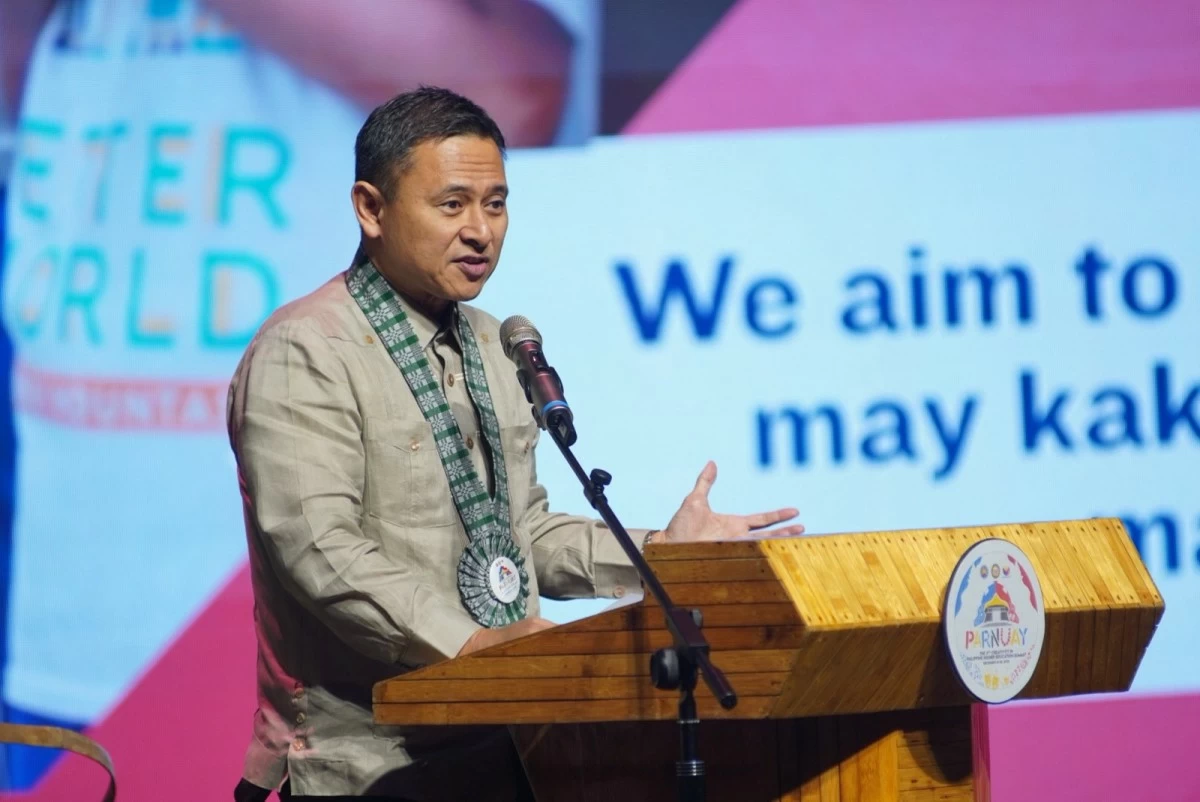
DepEd Secretary Sonny Angara (DepEd photo)
Recognizing that stronger foundational skills are key to achieving quality education, the Department of Education (DepEd) is strengthening reforms in basic education, particularly those focused on early grade levels.
“In DepEd, we have deliberately shifted our focus toward stronger foundational learning, which is a strong thrust of the President,” said DepEd Secretary Sonny Angara at the
Parnuay: The 3rd Creativity in Philippine Higher Education Summit in Batac, Ilocos Norte.
In a statement issued on Tuesday, December 16, Angara emphasized that creativity should be viewed as a core developmental asset, rather than a peripheral or extracurricular activity.
"This tells us that the imagination does not magically appear in adulthood," Angara said, noting that DepEd is deliberately reinforcing early childhood education, curriculum improvements, and partnerships that keep learning relevant and future-ready.
To nurture a generation of creative and work-ready Filipinos, as the Marcos administration positions creativity, culture, and skills development as key drivers of inclusive economic growth, Angara said DepEd is deliberately embedding creativity into the K to 12 curriculum by reinforcing foundational learning, expanding creative skills training, and improving pathways from basic education to higher education and employment.
Strengthening foundations, aligning skills with jobs
Angara said DepEd’s reforms prioritize early childhood education, curriculum improvements, and partnerships that keep learning relevant to the evolving demands of the workforce.
He cited stronger alignment of Senior High School tracks with industry needs, expanded collaboration with the private sector, and closer coordination with the Commission on Higher Education (CHED) and the Technical Education and Skills Development Authority (TESDA).
These efforts, he said, aim to create clearer education-to-employment pathways, particularly in creative and digital industries.
Government data show the creative economy generated more than P1.9 trillion in economic output in 2024, highlighting the importance of developing talent pipelines that begin in public schools.
Creative industries beyond Metro Manila
Angara pointed to Ilocos Norte as a working model of how education, culture, and local governance can translate creativity into economic value.
He cited initiatives such as Himala sa Buhangin, Inabel weaving, burnay pottery, and regional festivals as proof that creative industries can thrive outside Metro Manila when supported by policy and community-based talent development.
“This is proof that the creative industry is alive and well far beyond Metro Manila, shaping local economies and strengthening local identities,” he said.
Culture, education, and national development
Angara also credited First Lady Liza Araneta Marcos for championing culture and the arts as part of national development, citing the expansion of national museums and cultural spaces across the country.
He said these initiatives complement DepEd’s education reforms by preserving heritage while opening new opportunities for learners and educators.
“With these programs aligned, we shape a developmental arc from childhood to higher education to industry, where creativity is refined, not restricted,” Angara said, adding that the goal is to produce graduates who can confidently enter creative workplaces that contribute directly to economic growth.
Parnuay: The 3rd Creativity in Philippine Higher Education Summit is a three-day national gathering led by CHED that explores the role of performing and digital arts in education, culture, and the economy.
The event brings together CHED Chairperson Shirley C. Agrupis, TESDA Director General Jose Francisco “Kiko” Benitez, EDCOM 2 Executive Director Karol Mark Yee, and leaders from higher education institutions and the creative sector.