






Manila Bulletin
 Business
The Economy
Corruption scandal clouds outlook as Capital Economics slashes Philippine growth forecasts anew
Business
The Economy
Corruption scandal clouds outlook as Capital Economics slashes Philippine growth forecasts anew
Business
The Economy
Corruption scandal clouds outlook as Capital Economics slashes Philippine growth forecasts anew
Corruption scandal clouds outlook as Capital Economics slashes Philippine growth forecasts anew
Published Dec 16, 2025 12:17 pm


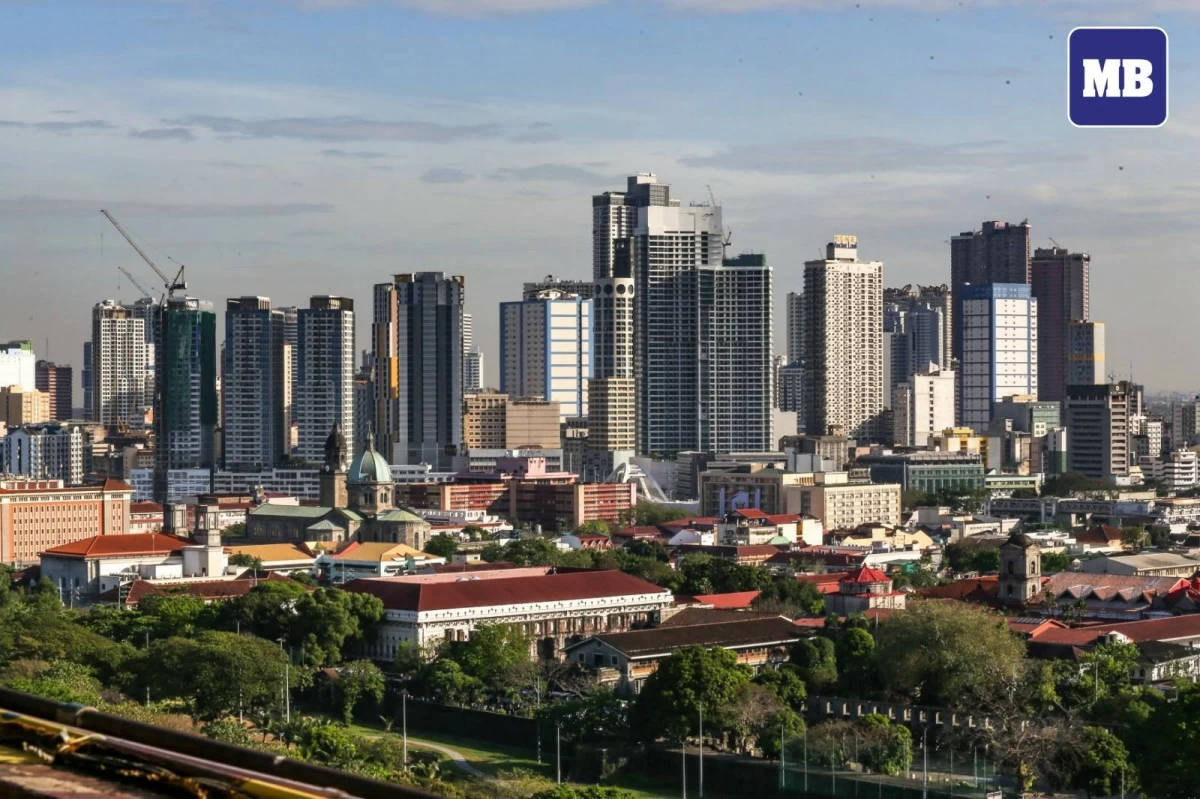
The infrastructure corruption scandal is expected to weigh on the Philippines’ economic outlook, with growth once again seen falling below the government’s targets this year and in the next two years, after London-based think tank Capital Economics lowered its forecasts in the wake of the controversy.
“The ongoing corruption scandal will drag on prospects in the Philippines,” said Capital Economics senior Asia economist Gareth Leather in a Dec. 15 report.
The drag from the corruption scandal has prompted the think tank to cut its Philippine gross domestic product (GDP) growth forecasts to four percent for 2025, 4.5 percent for 2026, and five percent for 2027—well below the government’s targets of 5.5 to 6.5 percent for this year and six to seven percent for 2026 to 2028.
To recall, Capital Economics last month cut its 2025 GDP growth forecast for the Philippines to five percent, following a dismal four-percent expansion in the third quarter—the economy’s slowest pace in 4.5 years.
“The corruption scandal that has engulfed the Philippines will continue to weigh on growth over the coming quarters and is likely to trigger a few more rate cuts from the BSP [Bangko Sentral ng Pilipinas],” the think tank said.
Last week, the BSP reduced its policy rate by 25 basis points (bps), bringing it down to 4.5 percent.
Capital Economics forecasts the key interest rate to be reduced by another 25 bps in the first quarter of 2026 and to decline further to four percent by the end of next year.
The think tank also projected year-on-year consumer price index (CPI) inflation at 1.6 percent in 2025, 2.3 percent in 2026, and three percent in 2027.
The latest Philippine Statistics Authority (PSA) data showed headline inflation averaged 1.6 percent during the first 11 months of 2025, below the government’s two- to four-percent target range of annual consumer price increases deemed manageable and conducive to economic growth.
Capital Economics noted that the economy slowed sharply in the third quarter, with GDP rising just 0.4 percent quarter-on-quarter—the weakest performance outside the Covid-19 pandemic since 2018.
It added that the slowdown was largely due to a 13.3-percent decline in government construction, following the postponement of several projects amid ongoing corruption investigations.
“Survey data point to further weakness in the fourth quarter, and the effects of the corruption scandal will continue to be felt over the coming quarters,” the think tank said, stressing that “one risk is that there is fresh unrest, although evidence from other EMs [emerging markets] is mixed when it comes to the impact of protests on activity.”
“A bigger concern is that uncertainty weighs on private investment. At the same time, greater scrutiny may cause individuals to avoid purchases of pricey assets such as land or property,” it said, noting that the government could also clamp down further on public spending projects.
The think tank added that the country’s export sector is struggling, contributing to a widening current account deficit. It also noted that the peso has fallen to record lows and is likely to face further downward pressure.
However, the latest BSP data showed that the faster growth in exports than in imports narrowed the current account deficit to $12.5 billion in the first nine months of the year, from $13.34 billion in the same period last year. Meanwhile, the peso fell to a historic low of ₱59.22 against the United States (US) dollar on Dec. 9.
Capital Economics also emphasized that domestic demand is mixed across the region. Household consumption, supported by low inflation and recent rate cuts, is expected to grow steadily. Strong export growth and the reorientation of supply chains are also likely to boost investment. However, it stressed, “One exception is the Philippines, where the ongoing corruption scandal is weighing on business confidence.”
“We expect Thailand and the Philippines to underperform,” the think tank added. “Further easing is on the cards in economies where growth will remain softer—notably the Philippines and Thailand.”
On a positive note, the think tank noted that “[Philippine] authorities have pledged to restart infrastructure projects, which would reverse some of the recent weakness in the economy. There is also plenty of scope for monetary policy support. With inflation set to stay low, we think the central bank will deliver a couple more interest rate cuts.”
“All told, we have penciled in GDP growth of 4.5 percent in 2026, which lies below the consensus,” the think tank said.