







AFP, US patrol WPS as tension with China heats up anew
Published Dec 16, 2025 11:21 am
|
Updated Dec 16, 2025 01:15 pm


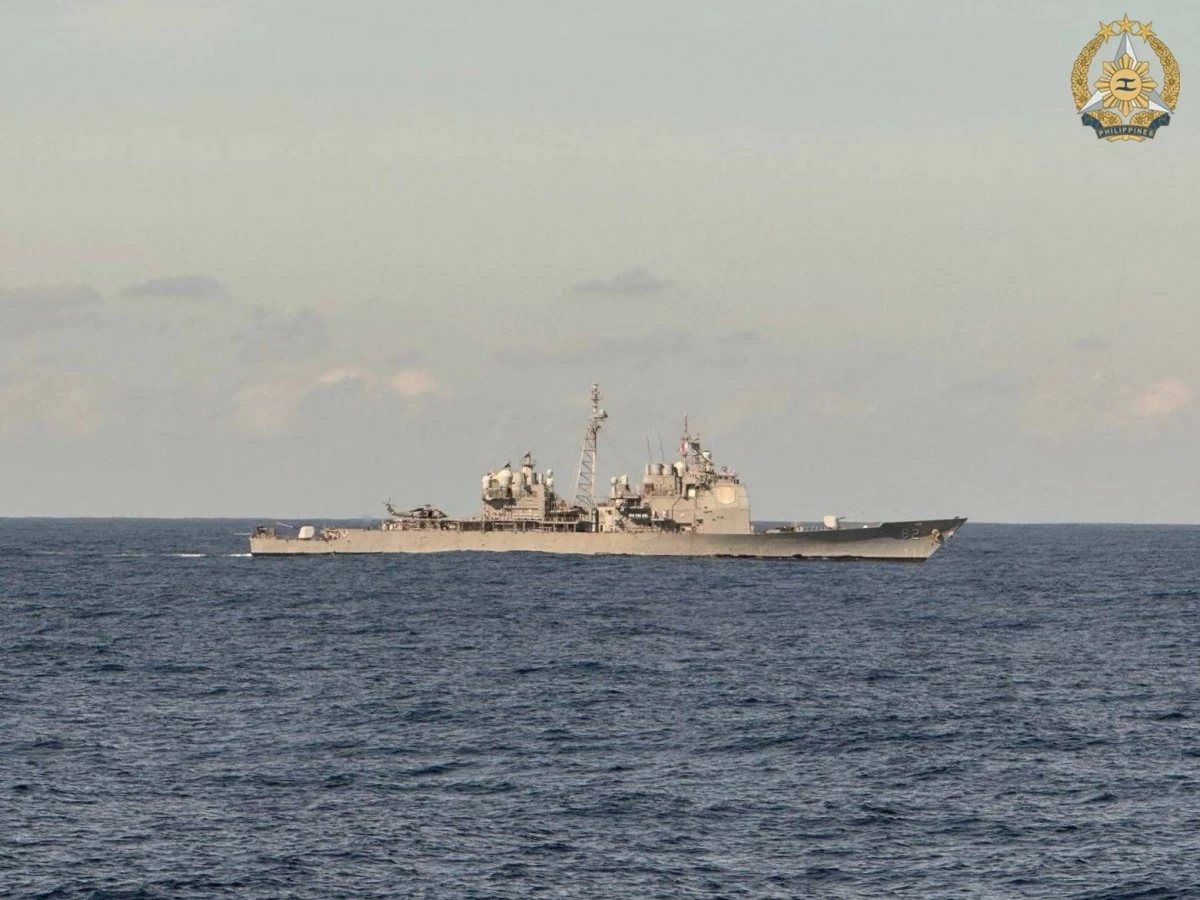
USS Robert Smalls (CG-62) sails in the West Philippine Sea on Dec. 15, 2025 during the 10th Philippines–United States bilateral Maritime Cooperative Activity (MCA). (Photo: Armed Forces of the Philippines)
The Armed Forces of the Philippines (AFP) and the United States Indo-Pacific Command (US Indopacom) carried out their 10th bilateral Maritime Cooperative Activity (MCA) in the West Philippine Sea (WPS) to deepen operational coordination amid flaring tension in disputed waters with China.
The latest drill was held within the country’s exclusive economic zone (EEZ), specifically west of Zambales, on Monday, Dec. 15, according to AFP chief information officer Col. Xerxes Trinidad.
Trinidad said the activity came less than a week after the ninth MCA on Dec. 9 to 10, which signals a quicker tempo in joint maritime activities between the two allied forces.
The AFP deployed the guided missile frigate BRP Miguel Malvar (FFG-06), which was supported by three A-29B Super Tucano aircraft, three FA-50 fighter jets, and a Sokol search-and-rescue helicopter.
Meanwhile, the US Indopacom fielded the guided-missile cruiser USS Robert Smalls (CG-62), an MH-60R Seahawk helicopter, and a P-8A Poseidon maritime patrol aircraft.
The joint activities included communications and maritime domain awareness drills, coordinated maneuvering exercises, a simulated raid, and low-pass fly-bys by both AFP and US Indopacom aircraft.
Filipino naval commandos from Naval Special Warfare Unit-9 also conducted a visit, board, search, and seizure exercise aboard the BRP Miguel Malvar.
Trinidad said the exercise highlighted the growing ability of AFP and US forces to operate together in complex maritime environments, particularly in areas critical to regional sea lanes.
“The successful conduct of the 10th Bilateral MCA underscores the shared commitment of the Philippines and the United States to uphold a rules-based Indo-Pacific region in accordance with international law,” he said on Tuesday, Dec. 16.
Further, the AFP noted that the MCA affirmed support for the regional freedom of navigation and overflight which contributes to maritime security, regional stability, and a free and open Indo-Pacific.
The move is seen to deter China’s growing presence and control in the South China Sea.
Last Dec. 12, three Filipino fishermen were injured when China Coast Guard (CCG) and militia vessels fired water cannon, conducted dangerous maneuvers, and cut the anchor lines of their fishing boats near Escoda (Sabina) Shoal in the Spratly Islands.