







What a 'New Philippines' must mean, AFP at 90
Published Dec 15, 2025 12:05 am
|
Updated Dec 14, 2025 03:56 pm


BARRACKS AND STRATEGY
On Dec. 21, the Armed Forces of the Philippines (AFP) marks 90 years since its formal establishment under the National Defense Act of 1935—an anniversary also recognized nationally as Armed Forces Day. This year’s theme, “Matatag na Sandatahang Lakas, Sandigan ng Bagong Pilipinas,” is more than a ceremonial slogan. It is an invitation to define what the “Bagong Pilipinas” should stand for, and what kind of national character can carry us there.
We have heard the familiar patriotic triad for decades—Makadiyos, Makatao, Makalikasan. Important, yes, but over-repeated to the point of becoming safe, decorative rhetoric . A “new Philippines,” if it is to be real, must represent something sharper: the moral and institutional courage to confront what is crushing the nation from within.
A new Philippines is not just a dream—it is a test of governance
A new Philippines should not be defined by adjectives alone—inclusive, resilient, sustainable. Those are goals. But the defining challenge of our time is whether we can still build a state that functions honestly.
Yes, we face geopolitical pressure in the West Philippine Sea, and sovereignty there remains non-negotiable. Yet that struggle—however critical—has already been described at length in policy papers, headlines, and public speeches. It should be remembered, defended, and carried in our national agenda, but it is not where the newness of “Bagong Pilipinas” will be proven. The more decisive battlefield is internal: corruption.
Corruption is the crisis that will decide our future
We live today in a moment where people increasingly feel the bureaucracy has been compromised. Trust in institutions has thinned. Ordinary Filipinos see accountability as selective, justice as slow, and public office too often as a private business.
A country cannot modernize while bleeding credibility. It cannot stand proudly among nations if its own citizens assume the system is rigged. It cannot ask for sacrifice from the people when the people suspect that sacrifice will be stolen.
This is why the “new Philippines” must mean clean government, enforced accountability, and the restoration of institutional trust—not as a slogan, but as a lived national discipline.
Why the AFP matters in this moment
If the question is: What institution still has the credibility and disciplined structure to help tilt the nation back toward integrity?—many Filipinos will answer: the AFP.
Not because the military is perfect, but because it is built on foundations that other sectors have struggled to sustain.
1) Constitutional mandate.
The AFP exists not for faction or personality, but for the republic. Its legitimacy is anchored in the Constitution and the civilian state it protects. That mandate gives the AFP a unique national role: to safeguard the continuity of lawful government and the integrity of the nation itself.
2) Professionalism forged by discipline.
Military life is a daily education in restraint, chain of command, rule-bound conduct, and accountability under the Articles of War. Professionalism in the AFP is not an aspiration—it is a system enforced through training, evaluation, and consequences. That culture is precisely what a corruption-weary country needs to see again, in practice, not just in promise.
3) Leadership shaped by meritocracy.
From junior officers to top commanders, advancement requires competitive schooling, mandatory career courses, balanced assignments (tactical and administrative), and exposure across geography and mission environments. In plain terms: the AFP’s leadership pipeline is one of the strictest merit-based filters still operating in the country. It is a national asset, and it sets an example that public service can still be earned, not bought.
AFP as a stabilizing moral example—not a political actor
Here lies the crucial distinction. The AFP’s strength is not in seizing political space, but in holding the moral and professional line while the political space reforms itself.
The military can help address the corruption crisis by:
• Setting the standard of clean, disciplined service;
• Living its core values (courage, loyalty, honor, integrity, and sacrifice) in visible ways;
• Refusing to let professionalism decay into convenience;
• Maintaining unity in mission rather than in personalities.
When society sees a stable institution that polices itself, rewards merit, and places country above self, it reawakens hope that the government can be rebuilt.
That is why the AFP is a “Sandigan”—a pillar. Not because it replaces civilian governance, but because its conduct makes good governance possible again.
In moments of political tension, there is always the temptation for sectors—frustrated, impatient, or embittered—to pull the military into partisan games. This is dangerous.
The civil sector must never call on, pressure, or manipulate the AFP to withdraw support from a duly constituted government.
The short-term thrill of destabilization is never worth the long-term wreckage it brings. Once the chain of constitutional order snaps, every cause becomes a pretext, every grievance becomes a weapon, and the republic becomes hostage to whoever shouts loudest.
History teaches: political crises are survivable; constitutional breakdown is not.
A “new Philippines” is one that reforms through law, not through rupture.
What the 90th anniversary should remind us of
Ninety years of service means the AFP has stood through war, insurgency, disaster, political transitions, and modernization. Its story is not only about battles won—it is about discipline sustained and republic defended across generations.
So on this 90th anniversary, “Bagong Pilipinas” should mean:
• A nation that restores trust through accountability;
• A bureaucracy that rediscovers honor as a requirement, not a decoration;
• Leadership that returns to merit, competence, and service;
• Citizens who demand reform without endangering constitutional stability;
• An AFP that remains matatag, united, and professional—the steady hand that helps the republic stand upright while it cleans its own house.
Matatag na Sandatahang Lakas, Sandigan ng Bagong Pilipinas is therefore not just a theme for a parade. It is a blueprint for national survival. The Philippines will be “new” not when we say new words, but when we finally carry out the hard old task we keep postponing: ending corruption by rebuilding institutional character.
And in that defining struggle, the AFP’s example—constitutional, disciplined, and merit-driven—may be the strongest compass we have left.
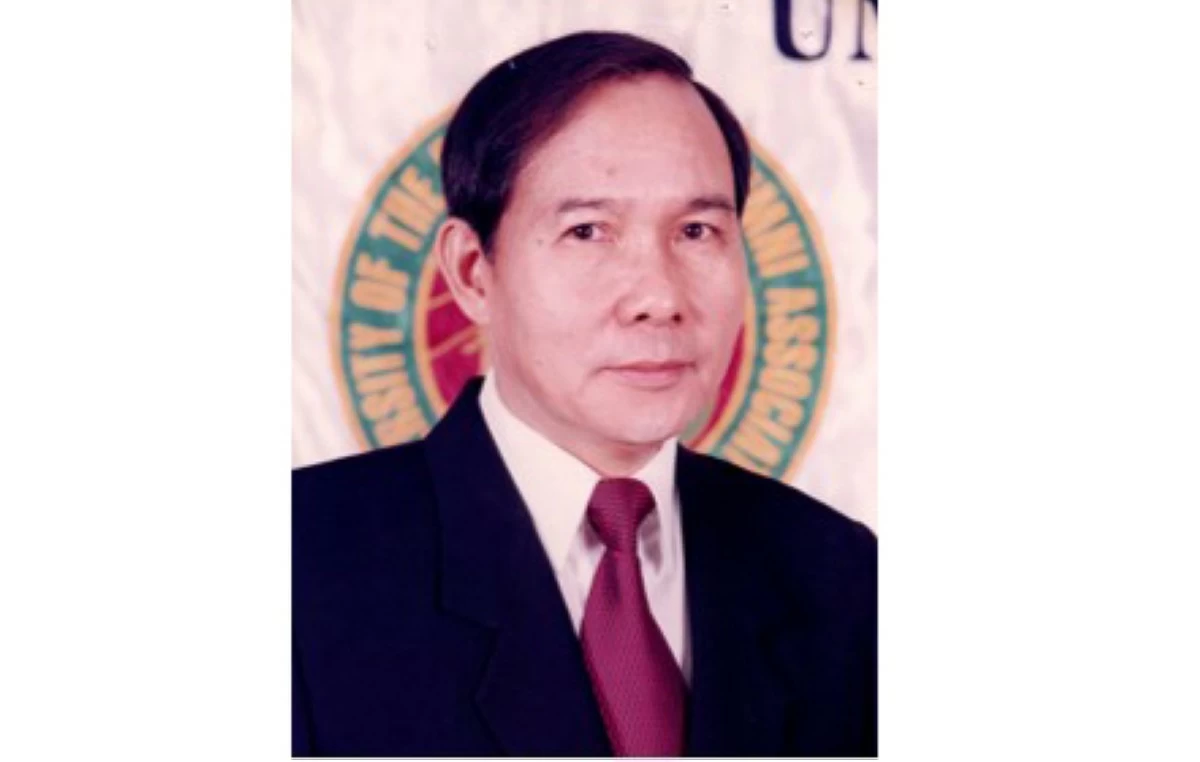
(Lt. Gen. Jaime S. de los Santos served with distinction as a military professional, 42nd Commanding Gen. Philippine Army, 1st Force Commander, UN Multi-National Peacekeeping Force in East Timor, former member, UP Board of Regents and Professorial Lecturer II (part-time), UP-Diliman.)