







Transitional Justice and Reconciliation
Published Dec 15, 2025 12:05 am
|
Updated Dec 14, 2025 03:53 pm


PEACE BY PEACE
I recently attended the Doha Forum in Qatar, where leaders, mediators, and peace practitioners from around the world gathered to confront a sobering reality: the crises that nations face today are far more complex, layered and interconnected.
I joined Supreme Court Associate Justice Japar Babay Dimaampao, Prof. Miriam Coronel Ferrer, and Philippine Ambassador to Qatar Mardomel Celo D. Melicor at the peace forum. The core message that resonated among the delegates was that governance, mediation, and diplomacy must effectively adapt to emerging realities to successfully ride the massive wave of change sweeping across the globe.
A recurring message across the panels was that sustainable peace requires more than just ceasefires or political settlements; it demands that we address deep-seated grievances. Justice must be integral to the solution—a sentiment captured perfectly by the Doha Forum’s theme, 'Justice in Action: Beyond Promises to Progress.
Moreover, mediation must go beyond the silencing of the guns of war. It must instead be anchored on the history, identity and dignity of the victims of conflict. In essence, peace must be built on truth.
As I listened to these conversations in Doha, I could not help but reflect on our own peace journey in the Philippines, particularly in the Bangsamoro. What the international community is calling for is exactly what we have been striving to do here at home for decades.
Last Dec. 9 marked another major milestone in the Bangsamoro peace process with the launching of the Transitional Justice and Reconciliation (TJR) Roadmap by the Government of the Philippines and the Moro Islamic Liberation Front (MILF) in Camp Darapanan.
The event was a powerful affirmation that we have chosen to use mediation, justice, and moral courage in building lasting peace. It demonstrated that long-lasting peace cannot be achieved through peace accords or institutions alone.
Peacebuilding must be sustained by our nation' s willingness to confront painful truths and to heal wounds that have been passed over generations.
The TJR Roadmap underpins the commitments made under the Comprehensive Agreement on the Bangsamoro. It recognizes that normalization is holistic in nature, covering not only decommissioning combatants or transforming their camps into zones of peace and development.
The roadmap is an acknowledgement of the historical injustices that have been committed against the Bangsamoro people: land dispossession, human rights violations, and systematic marginalization that have fueled decades of conflict.
MILF Peace Implementing Panel Chair Mohagher Iqbal articulated it best when he said during the launching that we cannot move forward unless we look back.
As a former soldier, I have witnessed firsthand how unresolved grievances can escalate into renewed conflict. Peacebuilding work can only succeed by learning from the lessons of the past.
What makes the TJR Roadmap significant is that it translates transitional justice from principle to practice. It operationalizes the “Dealing with the Past” framework—truth, justice, reparations, and guarantees of non-recurrence through concrete actions
This is the only way that Transitional Justice can move away from being an abstract concept into a tangible commitment that will ensure that the stories of the Bangsamoro are heard, their grievances recognized, and their healing prioritized.
However, a roadmap, no matter how well designed, needs to be built on firm institutional ground. In light of the major challenges we have faced over the years in the CAB’s implementation, policy and practice must be intertwined.
This is why I fully support the call of MILF Chairman Ahod “Al Haj Murad” Ebrahim for Congress to pass the law creating the National Transitional Justice and Reconciliation Commission for the Bangsamoro.
Institutionalizing transitional justice is not only about confronting old wounds but healing them fully. Further, it is about ensuring the consistency, credibility, and continuity of government policy by the succeeding administrations.
The roadmap’s two-track approach reflects both idealism and pragmatism. This dual approach is necessary so that TJR policies directly emanate from an institutional body whose main task is to address historical injustices.
The first track focuses on the legislative creation of the NTJRCB, while the second track focuses on the implementation of specific policies and programs as mandated by the CAB to address the roots of the conflict through existing agency mandates.
MILF TJR Technical Working Group Chair Amir Mawallil Dodo reminded us that justice can take many forms: return what can be returned, compensate what cannot, and when neither is possible, acknowledge and apologize.
This is why the TJR Roadmap needs the support of all stakeholders—from local governments, civil society, academe, religious community and international partners—in order to succeed and make an impact on the lives of people.
As emphasized repeatedly in Doha, peace processes can only succeed when they are inclusive, empathetic, and rooted in justice. Mediation is not merely about negotiation between opposing parties; it is about rebuilding trust between peoples.
The launch of the TJR Roadmap marks the beginning of a more challenging phase in the peace process that requires patience, humility, and sustained political will. But it is precisely this kind of work that gives peace its meaning.
If we are serious about securing a just, lasting, and inclusive peace in the Bangsamoro and in the entire country, we must keep transitional justice at the center of our efforts. It must serve as the moral core of our peace journey.
From Doha to Darapanan, the message is the same: peace built on justice endures.
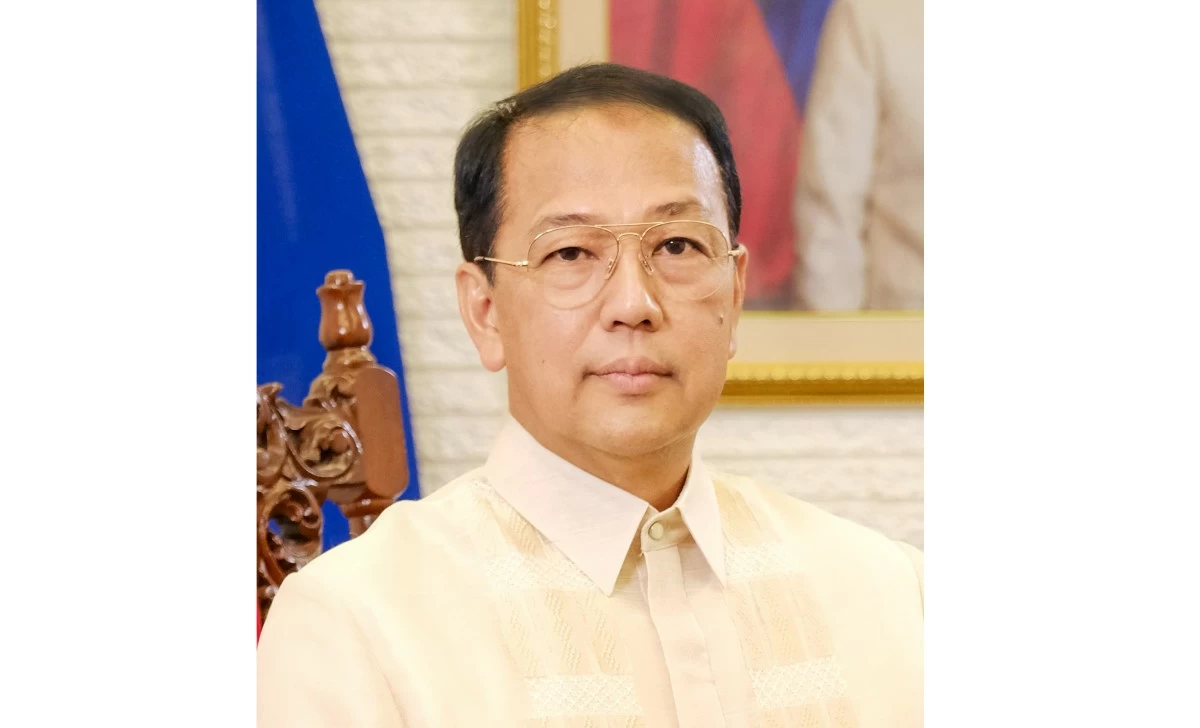
(Secretary Carlito G. Galvez, Jr., is the presidential adviser on peace, reconciliation and unity.)