







Safeguards urged for socialized housing land acquisition
Published Dec 15, 2025 01:50 pm


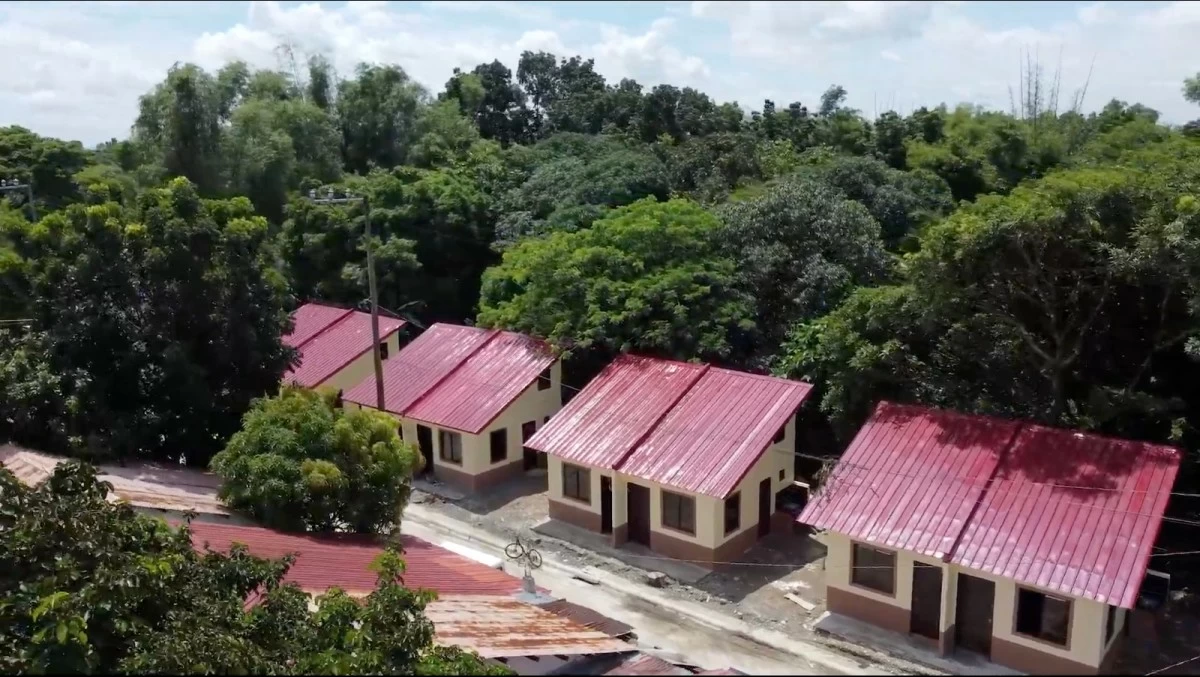
Affordable housing in Pandi, Bulacan
State-run policy think tank Philippine Institute for Development Studies (PIDS) is backing proposed amendments to the Urban Development and Housing Act (UDHA) of 1992 that would remove the priority order for acquiring land for socialized housing.
“We are in favor of the removal of priority on land for expropriation for socialized housing, but such expropriation should be conditional on two material conditions,” PIDS vice president Marife M. Ballesteros said in a Dec. 5 position paper on House Bill (HB) Nos. 2587 and 6281, which both aim to amend UDHA or Republic Act (RA) No. 7279, specifically Sections 9 to 11 of the law.
PIDS first highlighted “the presence of an approved city development plan or township development plan,” saying that any land expropriation for socialized housing should be evaluated within the framework of the city or township’s development plan, rather than isolating a specific property solely for housing purposes.
“The presence of an approved plan would enable the integration of contiguous lands and better infrastructure connectivity, allowing for a well-planned mixed-income housing development,” it added.
Following this first condition, the think tank recommended that “the second paragraph of Section 9 of the combined HBs 2587 and 6281 be deleted and replaced by a provision from the National Housing and Urban Development Framework that carries the principle of inclusive urban development and livable communities,” adding that this includes: “The expropriation of land shall be spatially and thematically integrated in approved city, township, or infrastructure development plans that include the development of integrated neighborhoods and sustainable communities, particularly for low-income households; and the implementation of alternatives and innovative solutions in addressing the housing needs of lower-income classes and vulnerable sectors, such as public rental housing, mixed-income, and mixed-use housing development.”
The second condition, PIDS stressed, “is that expropriated lands are to be held in public trusteeship,” noting that while expropriation is justified for public use, taking land for social housing with the intent to sell or transfer it to private entities could violate constitutional rights and undermine its purpose, as land valuation would then focus on economic rather than social value.
“Therefore, expropriation of lands for social housing should remain for public use,” the think tank said, stressing that the expropriated property “should be held in public trust for beneficial ownership.”
The think tank also said that local government units (LGUs) or appropriate government agencies can act as trustees and appoint trustors to oversee socialized housing beneficiaries.
“The expropriated land is taken out of the real estate market and speculative forces, thus minimizing the displacement of low-income households from cities and urbanizing areas due to increasing commercialization. Keeping the land in public trust will enable the trustee to define the terms of development—whether rental or sale of housing units, but not land—consequently ensuring that poor and low-income families will have a place in the city in a sustainable manner,” it explained.
PIDS further said that “[the] government can also use zoning regulations to allocate land for socialized housing,” noting that LGUs or appropriate authorities can require township development plans to include areas for mixed-income housing.
It added that the national government (NG) and LGUs should ensure project plans, including infrastructure developments such as transit-oriented developments (TODs), incorporate mixed-income planning. The think tank said escrow funds from balanced housing regulations and other sources can help co-finance these socialized housing zones.
Finally, PIDS stressed that the government should take a comprehensive approach to urban and infrastructure projects, ensuring that existing low-income communities are included in, rather than excluded from, development plans.