






Manila Bulletin
 Philippines
National
Int'l community slams China's water cannon attack on Filipino fishermen
Philippines
National
Int'l community slams China's water cannon attack on Filipino fishermen
Philippines
National
Int'l community slams China's water cannon attack on Filipino fishermen
Int'l community slams China's water cannon attack on Filipino fishermen
Published Dec 15, 2025 03:06 pm


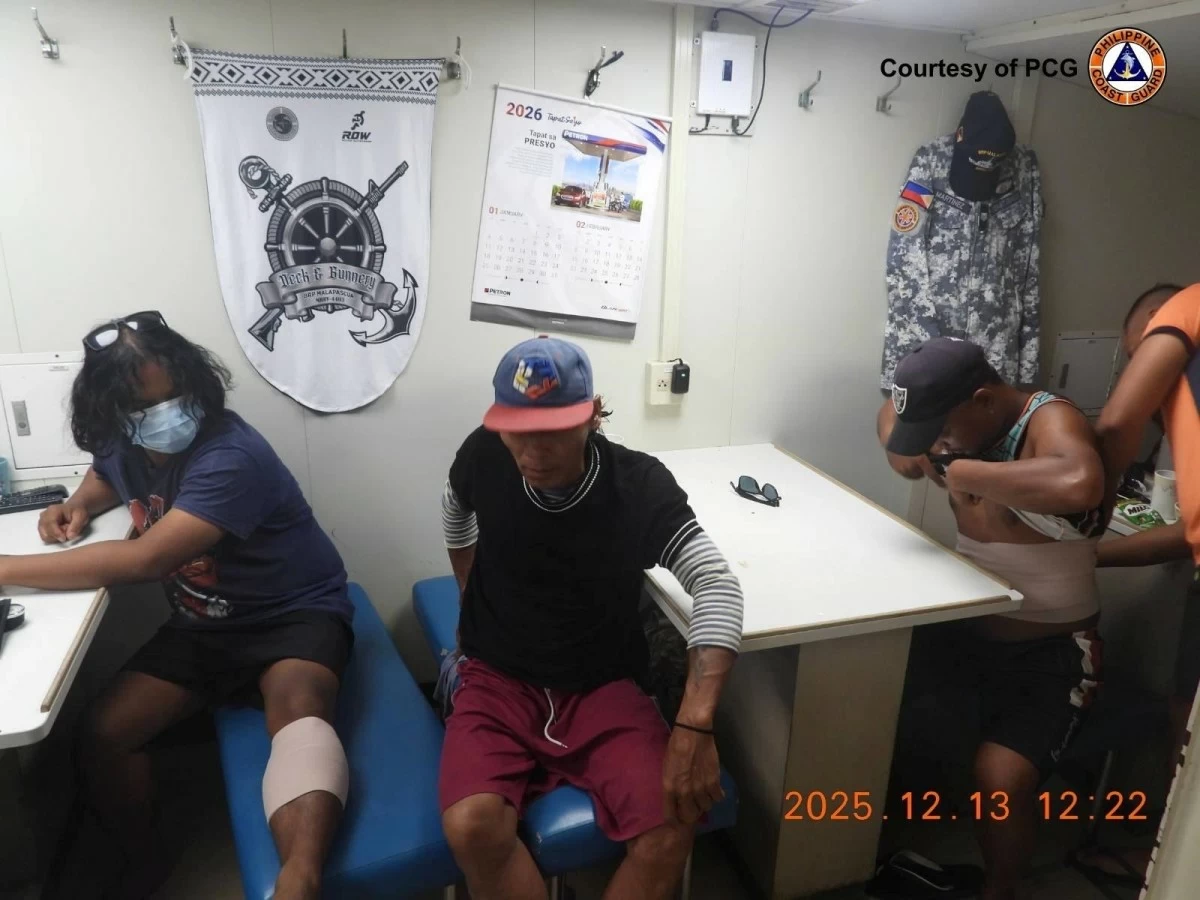
Three Filipino fishermen sustain injuries when Chinese vessels allegedly fired water cannon against their group near Escoda Shoal in the West Philippine Sea on Dec. 12, 2025. Philippine Coast Guard (PCG) personnel came to their rescue and reached the area on Dec. 12 despite also being harassed by Chinese vessels. (Courtesy of PCG)
Foreign countries have conveyed their concern over the recent water cannon attack made by China Coast Guard against Filipino fishermen in the West Philippine Sea.
The United States, Canada, Australia, and Germany have issued their respective statements over China's action at sea.
United States Ambassador to the Philippines MaryKay Carlson condemned China Coast Guard's "aggressive tactics" against Filipino fishermen near Escoda (Sabina) Shoal in the West Philippine Sea.
“China Coast Guard’s aggressive tactics—water cannoning and cutting anchor lines—against Filipino fishers at Sabina Shoal threaten lives and livelihoods," Carlson said in a statement.
"We strongly condemn these illegal actions and applaud the Philippine Coast Guard for aiding fishers and defending Philippines sovereign rights," the envoy added.
In a separate statement, US Department of State Principal Deputy Spokesperson Thomas Pigott condemned China's acts which endangered Filipinos fishing for their livelihood.
"The United States condemns China’s water cannoning and cutting of anchor lines of Filipino fishers close to Sabina Shoal in the South China Sea. These aggressive actions endangered Filipinos fishing for their livelihoods. We stand with our Philippine allies as they confront China’s provocative actions and increasingly dangerous tactics against its neighbors, which undermine regional stability," Pigott said.
German Ambassador to the Philippines Andreas Pfaffernoschke also expressed concern over the recent incident in the West Philippine Sea, saying Germany stands with the Philippines in protecting the rules-based international order.
"I am concerned about yesterday’s water-cannoning near Sabina Shoal against Filipino fishermen fishing in the EEZ (exclusive economic zone) of the Philippines just to make a living. Germany stands with the Philippines in protecting the rules-based international order," Pfaffernoschke said in a statement.
The Canadian Embassy in the country also conveyed its concern over the "aggressive actions" of Chinese Coast Guard against Filipino fishermen.
"Canada is seriously concerned by the Chinese Coast Guard's aggressive actions against Filipino civilian fishing vessels near Sabina Shoal. These actions jeopardize regional peace and stability. Disputes must be resolved peacefully and in accordance with international law,” Ambassador David Hartman said on Monday, Dec. 15.
Australia likewise expressed its support to the Philippines, calling for restraint and respect for international law.
"Australia is seriously concerned by the Chinese Coast Guard's aggressive actions against Philippine fishers near Sabina Shoal, which injured civilians and caused damage to vessels. We call for restraint and respect for international law, particularly UNCLOS (United Nations Convention on the Law of the Sea)," Ambassador Marc Innes-Brown said.
On Friday, Dec. 12, three fishermen were injured after Chinese vessels fired water cannons and carried out dangerous maneuvers against Filipino fishing boats near Escoda Shoal, the Philippine Coast Guard (PCG) revealed on Saturday.
According to PCG spokesperson Commodore Jay Tarriela, the fishermen were allegedly harassed by China Coast Guard (CCG) vessels with bow numbers “21559” and “21562” along with several Chinese maritime militia (CMM) boats.
High-pressure water cannon blasts injured the three fishermen and left them with bruises and open wounds while two fishing boats also sustained damage, Tarriela said.
'Direct and intentional attack'
According to civic leader Jose Antonio Goitia, the injury of three Filipino fishermen and the damage to two small fishing boats due to the incident "is no longer a matter of routine harassment in the West Philippine Sea, but a direct and intentional attack on peaceful Filipino civilians operating lawfully within their own waters."
He pointed out that the fishermen were not combatants, they posed no threat, and they were unarmed civilians fishing lawfully in waters long relied upon by Filipino communities.
"What occurred was not an accident. It was a deliberate act," said Goitia, Chairman Emeritus of four civic-oriented organizations, including the Alyansa ng Bantay sa Kapayapaan at Demokrasya (ABKD).
He stressed that the use of force against non-combatants strips away any claim of law enforcement or maritime regulation.
“This is no longer posturing,” Goitia added. “This is violence against Filipinos whose only act was to earn a living in their own sea.”
“The West Philippine Sea is not an abstract concept. It is where Filipinos work, live, and sustain their families," he further said.
NMC maintains China's presence in WPS is illegal
National Maritime Council (NMC) Undersecretary Alexander Lopez maintained that although Chinese vessels' presence in the West Philippine Sea is no longer new, it is still illegal.
"Unang-una, katulad ng aking nabanggit kanina, iligal ang kanilang presensiya sa Escoda Shoal at wala silang karapatang legal base sa international law na magpatupad ng tinatawag nilang control measures (First of all, as I mentioned earlier, their presence at Escoda Shoal is illegal, and they have no legal basis under international law to enforce what they call control measures)," Lopez said in a Bagong Pilipinas Ngayon interview on Monday.
He stressed that their presence in Escoda Shoal is a manifestation that their aim to occupy the West Philippine Sea continues.
"Ang kanilang presensya sa shoal ay nagpapahiwatig pa rin ng kanilang actually ambisyon na sakupin at angkinin ang kabuuan ng South China Sea kasama na rin dito ang West Philippine Sea na ang Pilipinas lang ang may tanging angking soberanya, karapatang soberanya at hurisdiksiyon sa buong West Philippine Sea na nasasakop o napapaloob sa 200 nautical mile exclusive economic zone ng ating bansa (Their presence at the shoal still indicates their actual ambition to occupy and claim the entirety of the South China Sea, including the West Philippine Sea. The Philippines alone holds exclusive sovereignty, sovereign rights, and jurisdiction over the entire West Philippine Sea that falls within or is encompassed by our country’s 200-nautical-mile exclusive economic zone)," Lopez said.
The NMC official also said that the presence of Chinese vessels in the West Philippine Sea depends on weather conditions, saying sometimes the number of Chinese vessels in the West Philippine Sea decreases, and at other times it increases.
He noted that they monitor, observe, and analyze these reported numbers on a daily basis.
"Sa ngayon ito ay masasabi ko ‘no hindi kabaha-bahala bagkus napi-predict naman natin ang mga pagbawas o pagdami ng mga barkong pandagat ng Tsina dito sa West Philippine Sea (At present, I can say that this is not alarming; rather, we are able to predict the decreases or increases in the number of Chinese maritime vessels here in the West Philippine Sea)," Lopez said.
Lopez also assured the public that the government will continue to defend the country's sovereign rights and jurisdiction over its territory in the West Philippine Sea through all legal and peaceful means.