ADVERTISEMENT

ICTSI spends ₱10 billion on Rio terminal to boost competitiveness

Published Dec 15, 2025 01:43 pm

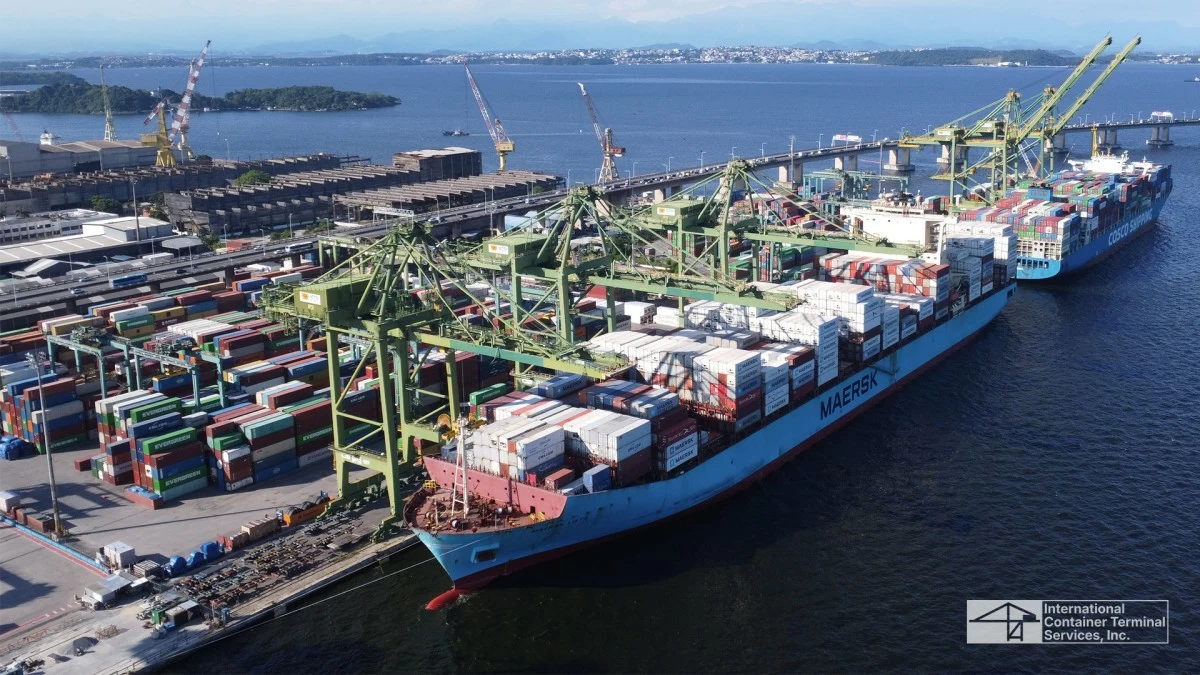
Razon-led International Container Terminal Services Inc. (ICTSI) is investing about ₱10.34 billion to expand and modernize the operations of the ICTSI Rio Brasil Terminal at the Port of Rio de Janeiro.

Minister of Ports and Airports Silvio Costa Filho announced the new private investment, which will be executed between 2025 and 2029. The project is set to increase the public terminal's operational capacity by 70.5 percent.

The expansion will boost capacity from the current 440,000 twenty-foot equivalent units (TEUs) per year to 750,000 TEUs per year, solidifying Rio de Janeiro's standing as a reference logistics hub for the Southeast and Midwest regions of Brazil.

ICTSI said the minister emphasized the importance of the project for the expansion, modernization, and greater competitiveness of the national port system, a key priority of his management.

The total R$948 million investment is comprised of approximately R$414.4 million for infrastructure works and R$533.5 million for the acquisition of state-of-the-art equipment.

The project encompasses unification and expansion of storage yards; rearrangement of buildings to optimize internal flows; acquisition of new container handling equipment; modernization of utility systems and electrical infrastructure.

“This is a transformative project that reinforces our commitment to Brazil and the expansion, efficiency and competitiveness of the national logistics chain,” said Roberto Lopes, Chief Executive Officer of Rio Brasil Terminal.

Lopes noted that this effort builds on their investments in the Rio-Minas and Rio-Suzano logistics corridors, where ICTSI has already invested more than R$190 million, with an emphasis on rail transport.

“Thus, we will not only expand the capacity of the Rio Brasil Terminal but also be able to help mitigate the congestion observed in the Port of Santos, better distributing the port demand in the country,” he added.

The expansion will enable the terminal to continuously operate large vessels on the full berth, including new Panamax and Post-Panamax vessels up to 366 meters in length (LOA) and with a capacity exceeding 13,000 TEUs.

This adaptation is essential to keep pace with the global trend of larger vessels calling on the east coast of South America. The first two new cranes, arriving mid-2026, are built to handle the world’s largest vessels, up to 400 meters long.

The Port of Rio de Janeiro has seen a significant and continuous increase in container handling, reflecting the growth of Brazilian foreign trade. Since 2023, the growth in volume has been substantial and is expected to continue in the coming years.

"This investment is essential for Rio to increase its efficiency and maintain its competitiveness and its ability to absorb part of the demand currently concentrated in Santos," Lopes said. "We are talking about a project that benefits not only the terminal but the entire economy of the Southeast and Midwest of Brazil."

With new cranes and additional yard capacity set to be available in 2026, ICTSI Rio is already offering this added capacity to customers.

Upon full implementation of the investments, the terminal is projected to operate with a capacity utilization of around 75 percent between 2029 and 2030.

Related Tags

Anders Kjeldsen Roberto Lopes International Container Terminal Services Inc. ICTSI Rio Brasil Terminal Silvio Costa Filho
ADVERTISEMENT
.most-popular .layout-ratio{ padding-bottom: 79.13%; } @media (min-width: 768px) and (max-width: 1024px) { .widget-title { font-size: 15px !important; } }

{{ articles_filter_1561_widget.title }}

.most-popular .layout-ratio{ padding-bottom: 79.13%; } @media (min-width: 768px) and (max-width: 1024px) { .widget-title { font-size: 15px !important; } }

{{ articles_filter_1562_widget.title }}

.most-popular .layout-ratio{ padding-bottom: 79.13%; } @media (min-width: 768px) and (max-width: 1024px) { .widget-title { font-size: 15px !important; } }

{{ articles_filter_1563_widget.title }}

{{ articles_filter_1564_widget.title }}

.mb-article-details { position: relative; } .mb-article-details .article-body-preview, .mb-article-details .article-body-summary{ font-size: 17px; line-height: 30px; font-family: "Libre Caslon Text", serif; color: #000; } .mb-article-details .article-body-preview iframe , .mb-article-details .article-body-summary iframe{ width: 100%; margin: auto; } .read-more-background { background: linear-gradient(180deg, color(display-p3 1.000 1.000 1.000 / 0) 13.75%, color(display-p3 1.000 1.000 1.000 / 0.8) 30.79%, color(display-p3 1.000 1.000 1.000) 72.5%); position: absolute; height: 200px; width: 100%; bottom: 0; display: flex; justify-content: center; align-items: center; padding: 0; } .read-more-background a{ color: #000; } .read-more-btn { padding: 17px 45px; font-family: Inter; font-weight: 700; font-size: 18px; line-height: 16px; text-align: center; vertical-align: middle; border: 1px solid black; background-color: white; } .hidden { display: none; }
function initializeAllSwipers() { // Get all hidden inputs with cms_article_id document.querySelectorAll('[id^="cms_article_id_"]').forEach(function (input) { const cmsArticleId = input.value; const articleSelector = '#article-' + cmsArticleId + ' .body_images'; const swiperElement = document.querySelector(articleSelector); if (swiperElement && !swiperElement.classList.contains('swiper-initialized')) { new Swiper(articleSelector, { loop: true, pagination: false, navigation: { nextEl: '#article-' + cmsArticleId + ' .swiper-button-next', prevEl: '#article-' + cmsArticleId + ' .swiper-button-prev', }, }); } }); } setTimeout(initializeAllSwipers, 3000); const intersectionObserver = new IntersectionObserver( (entries) => { entries.forEach((entry) => { if (entry.isIntersecting) { const newUrl = entry.target.getAttribute("data-url"); if (newUrl) { history.pushState(null, null, newUrl); let article = entry.target; // Extract metadata const author = article.querySelector('.author-section').textContent.replace('By', '').trim(); const section = article.querySelector('.section-info ').textContent.replace(' ', ' '); const title = article.querySelector('.article-title h1').textContent; // Parse URL for Chartbeat path format const parsedUrl = new URL(newUrl, window.location.origin); const cleanUrl = parsedUrl.host + parsedUrl.pathname; // Update Chartbeat configuration if (typeof window._sf_async_config !== 'undefined') { window._sf_async_config.path = cleanUrl; window._sf_async_config.sections = section; window._sf_async_config.authors = author; } // Track virtual page view with Chartbeat if (typeof pSUPERFLY !== 'undefined' && typeof pSUPERFLY.virtualPage === 'function') { try { pSUPERFLY.virtualPage({ path: cleanUrl, title: title, sections: section, authors: author }); } catch (error) { console.error('ping error', error); } } // Optional: Update document title if (title && title !== document.title) { document.title = title; } } } }); }, { threshold: 0.1 } ); function showArticleBody(button) { const article = button.closest("article"); const summary = article.querySelector(".article-body-summary"); const body = article.querySelector(".article-body-preview"); const readMoreSection = article.querySelector(".read-more-background"); // Hide summary and read-more section summary.style.display = "none"; readMoreSection.style.display = "none"; // Show the full article body body.classList.remove("hidden"); } document.addEventListener("DOMContentLoaded", () => { let loadCount = 0; // Track how many times articles are loaded const offset = [1, 2, 3, 4, 5, 6, 7, 8, 9, 10]; // Offset values const currentUrl = window.location.pathname.substring(1); let isLoading = false; // Prevent multiple calls if (!currentUrl) { console.log("Current URL is invalid."); return; } const sentinel = document.getElementById("load-more-sentinel"); if (!sentinel) { console.log("Sentinel element not found."); return; } function isSentinelVisible() { const rect = sentinel.getBoundingClientRect(); return ( rect.top < window.innerHeight && rect.bottom >= 0 ); } function onScroll() { if (isLoading) return; if (isSentinelVisible()) { if (loadCount >= offset.length) { console.log("Maximum load attempts reached."); window.removeEventListener("scroll", onScroll); return; } isLoading = true; const currentOffset = offset[loadCount]; window.loadMoreItems().then(() => { let article = document.querySelector('#widget_1690 > div:nth-last-of-type(2) article'); intersectionObserver.observe(article) loadCount++; }).catch(error => { console.error("Error loading more items:", error); }).finally(() => { isLoading = false; }); } } window.addEventListener("scroll", onScroll); });

Sign up by email to receive news.