






Manila Bulletin
 Lifestyle
Arts and Culture
Unearthing a master: The making of 'Sanso: Prized and Personal'
Lifestyle
Arts and Culture
Unearthing a master: The making of 'Sanso: Prized and Personal'
Lifestyle
Arts and Culture
Unearthing a master: The making of 'Sanso: Prized and Personal'
Unearthing a master: The making of 'Sanso: Prized and Personal'
By S.C. Fojas
Published Dec 13, 2025 01:45 am


At A Glance
- 'SANSÓ: Prized and Personal' ensures that the artist's story is preserved in its richest, most human form for generations to come.
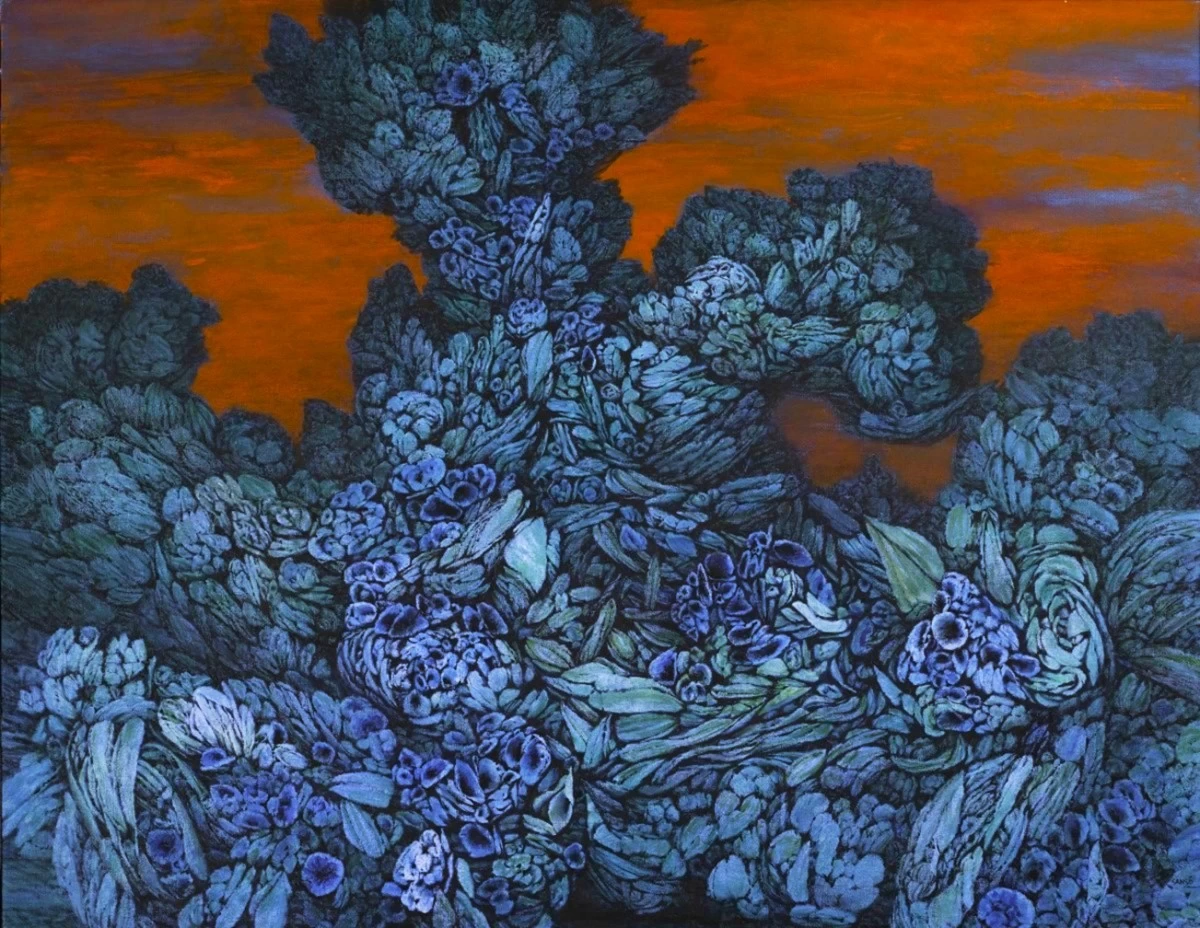
'EVANESCENT EXISTENCE' acrylic on canvas, 1970s
“Sansó: Prized and Personal,” a monumental 464-page volume from Fundacion Sansó, is not just a book… It is a comprehensive redefinition of the life and work of the Presidential Medal of Merit awardee, Juvenal Sansó. Featuring over 600 full-color images, the publication is the most extensive visual archive ever produced on the artist. Fundacion Sansó director Ricky Francisco shared the vision behind this project, revealing that the key to understanding Sansó lies in the collections that have long remained out of public view.
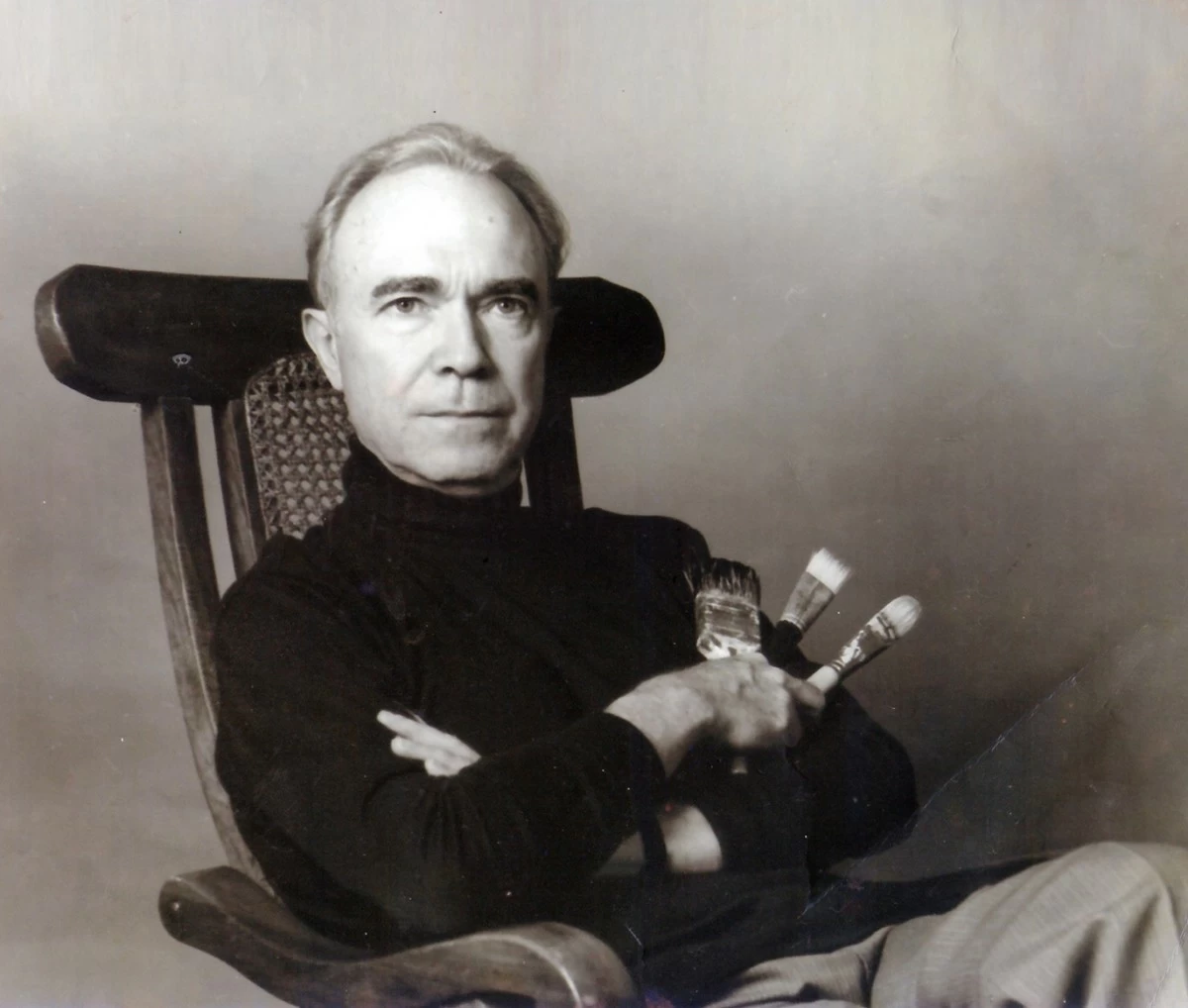
MEET THE ARTIST Juvenal Sanso
The hidden masterpieces: Why private collections were crucial
For many years, the perception of Sansó’s immense 70-year career has been limited by what was available in public spaces or published catalogues. Ricky explains that the creation of “Sansó: Prized and Personal” was a calculated effort to correct this imbalance.
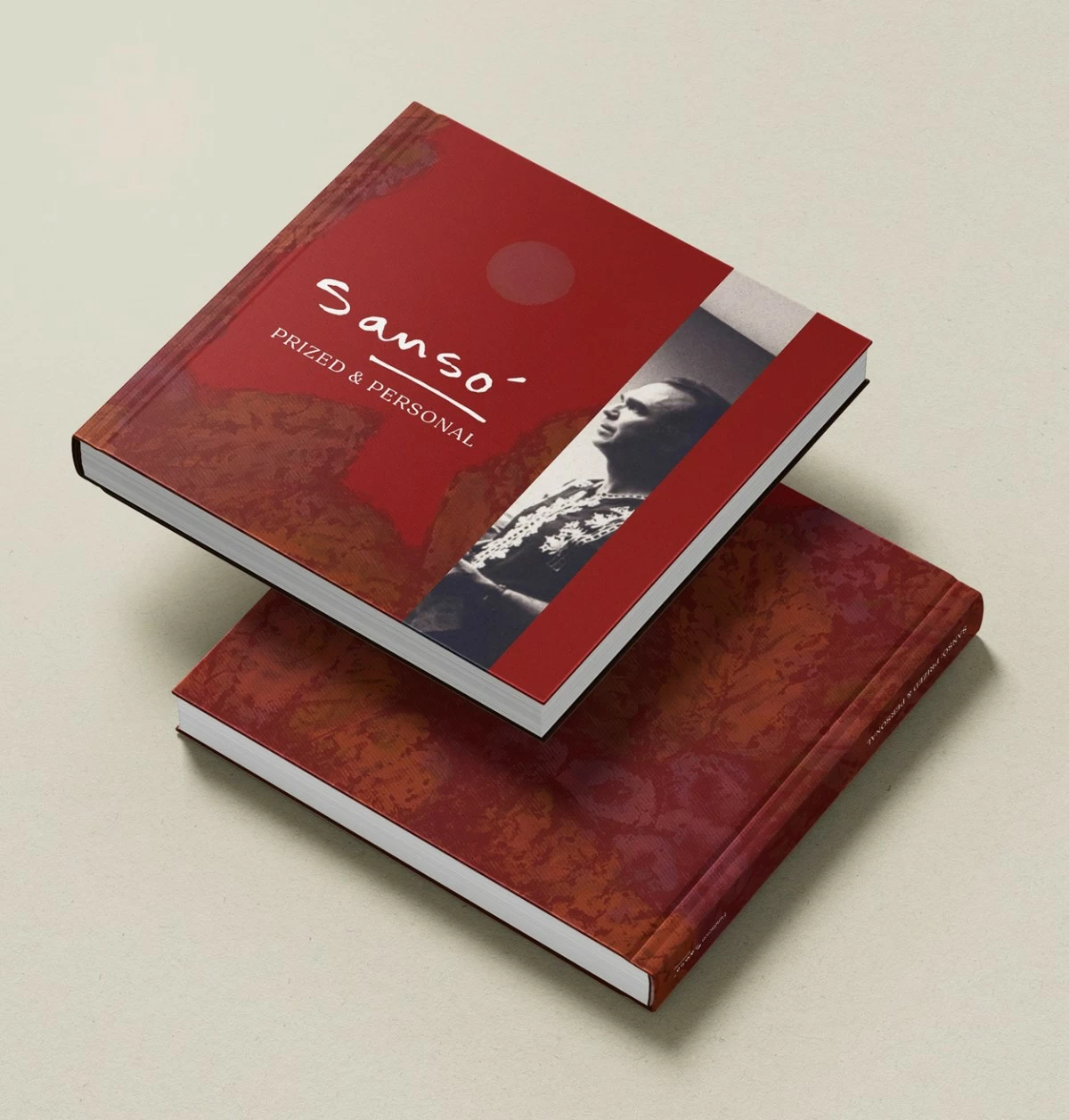
'PRIZED AND PERSONAL' Get to know the life of Juvenal Sanso through 464 pages containing over 600 full-color images.
“‘Sansó: Prized and Personal’ is our way of documenting, recording, and showcasing the works of Mr. Sansó that are currently held in many private collections,” Ricky stated. He noted a crucial detail: “Mr. Sansó often only kept the drafts or the unsold works in his collection. The best works, the ones that sold quite fast, reside in private collections.”
The project’s goal, therefore, was ambitious: to show the public what those pieces are, because, as stated by Ricky, “without the works kept in these private hands, we would never fully appreciate the best of Sansó and the true range of his works over his 70-year career.”
A democratic view of collecting
The process of compiling the volume was challenging. It required not only securing access to the best pieces but also ensuring the combined collections showcased the comprehensive range of Sansó’s works from 1948 to 2014.
The selection, however, was not just about scale. It was also about narrative. Ricky and his team intentionally diversified the roster of collectors featured in the book.
“We wanted to show the public that you could be a writer or an ordinary professional (not necessarily a tycoon or a highly paid executive) and still collect the works of Mr. Sansó,” he shared. “This allowed us to highlight a diverse range of collectors involved as well.
By including narratives from various individuals, the book captures how Sansó’s art transcends economic tiers, making it a truly human experience.
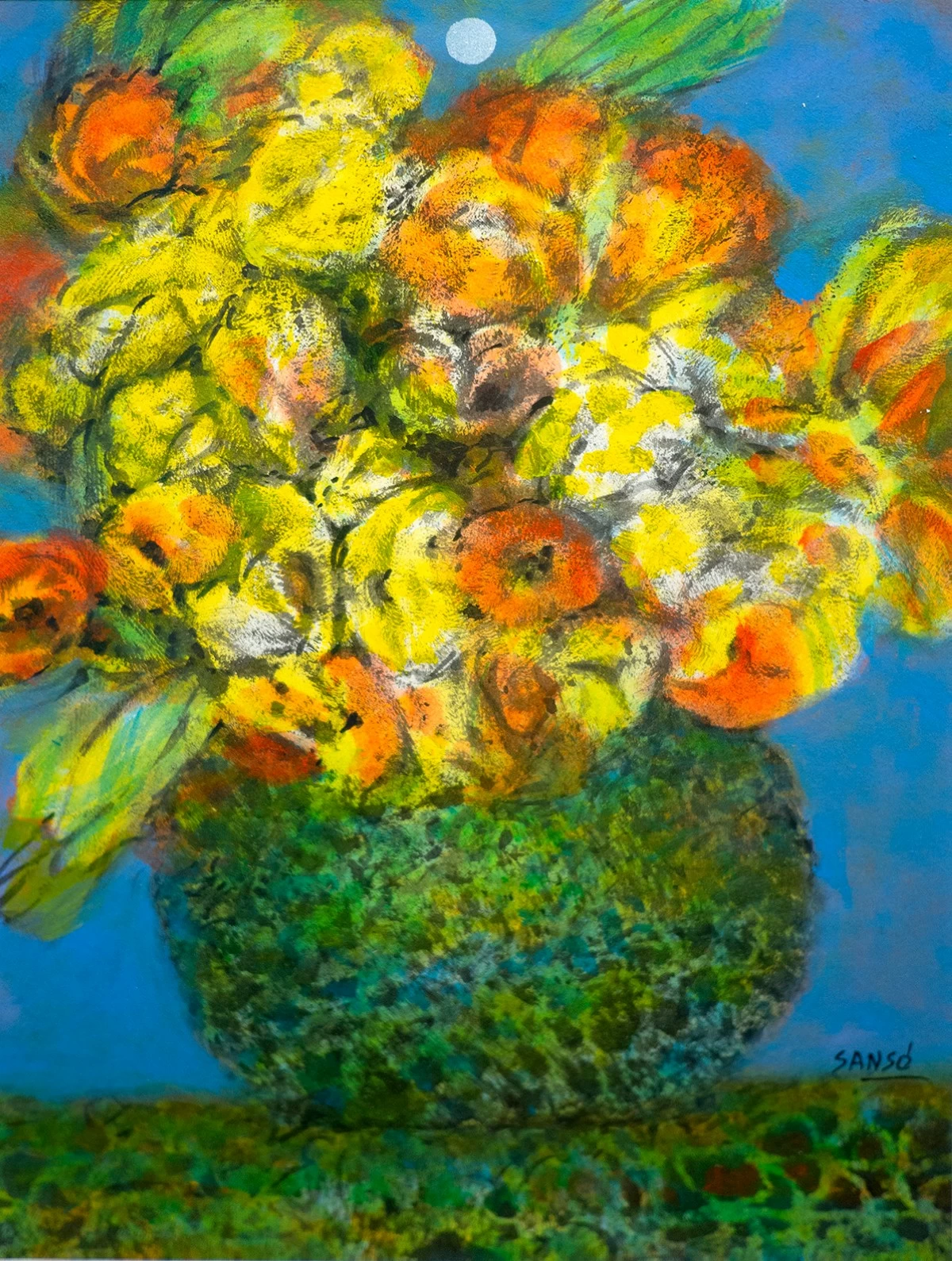
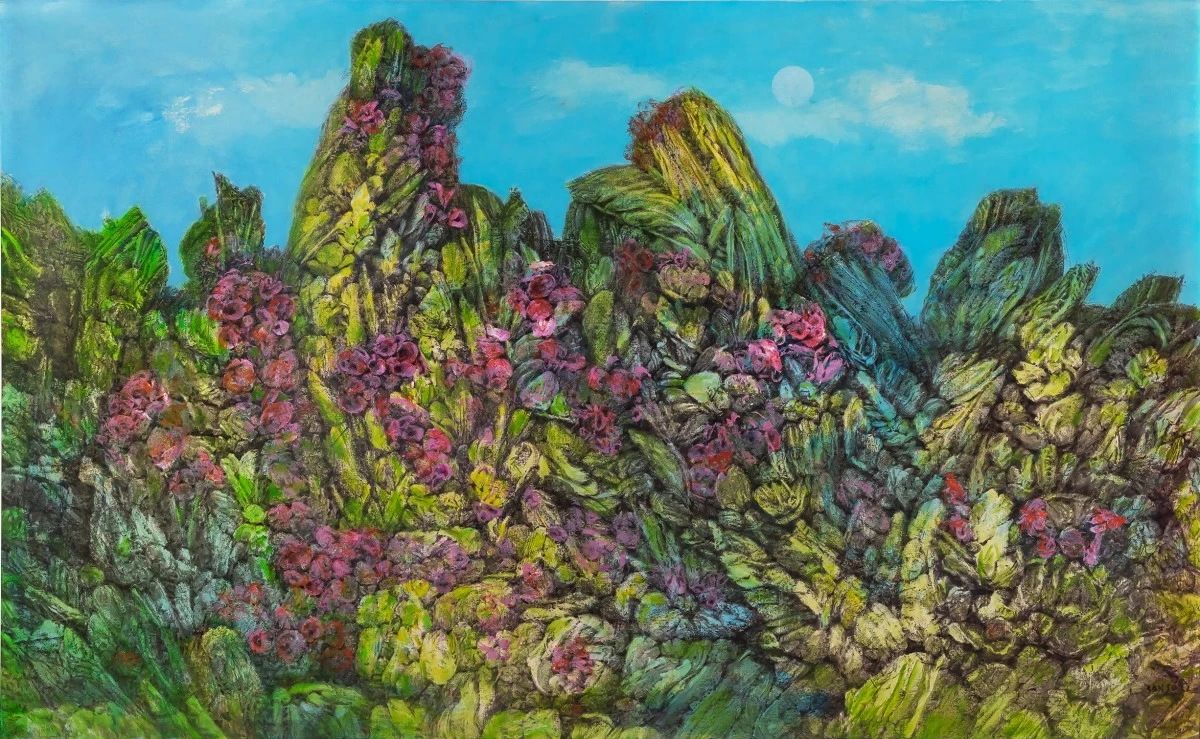
'AN ODE TO SPRING'
The humanity of the artist: Humility and humor
The interviews and collected conversations, spanning decades, offer an unprecedented glimpse of Sansó’s mind. Ricky revealed that the collected materials, categorized into interviews with the artist (1974 to 1988) and interviews with his collectors, provided profound insights,
From the conversations with critics like Ray Albano, Cid Reyes, and Ambeth Ocampo, Ricky discovered a key quality: “Sansó was truly intelligent, widely read, and possessed a very peculiar sense of humor that made him endearing to anyone who interviewed him. Despite all his achievements, he remained remarkably humble.”
The interviews with his collectors revealed an even deeper connection. Many shared that while they may have started collecting for prestige, they all inevitably end up loving his works.
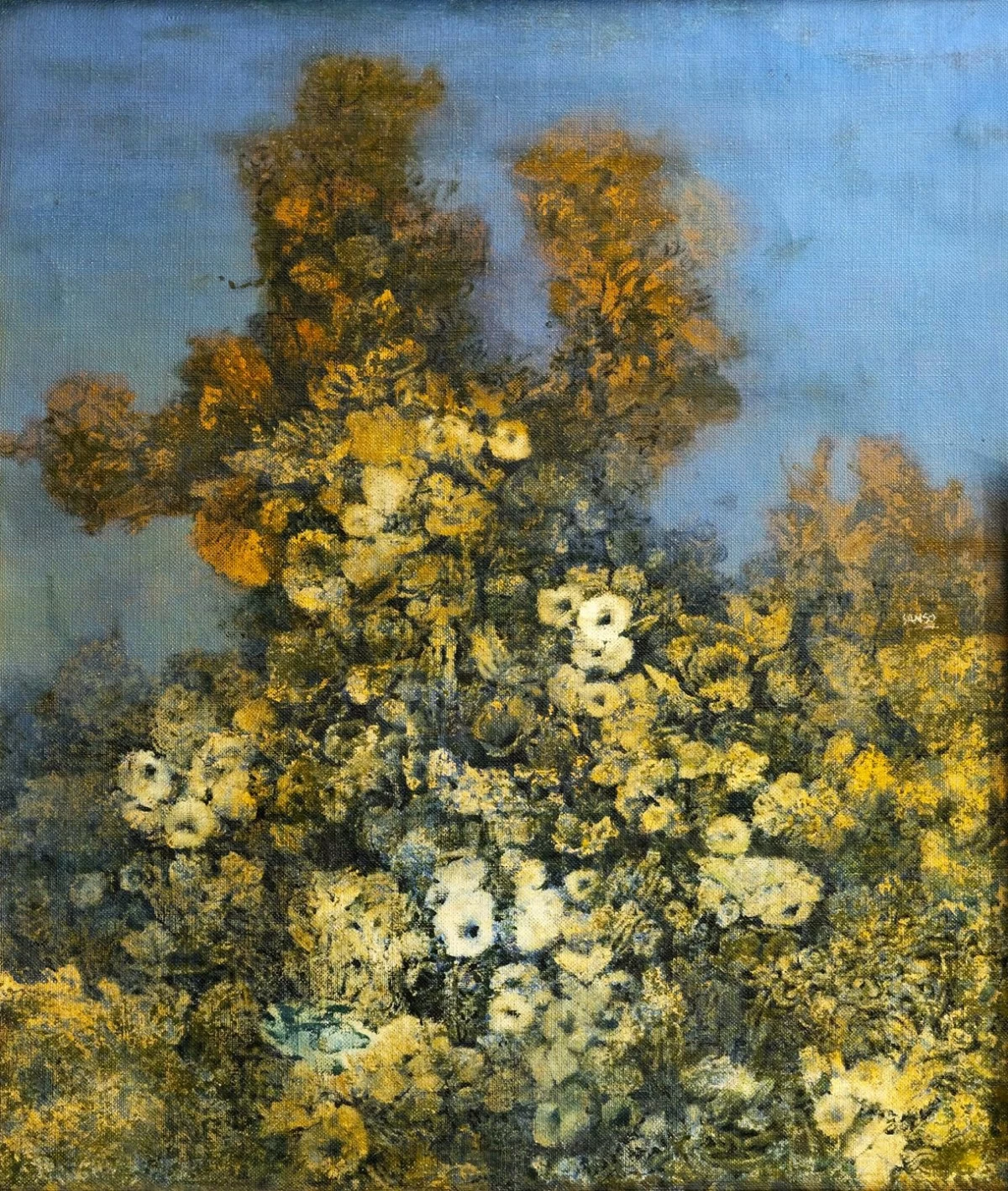
'ORACLE'S GARDENS' oil on canvas, 1960s
“Many collectors told us that when you see a Sansó day in and day out, its meaning always changes and it gives them a constant sense of peace and discovery,” Ricky explained. “There is a powerful emotional connection between his works and the viewer. There’s a deep humanity captured uniquely by the irreplaceable, brilliant person that is Sansó, expressing it through his art.”
Ricky hopes the book will play a vital role in the art community by providing context and correcting common misperceptions.
“I hope this volume effectively conveys the staggering range of paintings and prints of Mr. Sansó made over his very long artistic career. In that way, we can correct the box galleries have constructed around him that he paints only flowers and seascapes; as clearly that’s a disservice to his work.”
Ultimately, the book anchors Sansó’s multifaceted legacy: his pioneering expressionist works, which were ahead of their time; his commitment to consistently representing the Philippines as an artist on the international stage; and his profound national devotion.
“Even though he was a Spanish citizen, he was fully Filipino at heart,” Ricky affirmed. “He loved the Philippines so much that he not only left his body of work for the Philippine public to enjoy in his museum but also established a foundation that, up to this day, supports young Filipino artists and helps the families of important Filipino artists manage their legacy projects through its various programs.”
By illuminating the full spectrum of his art and providing scholarly rigor, including a comprehensive timeline by Dr. Reuben Ramas-Cañete, “Sansó: Prized and Personal” ensures that the artist’s story is preserved in its richest, most human form for generations to come.
You can pre-order the book "Sansó: Prized and Personal" through @fundacionsansomuseumshop on Instagram.
Visit Fundacion Sansó at 32 V. Cruz St., Brgy. Sta. Lucia, San Juan, Mon to Sat. 10 a.m. to 4 p.m.