






Manila Bulletin
 Philippines
National
Suansing: Bicam proves commitment to education by approving P86.8-B DepEd budget increase
Philippines
National
Suansing: Bicam proves commitment to education by approving P86.8-B DepEd budget increase
Philippines
National
Suansing: Bicam proves commitment to education by approving P86.8-B DepEd budget increase
Suansing: Bicam proves commitment to education by approving P86.8-B DepEd budget increase
Published Dec 13, 2025 05:45 pm


At A Glance
- House Committee on Appropriations Chairperson Nueva Ecija 1st district Rep. Mikaela Angela "Mika" Suansing highlighted during day one of the Bicameral Conference Committee hearings on the 2026 national budget the approved funding increases in education, which President Marcos earlier identified as a priority sector.
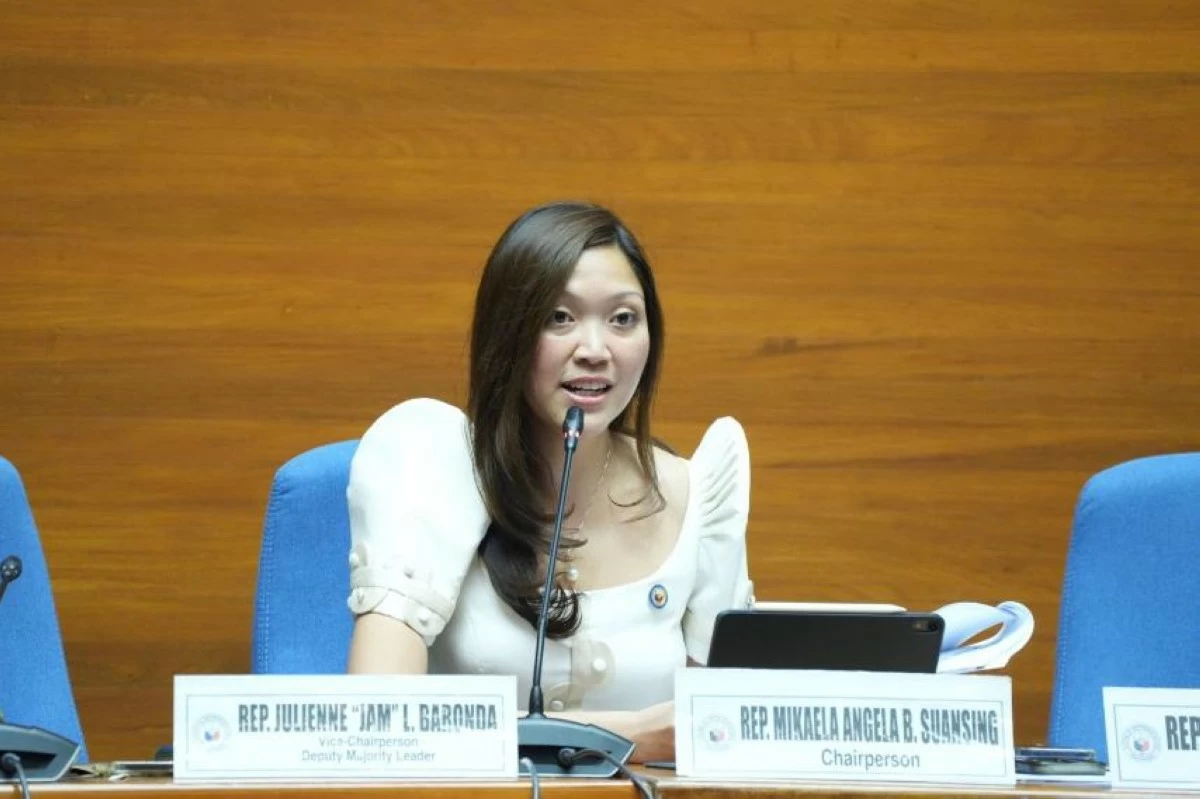
Nueva Ecija 1st district Rep. Mikaela Angela "Mika" Suansing (PPAB)
House Committee on Appropriations Chairperson Nueva Ecija 1st district Rep. Mikaela Angela "Mika" Suansing highlighted during day one of the Bicameral Conference Committee hearings on the 2026 national budget the approved funding increases in education, which President Marcos earlier identified as a priority sector.
"Under the Department of Education (DepEd), the total increase would be P86.8 billion from the NEP (National Expenditure Program) level, from P874.5 billion in the NEP to a final number of P961.3 billion," Suansing, head of the House of Representatives contigent to the bicam hearings, said on Saturday afternoon, Dec. 13.
"I just like to highlight the biggest increase and that would be in terms of classrooms, in terms of textbooks, at tsaka pagdating po sa (and when it comes to the) school-based feeding program," said the Harvard-educated solon.
The bicam discussions--livesstreamed for the very first time--focused on harmonizing the differing provisions between the House and Senate versions of the P6.793-trillion General Appropriations Bill (GAB) for 2026.
The GAB emanated from the 2026 NEP, which was prepared by the executive branch.
"Mahalaga pong ipaalam sa ating mga kababayan na kahit ano pong programa sa [DepEd], hindi po tayo bumaba sa NEP. Lahat po ng mga programa itinaas po natin mula sa lebel ng NEP," Suansing said in her manifestation.
(It is important to inform our fellow citizens that whatever program of the [DepEd] we did not go below the NEP. All programs were raised above the level of the NEP.)
"I just wanted to manifest that para po maipakita po natin na talagang totoo po yung sinasabi ng parehong Kongreso at Senado na talaga pong binibigyan natin ng napakalaking prayoridad ang edukasyon para sa budget sa 2026," she underscored.
(I just wanted to manifest this so we can show that what both Congress and the Senate are saying is indeed true—that we are truly giving the highest priority to education in the 2026 budget.)
The appropriations panel chairperson said that the Basic Education Facilities Program fund was raised by a total of P57.3 billion.
"So halos siguro po, mahina na po na 35,000 classrooms po yung atin pong maipapagawa para po sa taong 2026 (So my estimate is this will lead to the construction of a minimum of 35,000 classrooms for the year 2026).
"Maganda po yun, kung maaalala po natin, ang binanggit po ng ating Pangulo noong kanyang SONA (State of the Nation Address) ay 40,000...po yung target na maipatayo classrooms by 2028. Dahil po sa ating inilaan na Basic Education Facilities Program para sa 2026, halos kaya na po natin yun punan, konti na lang po, matatamaan na po natin yung target natin na supposedly sa 2028 pa," she noted.
(That is good, because if we recall, what our President mentioned in his SONA was the target of 40,000 classrooms to be built by 2028. With the Basic Education Facilities Program we have allocated for 2026, we can almost fill that target; just a little more, and we will already hit the goal that was supposed to be for 2028.)
"Sunod po, under the textbooks and other instructional materials, we are increasing it by P8.3 billion from the NEP level of P11.1 [billion], to the final number of P19.5 [billion]. Malaki po yung papel na gagampanan nito para po mapunan na yung kakulangan po sa mga libro at mga kagamitan sa atin pong mga paaralan," Suansing said.
(Next, under the textbooks and other instructional materials, we are increasing it by P8.3 billion from the NEP level of P11.1 billion, to the final number of P19.5 billion. This will play a big role in addressing the shortage of books and materials in our schools.)
Suansing also noted a significant increase--more than double--in the school-based feeding program funds.
"Pagdating po sa school-based feeding program...magdadagdag po tayo ng P13.9 billion mula po sa P11.7 billion sa NEP, paakyat po sa P25.7 billion (As for the school-based feeding program… we will add P13.9 billion, from P11.7 billion in the NEP, going up to P25.7 billion).
"That represents an increase from 120 days to 180 days para po sa ating mga estudyante. Maganda po yun kasi halos lahat na po ng mga araw na pumapasok sila, mayroon na pong feeding program para po sa kanila," the Nueva Ecija solon explained.
(That represents an increase from 120 days to 180 days for our students. This is good because almost all the days they attend school, there will now be a feeding program for them.)
These budget increases for the education sector were successively approved by House members and senators without any hitches during the livestreamed bicam hearing. The proceedings were still ongoing as of this posting.
Suansing, a member of the House "Young Guns" bloc, highlighted earlier in the hearing the historic nature of the open bicam proceedings.
“Ang makasaysayang araw na ito—ang pinakaunang araw sa kasaysayan na bubuksan sa publiko ang bicam—ay sumasalamin po sa paninindigan ng Kongreso na tanggalin ang tabing sa usaping budget at talagang ipakita kung saan napupunta ang bawat piso ng buwis na mula sa dugo at pawis ng bawat Pilipino,” she said.
(This historic day—the very first day in history that the bicam will be opened to the public—reflects the commitment of Congress to lift the veil on budget deliberations and to truly show where every peso of taxes, drawn from the blood and sweat of every Filipino, is going.)
She continued: "This is the actualization of the House’s commitment since August, even before the budget deliberations started, to open and live-stream the Bicameral Conference Committee proceedings."
“We are here not only to reconcile disagreeing provisions of the 2026 budget, but to continue structural reforms that place transparency at the center of how public funds are allocated," Suansing further said.