






Manila Bulletin
 Business
Trade & Industry
Philippines successfully hosts e-commerce workshop focused on plant health
Business
Trade & Industry
Philippines successfully hosts e-commerce workshop focused on plant health
Business
Trade & Industry
Philippines successfully hosts e-commerce workshop focused on plant health
Philippines successfully hosts e-commerce workshop focused on plant health
Published Dec 13, 2025 09:28 am


With the continuous increase in internet access and adoption, it is estimated that there are around six billion internet users globally. With this, the number of online purchases has also steadily amplified, with an estimated amount of more than $3.6 trillion in 2025 alone. As this figure is expected to further increase in the coming years, the risks in moving plants and plant products have also been observed. But how do we know that what we are moving is safe?
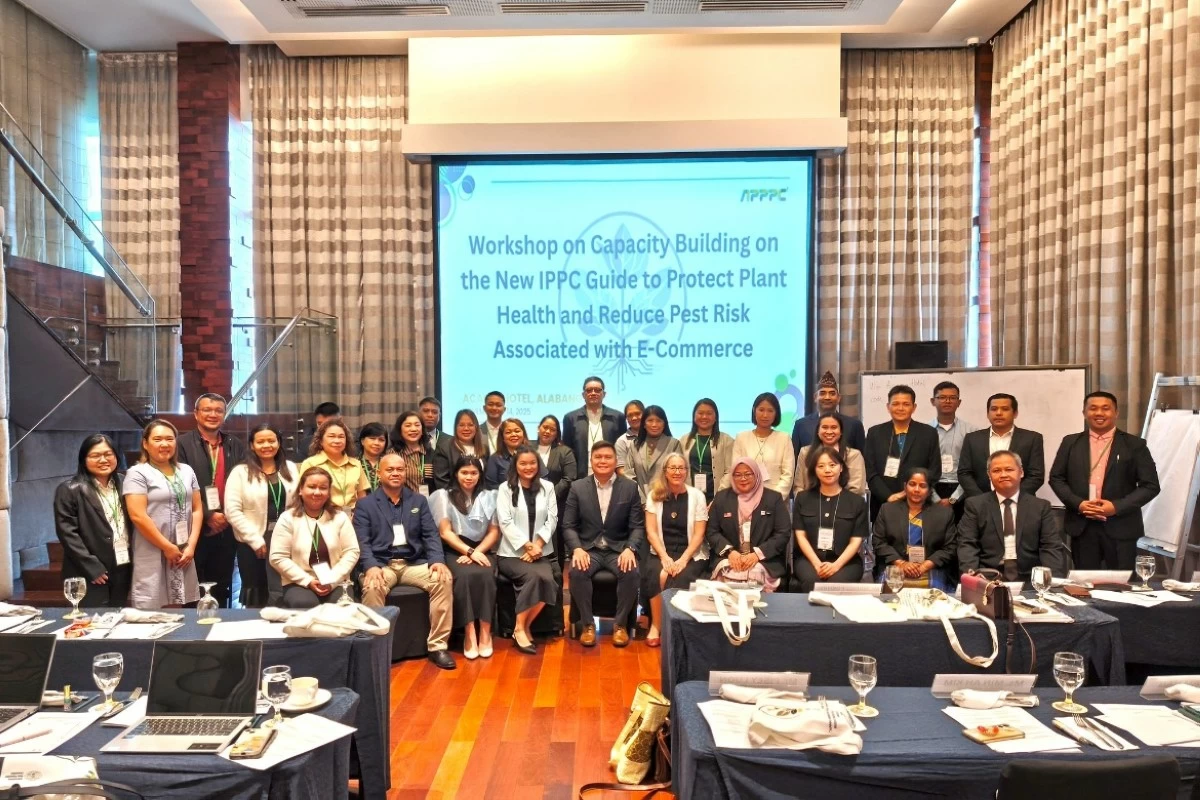
Last Nov. 9-15, 2025, the Philippines’ Bureau of Plant Industry (BPI) hosted the Asia and Pacific Plant Protection Commission (APPPC) Workshop on the International Plant Protection Convention’s (IPPC) Guide to Protect Plant Health and Reduce Pest Risk Associated with E-Commerce at Acacia Hotel, Manila, Philippines. Made possible through the collaborative efforts of the APPPC, its Advisory Group, and BPI, with funding support from the Department of Agriculture, Fisheries and Forestry, Australia, the workshop intended to raise awareness among government regulators from the Department of Trade and Industry, the Department of Agriculture, the Department of Finance, and private stakeholders on phytosanitary risks associated with e-commerce.
Asia Pacific countries such as Australia, Bangladesh, Cambodia, Fiji, Lao PDR, the Philippines, Indonesia, Malaysia, Thailand, Sri Lanka, Nepal, Vietnam, and South Korea shared their experience in implementing e-Commerce systems in the trade of plants, plant products, and planting materials. They also shared how legislations and regulations govern online trade while ensuring the appropriate phytosanitary measures are in place. Participants were equipped with information and practical knowledge needed to safeguard national borders and protect agricultural industries from invasive pests and diseases.
The workshop highlighted the importance of compliance with import regulations and strengthened cooperation among National and Regional Plant Protection Organizations (NPPOs and RPPOs), postal services, express carriers, and other key partners. NPPOs and RPPOS are the organizations under the auspices of the respective countries and the United Nations’ International Plant Protection Convention (IPPC) tasked to implement the necessary actions to prevent the entry and spread of plant pests and diseases, especially those of economic importance. Also known as plant quarantine agencies, their roles in trade are essential as they make it possible for countries to trade agricultural commodities while ensuring that local agricultural industries and the general population are protected from sanitary and phytosanitary risks. With the success of this workshop, we can be assured that countries are working hand-in-hand to ensure safe trade.