

ADVERTISEMENT

Kozo Kawamura on crafting the 'New Colonial Style'

The Japanese designer returns to Manila for Colony Clothing's newest trunk show

Published Dec 13, 2025 10:15 am
At first glance, Kozo Kawamura, founder and creative director of Singapore-based menswear label Colony Clothing cuts a quiet figure. Soft-spoken, thoughtful, and quick to laugh, he speaks with the calm certainty of someone who has lived long enough in fashion to understand both its cycles and its contradictions. But beneath that gentle exterior is a man who has built a distinct design language shaped by three decades of global travel, deep experience in fashion retail, and an unwavering curiosity about culture.
Kozo Kawamura
Kozo Kawamura
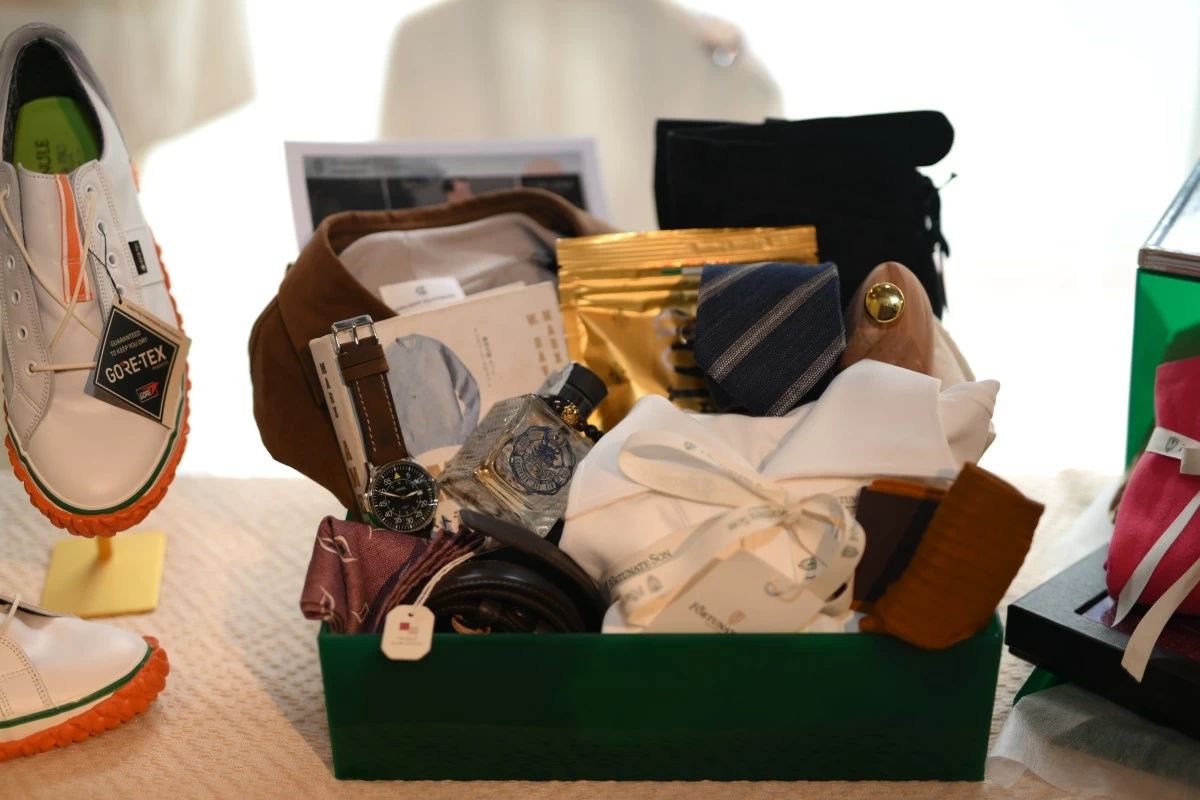
Last November, Kozo returned to Manila for a milestone: Colony Clothing’s fourth trunk show in partnership with the Tiño Group, alongside the launch of lifestyle subscription platform The Fortunate Son (TFS). The two-day event introduced the brand’s fall-winter 2025 collection, highlighted by new iterations of its signature Ultrasuede pieces, now available not only in-store but also through TFS's curated subscription service.
Yet beyond the clothing rack, what Kozo brought to Manila this year felt larger than a seasonal showcase. It was a full-circle conversation about identity: personal, cultural, and sartorial.
Finding his identity in the mix
Kozo’s journey in fashion began long before Colony Clothing existed. “When I was very young, I already liked fashion,” he tells Manila Bulletin Lifestyle. He spent the 1990s and early 2000s in Japan, a golden era for the country’s fashion scene. “The Japanese market was very big. Many good European and American brands came in. I tried many brands, many pieces, but I was still wondering about my identity.”
For years, he followed Western fashion closely, but something never fully aligned. “My identity is Asian and Japanese,” he says. “So I thought, why not mix European culture and American brands with my own?”
This realization eventually brought him to Singapore, a city he saw as a cultural crossroads. “Singapore has mixed cultures, and the economy was growing,” he shares. “I felt it was the right place to build my brand.”
From this perspective, Colony Clothing was born—an interpretation of global style filtered through East Asian sensibilities. Kozo calls it the “New Colonial Style”: mid-century American and European silhouettes reimagined for tropical climates and modern lifestyles.
Classic, not trendy
While fashion often chases the new, Kozo insists menswear thrives on restraint.
“For ladies and young fashionistas, trends are very fast,” he says. “But for adult men, very trendy fashion feels a little different.” He prefers pieces that last: classic shapes, clean silhouettes, and functional details.
This philosophy is why Colony Clothing’s collections evolve through refinement, not reinvention: safari jackets, overshirts, Harringtons, blazers—items that serve as building blocks of a wardrobe, renewed each season with small, intentional tweaks.
Ultrasuede: The star of the season
The highlight of this year’s trunk show was Ultrasuede, which Kozo refers to as one of the best fabrics developed in modern textile innovation.
Originally engineered as a high-end alternative to leather, Ultrasuede is soft, light, breathable, and surprisingly washable. The material’s relevance is especially clear in Southeast Asia. Suede is notoriously difficult to maintain in hot, humid countries, something he learned firsthand while adjusting to Singapore’s climate. “Real leather is very hard to use in humidity,” he says. “But Ultrasuede is breathable, and you can wash it.”
Designed specifically for warm-weather cities like Manila, the pieces adapt well to travel, too. “When moving from Singapore or the Philippines to winter destinations like Korea or Italy, wearing Ultrasuede lets me move seamlessly around the world,” he says.
Designing like a DJ
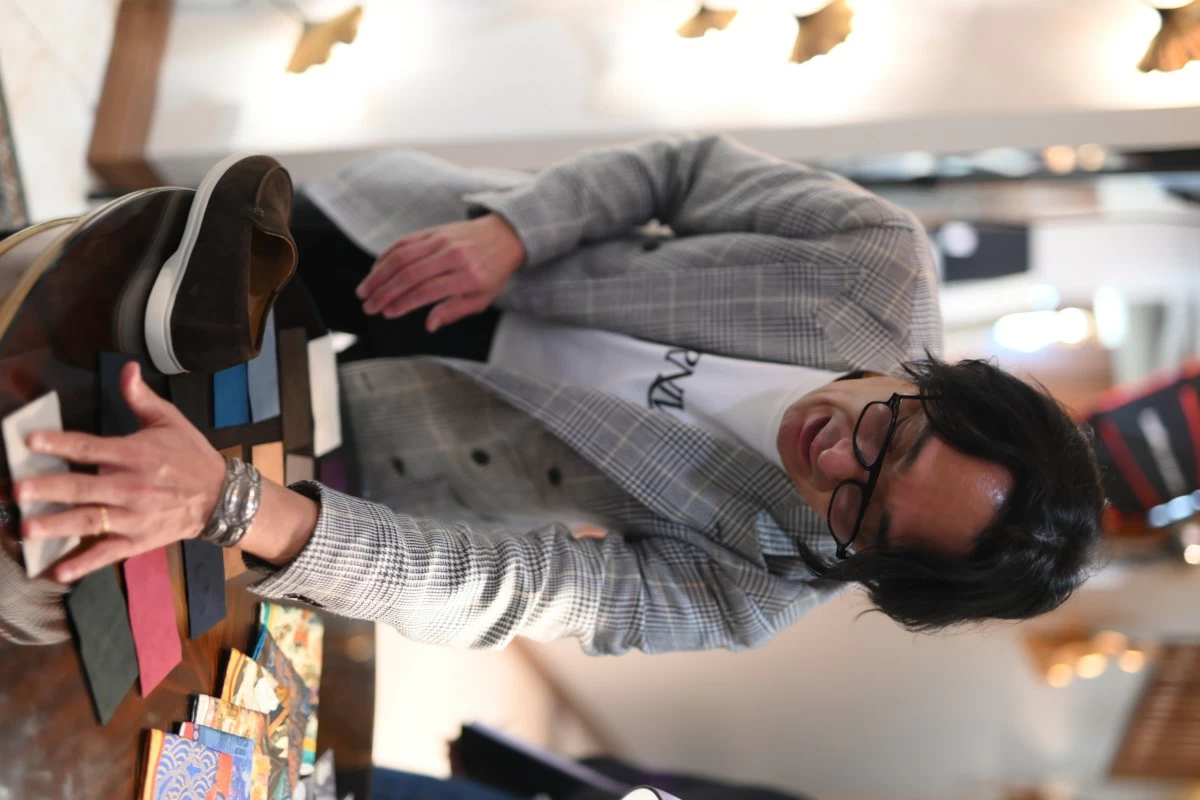
When asked about his creative process, Kozo sees himself as a DJ. His designs, he explains, come from combining materials, inspirations, silhouettes, and memories, much like mixing tracks.
“I cannot write an original song, but I can DJ,” he says. “I look for good material. I see something in the past. Then I edit.”
It’s a principle he lives by: Selecting textiles from all over the world, manufacturing mostly in Japan, and preserving techniques rooted in tradition, like the denim-making craft of Okayama, where he grew up.
Whether he’s recalling a vintage Hermes suede pair of trousers worn by an elderly woman or tracing the roots of batik’s influence on European patterns, Kozo’s gift lies in his ability to see beyond trends. His work blends the past with the present, the East with the West, the classic with the climate-specific—assembling the world through fabric, one edited piece at a time.

Related Tags

Luminaries fashion and beauty Kozo Kawamura Colony Clothing
ADVERTISEMENT
.most-popular .layout-ratio{ padding-bottom: 79.13%; } @media (min-width: 768px) and (max-width: 1024px) { .widget-title { font-size: 15px !important; } }

{{ articles_filter_1561_widget.title }}

.most-popular .layout-ratio{ padding-bottom: 79.13%; } @media (min-width: 768px) and (max-width: 1024px) { .widget-title { font-size: 15px !important; } }

{{ articles_filter_1562_widget.title }}

.most-popular .layout-ratio{ padding-bottom: 79.13%; } @media (min-width: 768px) and (max-width: 1024px) { .widget-title { font-size: 15px !important; } }

{{ articles_filter_1563_widget.title }}

{{ articles_filter_1564_widget.title }}

.mb-article-details { position: relative; } .mb-article-details .article-body-preview, .mb-article-details .article-body-summary{ font-size: 17px; line-height: 30px; font-family: "Libre Caslon Text", serif; color: #000; } .mb-article-details .article-body-preview iframe , .mb-article-details .article-body-summary iframe{ width: 100%; margin: auto; } .read-more-background { background: linear-gradient(180deg, color(display-p3 1.000 1.000 1.000 / 0) 13.75%, color(display-p3 1.000 1.000 1.000 / 0.8) 30.79%, color(display-p3 1.000 1.000 1.000) 72.5%); position: absolute; height: 200px; width: 100%; bottom: 0; display: flex; justify-content: center; align-items: center; padding: 0; } .read-more-background a{ color: #000; } .read-more-btn { padding: 17px 45px; font-family: Inter; font-weight: 700; font-size: 18px; line-height: 16px; text-align: center; vertical-align: middle; border: 1px solid black; background-color: white; } .hidden { display: none; }
function initializeAllSwipers() { // Get all hidden inputs with cms_article_id document.querySelectorAll('[id^="cms_article_id_"]').forEach(function (input) { const cmsArticleId = input.value; const articleSelector = '#article-' + cmsArticleId + ' .body_images'; const swiperElement = document.querySelector(articleSelector); if (swiperElement && !swiperElement.classList.contains('swiper-initialized')) { new Swiper(articleSelector, { loop: true, pagination: false, navigation: { nextEl: '#article-' + cmsArticleId + ' .swiper-button-next', prevEl: '#article-' + cmsArticleId + ' .swiper-button-prev', }, }); } }); } setTimeout(initializeAllSwipers, 3000); const intersectionObserver = new IntersectionObserver( (entries) => { entries.forEach((entry) => { if (entry.isIntersecting) { const newUrl = entry.target.getAttribute("data-url"); if (newUrl) { history.pushState(null, null, newUrl); let article = entry.target; // Extract metadata const author = article.querySelector('.author-section').textContent.replace('By', '').trim(); const section = article.querySelector('.section-info ').textContent.replace(' ', ' '); const title = article.querySelector('.article-title h1').textContent; // Parse URL for Chartbeat path format const parsedUrl = new URL(newUrl, window.location.origin); const cleanUrl = parsedUrl.host + parsedUrl.pathname; // Update Chartbeat configuration if (typeof window._sf_async_config !== 'undefined') { window._sf_async_config.path = cleanUrl; window._sf_async_config.sections = section; window._sf_async_config.authors = author; } // Track virtual page view with Chartbeat if (typeof pSUPERFLY !== 'undefined' && typeof pSUPERFLY.virtualPage === 'function') { try { pSUPERFLY.virtualPage({ path: cleanUrl, title: title, sections: section, authors: author }); } catch (error) { console.error('ping error', error); } } // Optional: Update document title if (title && title !== document.title) { document.title = title; } } } }); }, { threshold: 0.1 } ); function showArticleBody(button) { const article = button.closest("article"); const summary = article.querySelector(".article-body-summary"); const body = article.querySelector(".article-body-preview"); const readMoreSection = article.querySelector(".read-more-background"); // Hide summary and read-more section summary.style.display = "none"; readMoreSection.style.display = "none"; // Show the full article body body.classList.remove("hidden"); } document.addEventListener("DOMContentLoaded", () => { let loadCount = 0; // Track how many times articles are loaded const offset = [1, 2, 3, 4, 5, 6, 7, 8, 9, 10]; // Offset values const currentUrl = window.location.pathname.substring(1); let isLoading = false; // Prevent multiple calls if (!currentUrl) { console.log("Current URL is invalid."); return; } const sentinel = document.getElementById("load-more-sentinel"); if (!sentinel) { console.log("Sentinel element not found."); return; } function isSentinelVisible() { const rect = sentinel.getBoundingClientRect(); return ( rect.top < window.innerHeight && rect.bottom >= 0 ); } function onScroll() { if (isLoading) return; if (isSentinelVisible()) { if (loadCount >= offset.length) { console.log("Maximum load attempts reached."); window.removeEventListener("scroll", onScroll); return; } isLoading = true; const currentOffset = offset[loadCount]; window.loadMoreItems().then(() => { let article = document.querySelector('#widget_1690 > div:nth-last-of-type(2) article'); intersectionObserver.observe(article) loadCount++; }).catch(error => { console.error("Error loading more items:", error); }).finally(() => { isLoading = false; }); } } window.addEventListener("scroll", onScroll); });

Sign up by email to receive news.