






Manila Bulletin
 Environment and Sustainability
The unseen toll of progress on the Verde Island Passage
Environment and Sustainability
The unseen toll of progress on the Verde Island Passage
Environment and Sustainability
The unseen toll of progress on the Verde Island Passage
The unseen toll of progress on the Verde Island Passage
By Mat Richter
Published Dec 12, 2025 09:35 am


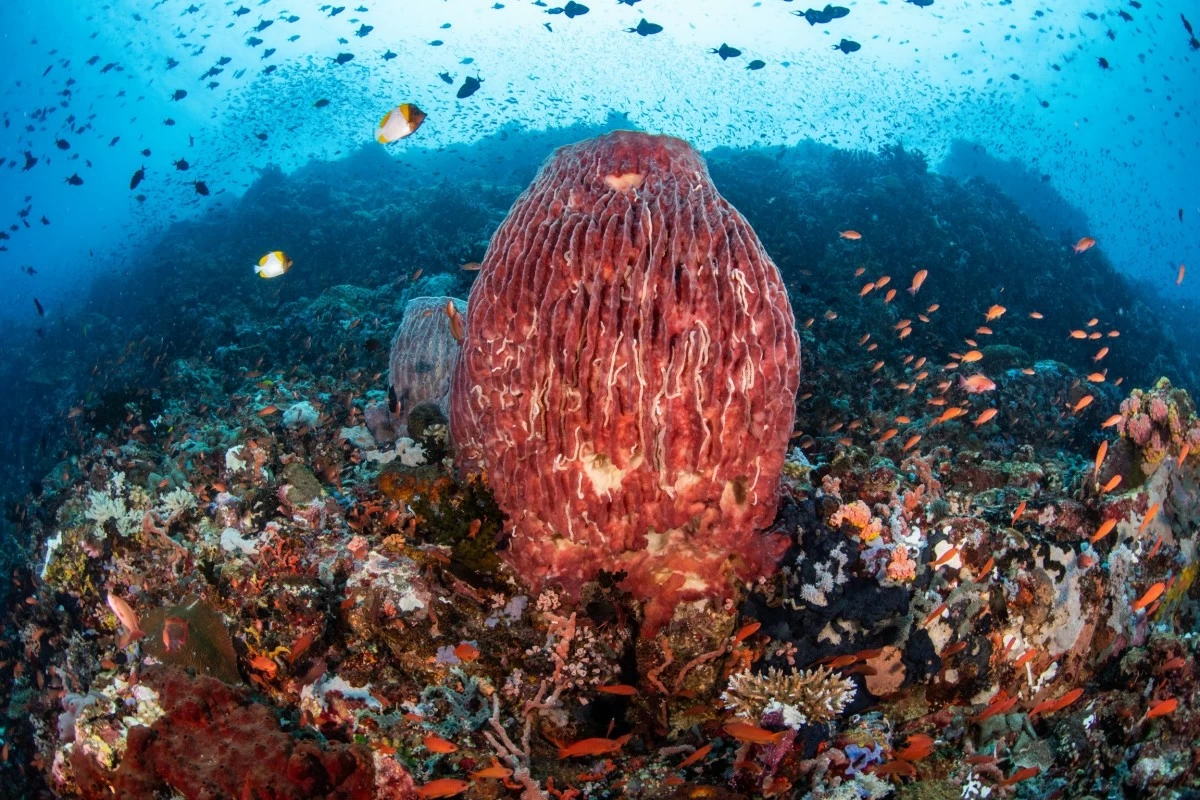
Underwater shot of the Verde Island Passage (Photos by Boogs Rosales)
In the Asia-Pacific region, a key ambition for the Philippines is to become a hub for liquefied natural gas (LNG). This fuel is marketed as a "better" alternative to coal, the dirtiest fossil fuel driving climate change.
But this promise dimmed when a wave of LNG projects clustered in Batangas City beginning in 2023, drawn by what proponents described as “existing infrastructure networks and pipelines for natural gas,” said Gerry Arances, executive director of Center for Environment, Ecology, and Development. Years later, the impacts of these facilities continue to stain the waters of Verde Island Passage (VIP), the strait beside Batangas Bay long regarded as an underwater sanctuary.
It is a troubling trade-off: a proposed solution that simultaneously creates a new threat. The increasing presence of turbomachines has muted the once-gentle rhythm of the tides. The rapid expansion of LNG hubs raises the risk of compromising the primary source of income for more than two million Filipinos who rely on the fisheries and coastal resources surrounding VIP. The danger of oil leaks and industrial discharge threatens the world’s most biodiverse marine passage, where 60 percent of global shore fish species once thrived.
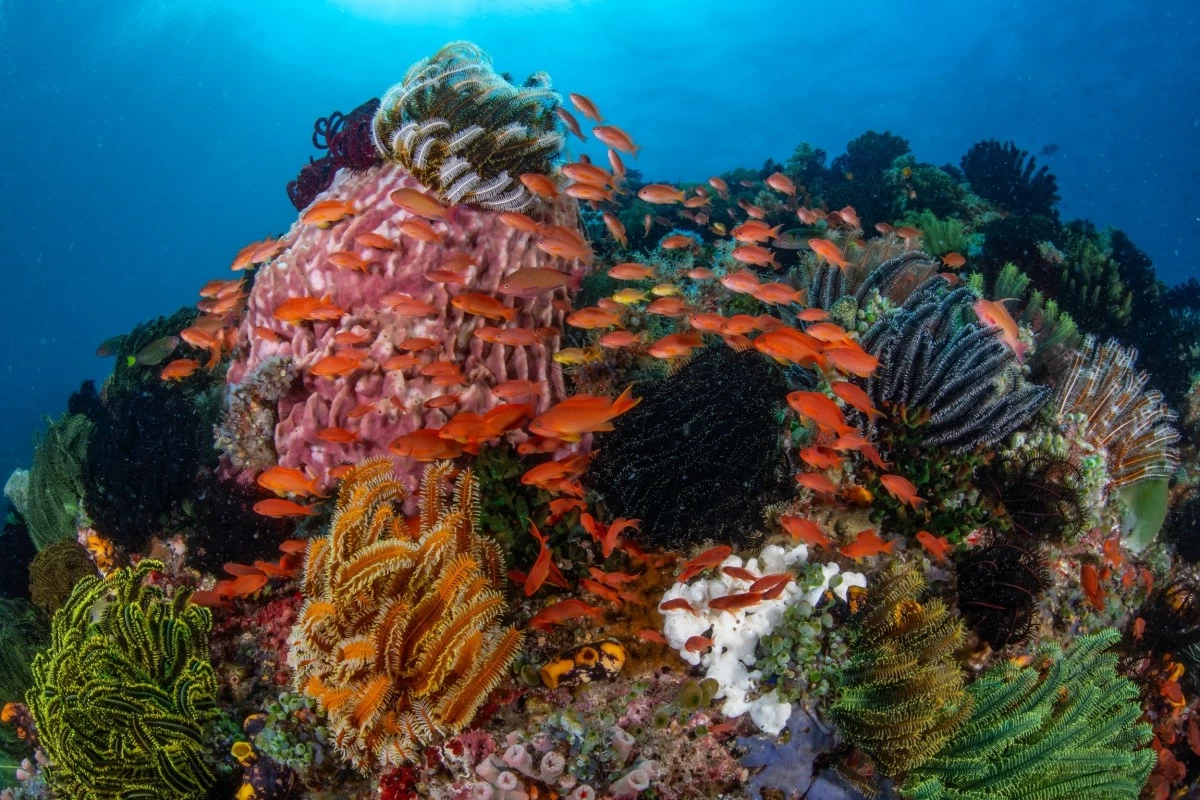
Reef fish, colorful crinoids, and corals thrive under the daylight underwater.
The Verde Island Passage today
Extreme overexploitation and widespread habitat disturbance, both in VIP and elsewhere in the country, have already caused dramatic genetic changes in marine fish populations over the past century, according to a biological sciences professor. These changes lead to grave consequences: reduced chance of survival and reproductive success among organisms, shrinking fish populations that affect livelihoods and drive up food prices, and the gradual degradation of marine ecosystems.
Dr. Kent Carpenter of Old Dominion University in the United States noted that industrial activities continue to change the habitat in several areas, triggering major shifts in the community structure of reef fishes.
“Increased industrialization in the VIP, continued population growth, and increased demands on fisheries researchers' resources are all cause for concern,” he stressed. “But continued biodiversity discovery and ecological studies by Philippine universities, government agencies, nonprofits, enlightened private and public sectors, and international collaborators help underpin our conservation science and environmental action efforts.”
Carpenter added that, based on a decade of research in VIP, the community structure of many coral reefs, particularly those properly conserved, remains “nearly stable” despite some changes. Still, he cautioned that the country cannot be complacent.
He urged national and local governments to establish clear legal protections for the VIP, to regulate industrial operations, strengthen fisheries management, and ensure that the passage is safeguarded by law.
“We should support a call to action to secure a regenerative ocean ecosystem in the VIP through nature-positive solutions and, hopefully, inspire the legislative protections essential to the continued environmental integrity of the VIP,” he said.
Carpenter is one of the authors who formally described VIP as the "center of the center" of marine shore fish biodiversity.
Bill to save an important passage
Without urgent intervention, threats such as unregulated industrialization and overfishing may irreversibly damage VIP, according to ASEAN Centre for Biodiversity director Dr. Arvin Diesmos.
Years ago, legislators introduced a bill seeking to conserve, protect, manage, and rehabilitate the passage. Yet the measure hasn’t progressed into law. The VIP Protected Seascape Bill of 2022 aims to provide a foundation for sustainable development and inclusive environmental governance.
“The proliferation of fossil fuel infrastructure, including proposed gas terminals and plants near the VIP, has raised alarm among scientists and environmental advocates for their potential to increase marine traffic, thermal pollution, and chemical discharge in this fragile ecosystem,” Diesmos warned.
He stressed the need for more scientists in government so that giving legal protection to VIP can be understood and addressed with urgency.
“We know that protective areas are planet Earth's last line of defense against threats to our fragile biodiversity. But the first order of business is for VIP to finally be given protective status through legislative action,” he said.
Declining species richness
Experts have repeatedly cautioned against pursuing development at the expense of the environment. One startling projection for 2050 shows that species richness in VIP will decline significantly.
“The lighter the colors, the fewer the species,” explained Dr. Loida Corpus of Quantitative Aquatics Inc., referring to projected biodiversity maps that show a gradual loss of marine species in the coming decades. She noted that the highest species richness coincides with the area where LNG expansion is planned—an overlap that heightens the urgency of intervention.
Research published in the Journal of Coral Reef Studies similarly found that the passage’s reefs host high coral and reef fish species diversity. However, the study stressed a persistent gap in local research: limited understanding on how corals and reef fishes interact, and how climate change affects their physiology and behavior.
“The VIP’s reef areas are already in a poor state due to the rapidly growing coastal population and development,” the study emphasized. “Highly urbanized coastal areas of some municipalities and overfished waters need urgent and coordinated responses to prepare for climate change.”
A transition away from coal must not come at the cost of irreparable harm to the country’s richest marine passage. The projected decline in species richness in VIP is a warning that energy expansion and environmental stewardship cannot move in different directions. Biodiversity, livelihoods, and stability of coastal communities depend on these waters. Sustained and coordinated efforts remain essential to protect the resource we cannot afford to lose.