ADVERTISEMENT

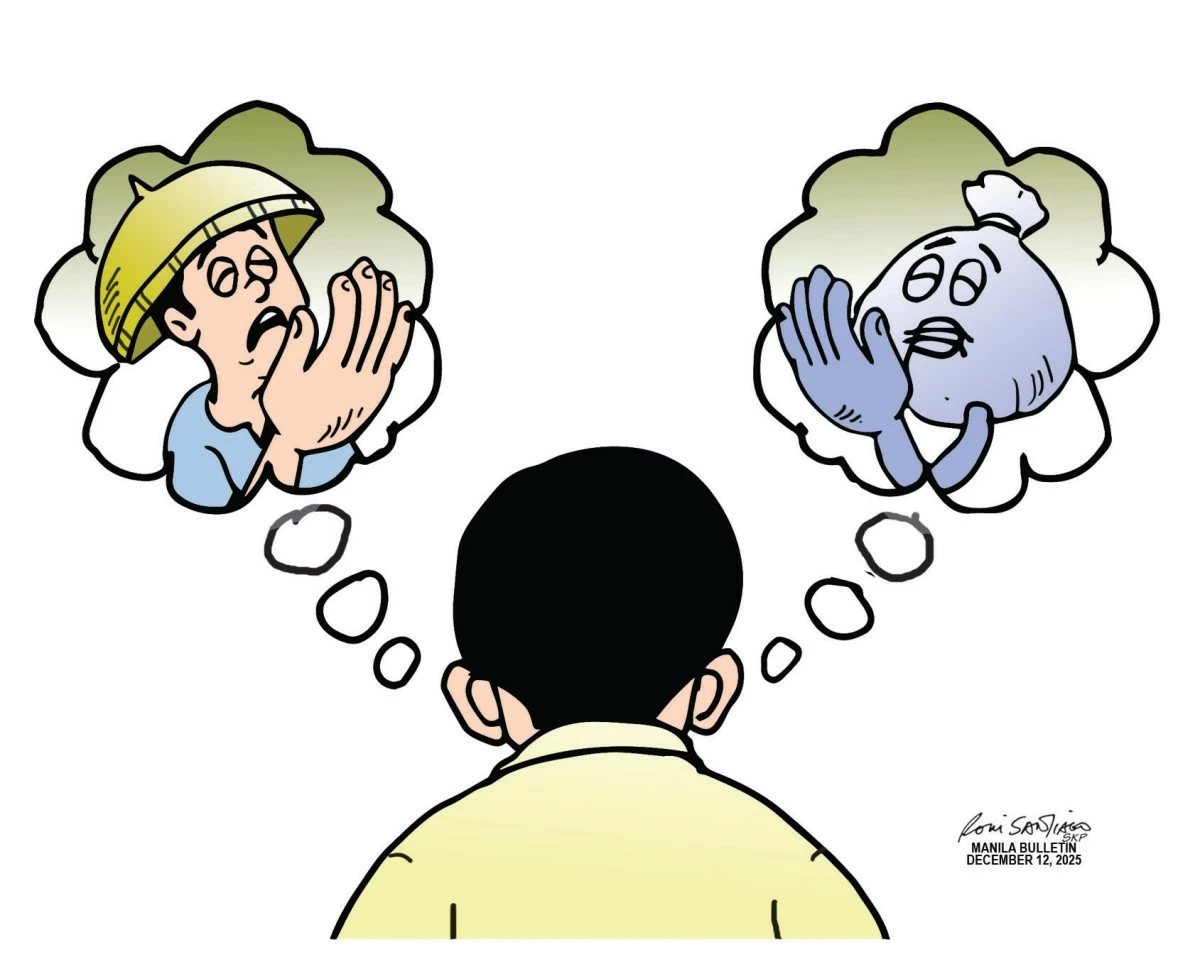
Country or personal gain? Congress has to make a choice

Published Dec 12, 2025 12:05 am  |  Updated Dec 11, 2025 06:08 pm
President Ferdinand Marcos Jr.’s call for Congress to prioritize four explosive reform measures—the Anti-Dynasty Bill, the Independent People’s Commission Act, the Party-list System Reform Act, and the CADENA transparency law—marks one of the boldest rhetorical strikes against the country’s entrenched political order.
If passed together, these measures would not simply tweak the system; they would trigger the most dramatic political re-engineering in the post-EDSA era. For the first time, the Philippines stands on the brink of a genuine structural reset—one that could finally crack the iron grip of dynasties; dismantle the current practice in the party-list system where the marginalized are further marginalized by the rich and the dynasties; and institute genuine transparency into the murky hallways of government spending.
But vision without execution is nothing. The question now is whether the government, the private sector, and ordinary citizens are willing to break the very system many have learned to live with—even benefit from—to build something better for the sake of the country and every Filipino.
The Senate and the House of Representatives hold the first and most decisive responsibility. Their role is not only to debate on these bills, but to confront the uncomfortable fact that many lawmakers are members of the very dynasties these laws seek to regulate. Reform will require a political courage rarely seen in Congress: the courage to legislate against one’s own interests.
The Senate must act as the nation’s brake against watered-down versions of the bills. The House, on the other hand, must resist the temptation to bury the measures in endless committee consultations or to dilute them until they become little more than decorative legislation. For once, both chambers must treat political reform with the sense of urgency usually reserved for budgets, taxes, and confidential funds. History will remember whether this Congress chose the country over personal interests. But we look forward to our esteemed congressmen and senators opting to be on the side of the country’s interest.
On the part of the private sector, Philippine business has operated within, around, and sometimes through political dynasties for decades. But a rational, rules-based political environment is ultimately good for business: it reduces unpredictability, levels the playing field, and attracts investment. The private sector can—and must—serve as a steadying force. It can use its influence to publicly endorse the four bills, support policy think tanks crafting airtight provisions, and fund civic education campaigns explaining why political reform is not an elite concern but an economic imperative.
Corporate leaders must also police themselves by refusing to bankroll candidates who perpetuate patronage and dynasty rule. Political reform dies when campaign donations reward the old system.
And how about each citizen? No legislation survives without public guardianship. Every Filipino has a stake in this political reform—and a role to play. Citizens must apply pressure: sign petitions, flood congressional hotlines, mobilize online campaigns, and demand transparency from their district representatives. The days of passive spectatorship are over; silence will be construed as consent.
Filipinos must also prepare to vote differently. If these bills pass, they will only be as powerful as the electorate’s willingness to abandon personality politics, transactional favors, and the seductive comfort of clannish politics.
The convergence of these four reform bills represents a once-in-a-generation chance to reset the Philippine political landscape. If the government acts with resolve, the private sector with integrity, and the citizenry with vigilance, the country can break free from a political system that has kept national progress chained for decades.
This is a rare opportunity to rebuild the Republic. Don’t miss the chance. Be part of a radical political reform Filipinos have all been longing for.
ADVERTISEMENT
.most-popular .layout-ratio{ padding-bottom: 79.13%; } @media (min-width: 768px) and (max-width: 1024px) { .widget-title { font-size: 15px !important; } }

{{ articles_filter_1561_widget.title }}

.most-popular .layout-ratio{ padding-bottom: 79.13%; } @media (min-width: 768px) and (max-width: 1024px) { .widget-title { font-size: 15px !important; } }

{{ articles_filter_1562_widget.title }}

.most-popular .layout-ratio{ padding-bottom: 79.13%; } @media (min-width: 768px) and (max-width: 1024px) { .widget-title { font-size: 15px !important; } }

{{ articles_filter_1563_widget.title }}

{{ articles_filter_1564_widget.title }}

.mb-article-details { position: relative; } .mb-article-details .article-body-preview, .mb-article-details .article-body-summary{ font-size: 17px; line-height: 30px; font-family: "Libre Caslon Text", serif; color: #000; } .mb-article-details .article-body-preview iframe , .mb-article-details .article-body-summary iframe{ width: 100%; margin: auto; } .read-more-background { background: linear-gradient(180deg, color(display-p3 1.000 1.000 1.000 / 0) 13.75%, color(display-p3 1.000 1.000 1.000 / 0.8) 30.79%, color(display-p3 1.000 1.000 1.000) 72.5%); position: absolute; height: 200px; width: 100%; bottom: 0; display: flex; justify-content: center; align-items: center; padding: 0; } .read-more-background a{ color: #000; } .read-more-btn { padding: 17px 45px; font-family: Inter; font-weight: 700; font-size: 18px; line-height: 16px; text-align: center; vertical-align: middle; border: 1px solid black; background-color: white; } .hidden { display: none; }
function initializeAllSwipers() { // Get all hidden inputs with cms_article_id document.querySelectorAll('[id^="cms_article_id_"]').forEach(function (input) { const cmsArticleId = input.value; const articleSelector = '#article-' + cmsArticleId + ' .body_images'; const swiperElement = document.querySelector(articleSelector); if (swiperElement && !swiperElement.classList.contains('swiper-initialized')) { new Swiper(articleSelector, { loop: true, pagination: false, navigation: { nextEl: '#article-' + cmsArticleId + ' .swiper-button-next', prevEl: '#article-' + cmsArticleId + ' .swiper-button-prev', }, }); } }); } setTimeout(initializeAllSwipers, 3000); const intersectionObserver = new IntersectionObserver( (entries) => { entries.forEach((entry) => { if (entry.isIntersecting) { const newUrl = entry.target.getAttribute("data-url"); if (newUrl) { history.pushState(null, null, newUrl); let article = entry.target; // Extract metadata const author = article.querySelector('.author-section').textContent.replace('By', '').trim(); const section = article.querySelector('.section-info ').textContent.replace(' ', ' '); const title = article.querySelector('.article-title h1').textContent; // Parse URL for Chartbeat path format const parsedUrl = new URL(newUrl, window.location.origin); const cleanUrl = parsedUrl.host + parsedUrl.pathname; // Update Chartbeat configuration if (typeof window._sf_async_config !== 'undefined') { window._sf_async_config.path = cleanUrl; window._sf_async_config.sections = section; window._sf_async_config.authors = author; } // Track virtual page view with Chartbeat if (typeof pSUPERFLY !== 'undefined' && typeof pSUPERFLY.virtualPage === 'function') { try { pSUPERFLY.virtualPage({ path: cleanUrl, title: title, sections: section, authors: author }); } catch (error) { console.error('ping error', error); } } // Optional: Update document title if (title && title !== document.title) { document.title = title; } } } }); }, { threshold: 0.1 } ); function showArticleBody(button) { const article = button.closest("article"); const summary = article.querySelector(".article-body-summary"); const body = article.querySelector(".article-body-preview"); const readMoreSection = article.querySelector(".read-more-background"); // Hide summary and read-more section summary.style.display = "none"; readMoreSection.style.display = "none"; // Show the full article body body.classList.remove("hidden"); } document.addEventListener("DOMContentLoaded", () => { let loadCount = 0; // Track how many times articles are loaded const offset = [1, 2, 3, 4, 5, 6, 7, 8, 9, 10]; // Offset values const currentUrl = window.location.pathname.substring(1); let isLoading = false; // Prevent multiple calls if (!currentUrl) { console.log("Current URL is invalid."); return; } const sentinel = document.getElementById("load-more-sentinel"); if (!sentinel) { console.log("Sentinel element not found."); return; } function isSentinelVisible() { const rect = sentinel.getBoundingClientRect(); return ( rect.top < window.innerHeight && rect.bottom >= 0 ); } function onScroll() { if (isLoading) return; if (isSentinelVisible()) { if (loadCount >= offset.length) { console.log("Maximum load attempts reached."); window.removeEventListener("scroll", onScroll); return; } isLoading = true; const currentOffset = offset[loadCount]; window.loadMoreItems().then(() => { let article = document.querySelector('#widget_1690 > div:nth-last-of-type(2) article'); intersectionObserver.observe(article) loadCount++; }).catch(error => { console.error("Error loading more items:", error); }).finally(() => { isLoading = false; }); } } window.addEventListener("scroll", onScroll); });

Sign up by email to receive news.