ADVERTISEMENT

Mayor Francis hails use of AI technology in expanding river cleaning efforts

Published Dec 11, 2025 11:17 am  |  Updated Dec 11, 2025 01:13 pm
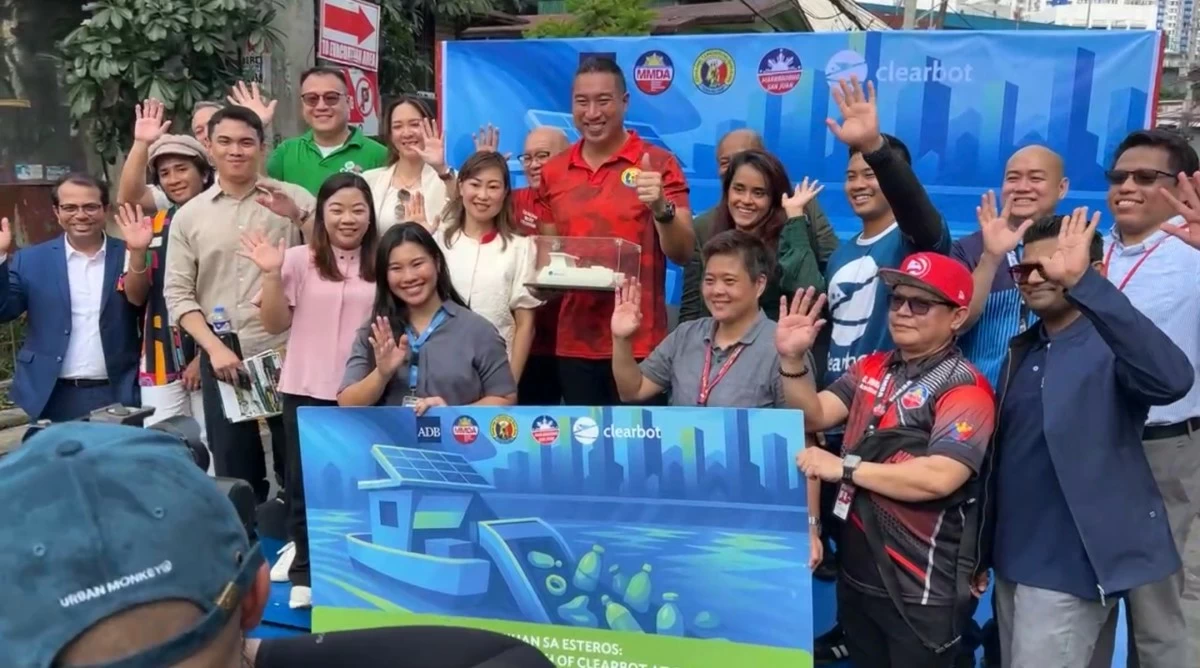
San Juan City Mayor Francis Zamora, together with officials from the MMDA, ADB, and ClearBot, pose for a photo while holding a miniature model of the ClearBot robotic vessel during its launch in San Juan City on Thursday, Dec. 11. (Photo by Patrick Garcia)

San Juan City Mayor Francis Zamora on Thursday, Dec. 11, lauded the use of modern technology in response to the perennial problem of accumulated trash and other debris in the National Capital Region's (NCR) waterways, which causes severe flooding in Metro Manila and nearby provinces.

Zamora made the statement during the demonstration of the Clear Robotics (ClearBot) vessel designed to remove floating garbage from waterways, which was held along the San Juan River.

Also in attendance at the launch were several representatives from the Asian Development Bank (ADB), including Christine Po King Chan, Principal Urban Development Specialist, Lar Chua, ADB Stakeholder Specialist, George Cheung from SM Cares, and representatives from Clear Robotics alongside other partner organizations.

ClearBot, already utilized in other parts of Metro Manila to support river rehabilitation, uses artificial intelligence and real-time telemetry to detect and collect trash and other obstructions, helping keep waterways clean and more navigable.

Clear Robotics CEO and founder Sidhant Gupta explained the vessel is also semi-autonomous, capable of capturing AI data on all waste collected. This system creates a digital twin to "track, analyze, and stop pollution at its source."

For the waste collected, it will be transported to a local partner’s sorting facility. High-value materials will be recycled or upcycled through partner programs, while non-recyclable waste will be characterized and weighed for proper disposal.

"The vessels can collect up to 500 kilograms of general waste and as much as 1,500 kilograms specifically for cleaning water hyacinth," Gupta said.

Zamora welcomed the initiative, stressing that ClearBot's introduction is part of the city’s broader initiative to decongest the San Juan River, improve water flow, and reinforce long-term flood mitigation strategies.

“We are very thankful to ADB and MMDA for granting San Juan City the ClearBot. In just a short time, it has already collected more than a ton of trash from the San Juan River. This intelligent and innovative approach is exactly what we need in our fight against the perennial problem of flooding—not only in San Juan or Metro Manila, but throughout the Philippines," Zamora explained.
The mayor emphasized that while technologies like the ClearBot greatly enhance the city’s ability to manage solid waste, public discipline remains crucial.
“Technology can help us, but it cannot replace our responsibility as citizens. I urge everyone to segregate their trash properly and avoid throwing garbage indiscriminately. When waste clogs our drainage and waterways, our communities suffer. Let us work together to keep San Juan clean and flood-free," he stressed.
San Juan City had also been proactive in teaming-up with various private organizations to help with the cause. 

"The city is currently working with the national government and San Miguel Corporation for the dredging of heavily silted portions of the San Juan River, a vital step in improving drainage and reducing overflow during heavy rains. San Juan City has also intensified efforts to remove illegal settlers and illegal structures blocking river easements and drainage pathways," Zamora said, adding the city government targets to build two more pumping stations to strengthen its flood control capacity and ensure faster water discharge during typhoons and monsoon rains.

It had also partnered with the Mother Earth Foundation, an environmental non-government organization (NGO), to train barangay personnel on proper waste segregation, waste management education, and community-based solid waste campaigns.

"These efforts aim to reduce the amount of garbage entering waterways and enhance barangay-level compliance with ecological waste management standards," the mayor noted.

Bayanihan sa Estero initiative

In August, the city government and the MMDA launched the “Bayanihan sa Estero Program” at Lambingan Bridge, which aims to mitigate flooding and promote environmental sustainability.

The program is part of the city government’s request for waterways clearing and cleanup, aligned with the MMDA’s continuing efforts to strengthen flood control measures in Metro Manila.

The simultaneous cleanup and dredging operation deployed MMDA dredging equipment, garbage collection trucks, and manpower, in partnership with civil society organizations.

Aside from mitigating flooding, the local government added that the operation also aims to restore the natural flow of waterways.

The cleanup includes volunteers from private partner organizations who will work with the MMDA in clearing debris and obstructions in San Juan’s critical waterways.

Related Tags

SAN JUAN CITY FRANCIS ZAMORA CLEARBOT RIVER CLEANING FLOODING FLOOD CONTROL METRO NEWS AI
ADVERTISEMENT
.most-popular .layout-ratio{ padding-bottom: 79.13%; } @media (min-width: 768px) and (max-width: 1024px) { .widget-title { font-size: 15px !important; } }

{{ articles_filter_1561_widget.title }}

.most-popular .layout-ratio{ padding-bottom: 79.13%; } @media (min-width: 768px) and (max-width: 1024px) { .widget-title { font-size: 15px !important; } }

{{ articles_filter_1562_widget.title }}

.most-popular .layout-ratio{ padding-bottom: 79.13%; } @media (min-width: 768px) and (max-width: 1024px) { .widget-title { font-size: 15px !important; } }

{{ articles_filter_1563_widget.title }}

{{ articles_filter_1564_widget.title }}

.mb-article-details { position: relative; } .mb-article-details .article-body-preview, .mb-article-details .article-body-summary{ font-size: 17px; line-height: 30px; font-family: "Libre Caslon Text", serif; color: #000; } .mb-article-details .article-body-preview iframe , .mb-article-details .article-body-summary iframe{ width: 100%; margin: auto; } .read-more-background { background: linear-gradient(180deg, color(display-p3 1.000 1.000 1.000 / 0) 13.75%, color(display-p3 1.000 1.000 1.000 / 0.8) 30.79%, color(display-p3 1.000 1.000 1.000) 72.5%); position: absolute; height: 200px; width: 100%; bottom: 0; display: flex; justify-content: center; align-items: center; padding: 0; } .read-more-background a{ color: #000; } .read-more-btn { padding: 17px 45px; font-family: Inter; font-weight: 700; font-size: 18px; line-height: 16px; text-align: center; vertical-align: middle; border: 1px solid black; background-color: white; } .hidden { display: none; }
function initializeAllSwipers() { // Get all hidden inputs with cms_article_id document.querySelectorAll('[id^="cms_article_id_"]').forEach(function (input) { const cmsArticleId = input.value; const articleSelector = '#article-' + cmsArticleId + ' .body_images'; const swiperElement = document.querySelector(articleSelector); if (swiperElement && !swiperElement.classList.contains('swiper-initialized')) { new Swiper(articleSelector, { loop: true, pagination: false, navigation: { nextEl: '#article-' + cmsArticleId + ' .swiper-button-next', prevEl: '#article-' + cmsArticleId + ' .swiper-button-prev', }, }); } }); } setTimeout(initializeAllSwipers, 3000); const intersectionObserver = new IntersectionObserver( (entries) => { entries.forEach((entry) => { if (entry.isIntersecting) { const newUrl = entry.target.getAttribute("data-url"); if (newUrl) { history.pushState(null, null, newUrl); let article = entry.target; // Extract metadata const author = article.querySelector('.author-section').textContent.replace('By', '').trim(); const section = article.querySelector('.section-info ').textContent.replace(' ', ' '); const title = article.querySelector('.article-title h1').textContent; // Parse URL for Chartbeat path format const parsedUrl = new URL(newUrl, window.location.origin); const cleanUrl = parsedUrl.host + parsedUrl.pathname; // Update Chartbeat configuration if (typeof window._sf_async_config !== 'undefined') { window._sf_async_config.path = cleanUrl; window._sf_async_config.sections = section; window._sf_async_config.authors = author; } // Track virtual page view with Chartbeat if (typeof pSUPERFLY !== 'undefined' && typeof pSUPERFLY.virtualPage === 'function') { try { pSUPERFLY.virtualPage({ path: cleanUrl, title: title, sections: section, authors: author }); } catch (error) { console.error('ping error', error); } } // Optional: Update document title if (title && title !== document.title) { document.title = title; } } } }); }, { threshold: 0.1 } ); function showArticleBody(button) { const article = button.closest("article"); const summary = article.querySelector(".article-body-summary"); const body = article.querySelector(".article-body-preview"); const readMoreSection = article.querySelector(".read-more-background"); // Hide summary and read-more section summary.style.display = "none"; readMoreSection.style.display = "none"; // Show the full article body body.classList.remove("hidden"); } document.addEventListener("DOMContentLoaded", () => { let loadCount = 0; // Track how many times articles are loaded const offset = [1, 2, 3, 4, 5, 6, 7, 8, 9, 10]; // Offset values const currentUrl = window.location.pathname.substring(1); let isLoading = false; // Prevent multiple calls if (!currentUrl) { console.log("Current URL is invalid."); return; } const sentinel = document.getElementById("load-more-sentinel"); if (!sentinel) { console.log("Sentinel element not found."); return; } function isSentinelVisible() { const rect = sentinel.getBoundingClientRect(); return ( rect.top < window.innerHeight && rect.bottom >= 0 ); } function onScroll() { if (isLoading) return; if (isSentinelVisible()) { if (loadCount >= offset.length) { console.log("Maximum load attempts reached."); window.removeEventListener("scroll", onScroll); return; } isLoading = true; const currentOffset = offset[loadCount]; window.loadMoreItems().then(() => { let article = document.querySelector('#widget_1690 > div:nth-last-of-type(2) article'); intersectionObserver.observe(article) loadCount++; }).catch(error => { console.error("Error loading more items:", error); }).finally(() => { isLoading = false; }); } } window.addEventListener("scroll", onScroll); });

Sign up by email to receive news.