







End political dynasties now, usher in people's government
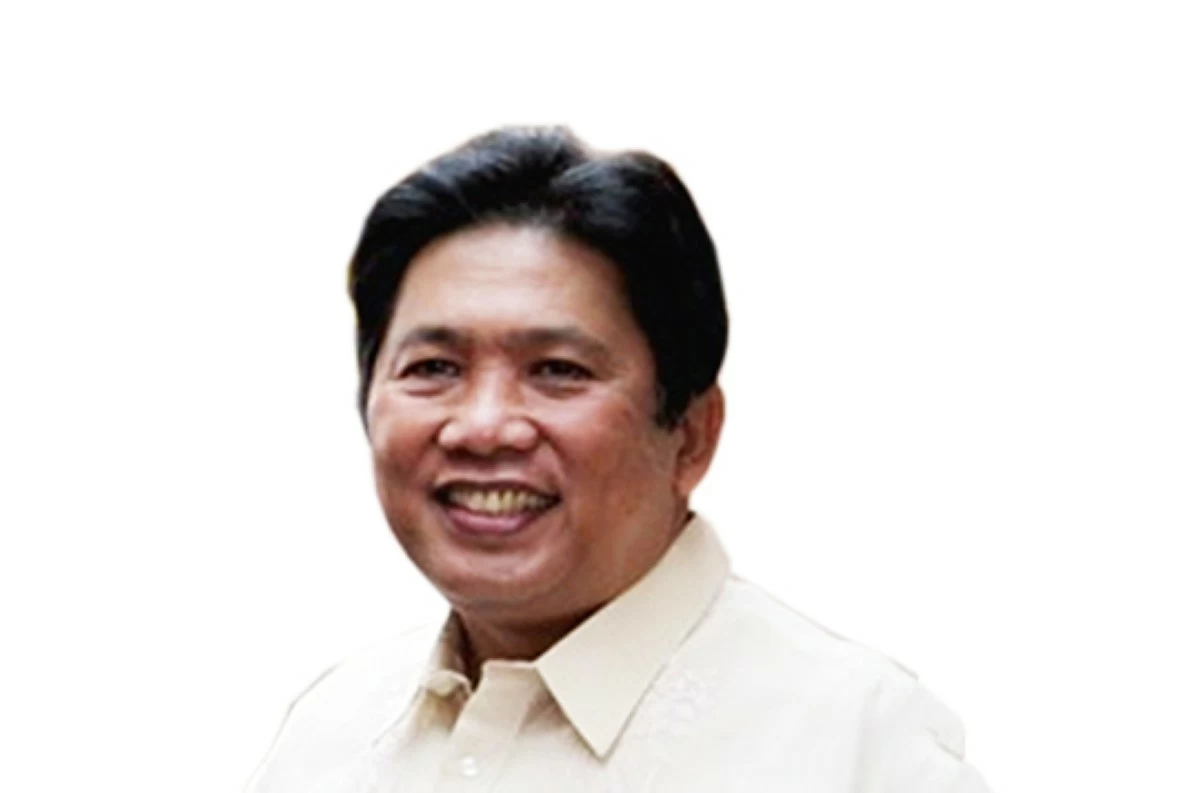
By Sonny Coloma
Published Dec 11, 2025 12:04 am
|
Updated Dec 10, 2025 04:07 pm


ENDEAVOR
The movement to curb and end the reign of political dynasties in the Philippines is underway.
Last Monday, Dec. 8, on a public holiday commemorating the feast of the Immaculate Conception, the Anti-Dynasty Network (ADN) rallied support for the enactment of a comprehensive law that will remove the vise-grip of well-entrenched dynasties on Philippine politics and governance.
This is one of the few specific mandates of the 1987 Constitution that remains unfulfilled simply because no enabling law has been passed to implement its intent. Citing the massive outcry against ghost flood control projects, the ADN noted “the entrenchment, scale, and normalization of corruption” that thrive on account of the glaring reality that national and local politics are dominated by the ruling elite whose core is made up of a few families.
Specifically, the anti-dynasty advocates are pushing for the following reforms:
· No immediate succession into an elective office by a family member.
· A ban covering relatives up to the fourth civil degree of consanguinity or affinity, including grandparents, parents, in-laws, children, siblings, grandchildren, aunts, uncles, and first cousins.
· A prohibition on political families occupying overlapping constituencies, including:
· No two relatives running for or holding the positions of President, Vice President, or Senator at the same time;
· No two relatives holding provincial, city, or municipal offices simultaneously.
· Local officials barred from being related to their area's district representative.
· Relatives of sitting officials barred from being nominated under the party-list system.
Moreover, the ADN declared that genuine political reform also requires complementary electoral reforms and broader citizen engagement.
Thus far, the only laws currently with anti-dynasty provisions are limited in scope: the Sangguniang Kabataan (SK) Reform Law (RA 10742) and the Bangsamoro Electoral Code (BAA 35), which apply restrictions at the youth council and regional levels, respectively.
On closer analysis, these reforms, once enacted, would effectively dilute and eventually demolish the vise-grip of entrenched political clans.
Presently stranded in the legislative mill are several bills, such as Senate Bill (SB) No. 35, filed by Senator Ping Lacson; SB 548 by Senator Grace Poe; and SB 2730 filed by Senator Robin Padilla.
Similar bills are pending with the House of Representatives’ Committee on Suffrage and Electoral Reforms, such as House Bill (HB) No. 389 by Rep. Gabriel Bordado Jr. and HB 1157 by Rep. Raoul Manuel.
On the judicial front, a group of lawyers has filed a petition with the Supreme Court to compel Congress to pass an anti-dynasty law. The case is still pending, and the Supreme Court has not issued a decision directing Congress to pass the law.
Led by Pasig Mayor Vico Sotto and Trillion Peso March convener Kiko Aquino Dee, the ADN actively propa-gates its cause under the IMPACT Leadership banner. It stands for Initiative for Movement-Building, Political Action and Community Transformation (IMPACT). The ADN’s IMPACT commitments and call to action are em-bodied in the following action plan:
· Lobby for the passage of an anti-dynasty law;
· Expand alliances across constituencies and reform sectors, and
· Help deepen discussions on inclusive politics and accountable governance.
ADN also seeks to activate a citizen-driven national dialogue on political dynasties, encouraging networks and stakeholders to articulate a unified position "that will secure a democracy that works for all and not the few."
As early as 2019, even before the pandemic’s onset, IMPACT Leadership launched the #PinkyPromisePH. It was a two-pronged approach to promote voter registration among the youth through a social and traditional media campaign that targeted key micro- and macro- influencers. It initiated partnerships with city colleges and universities, local communities and the Commission on Elections (Comelec) to organize, through its am-bassadors and partners, local events wherein there will be a voter’s education session and satellite voter regis-tration thereafter.
Drawing inspiration from such an initiative, the Manila Bulletin launched on Feb. 10, 2025, its election in-formation campaign called Matalinong Boto 2025 aimed at helping Filipinos prepare to vote during the mid-term elections on May 12.
More than just a hashtag, it projected a broad message contained in three pillars: 1) Facts, not fake news; 2) Peaceful elections, not violence; and 3) Respectful discourse, not mudslinging.
Through Manila Bulletin Online, readers were exposed to articles and infographics that debunked fake news circulating on social media. The Manila Bulletin also collaborated with trusted organizations like fact-checking bodies and universities in presenting accurate and credible information to the reading public.
Moreover, MB launched a video series and published editorials teaching readers how to identify credible news sources and avoid falling prey to purveyors of fake news.
Manila Bulletin’s policy-centric coverage beamed the spotlight on in-depth analyses of candidates’ plat-forms, proposals, and plans as a way to guide voters toward informed decisions.
Given this track record, we at Manila Bulletin are reasonably optimistic that an Anti-Dynasty Law will finally be passed by Congress and usher in a new era in Philippine electoral politics.
Victor Hugo, author of Les Miserables, once declared: “There is something more powerful than all the ar-mies of the world, and that is an idea whose time has come.
Bishop Gerardo Alminaza of San Carlos City, Negros Occidental said: “An Anti-Dynasty Law should be passed without delay.” Such wisdom is echoed by Akbayan Partylist’s Rep. Chel Diokno: "For decades, a handful of families have abused our political system, and this has repeatedly led to corruption. It is time to dismantle political dynasties once and for all."
Finally, here’s a compelling message from Makabayan bloc lawmakers: “The goal is clear—to return gov-ernment to the people, not to the few.”
Comments may be sent to [email protected]