







2025: A year of strategic shifts and pivots
This year, the Philippines' property market seized opportunities, practiced resilience, reinvented offerings, and showed growth potential, as defined by Santos Knight Frank.
Published Dec 11, 2025 04:09 pm


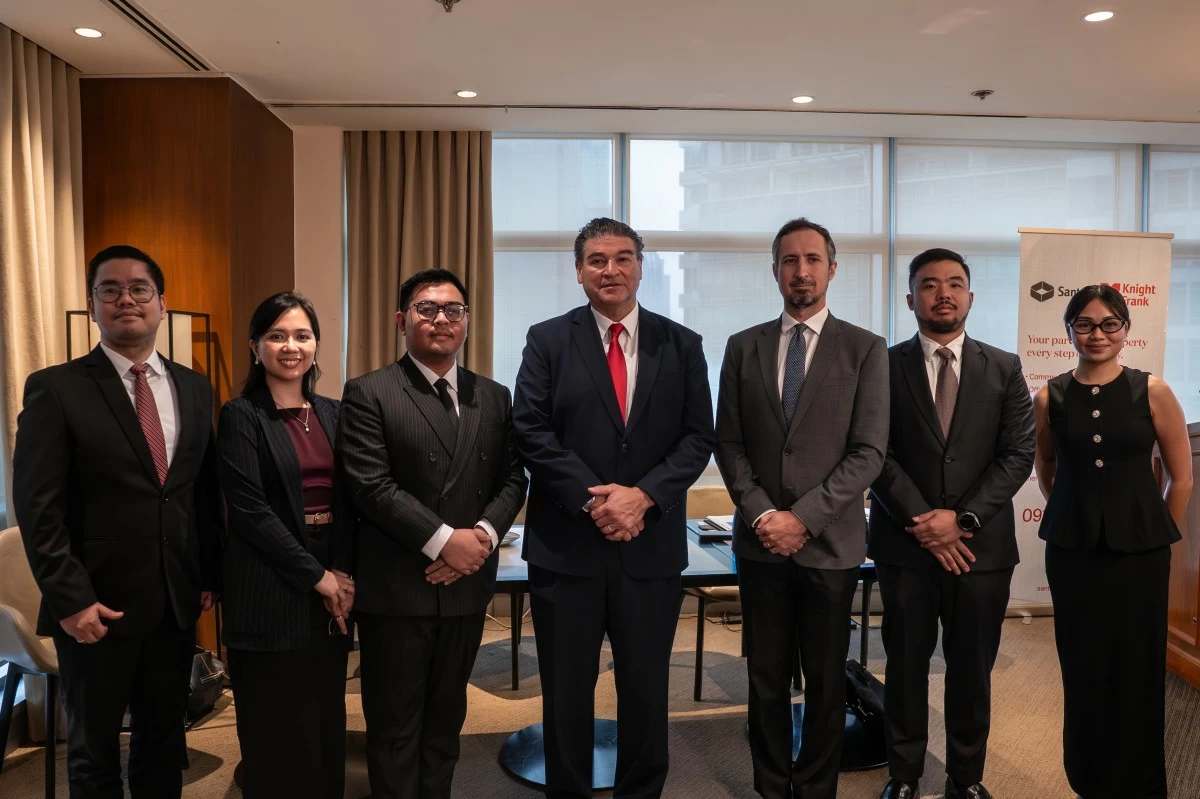
Santos Knight Frank Chairman and CEO Rick Santos (middle) with executives: Manager of Investment and Capital Markets Virgilio Velasco, Marketing Manager Mikee Delos Santos, Head of Residential Leasing and Sales Anjo Sumait, Senior Director for Occupier Strategy and Solutions Morgan McGilvray, Associate Director for Investment and Capital Markets Toby Miranda, and Manager of Research & Consultancy Services Andrea Villadoz
According to global real estate services firm Santos Knight Frank, 2025 was marked by purposeful pivots and structural shifts across the Philippine real estate landscape. In their Year-in-Review report, the firm cited the country’s sound policy environment, involving the landmark legislation of the 99-year lease and the progressive amendments to the REIT, in broadening acceptable assets and unlocking new channels for long-term investment.
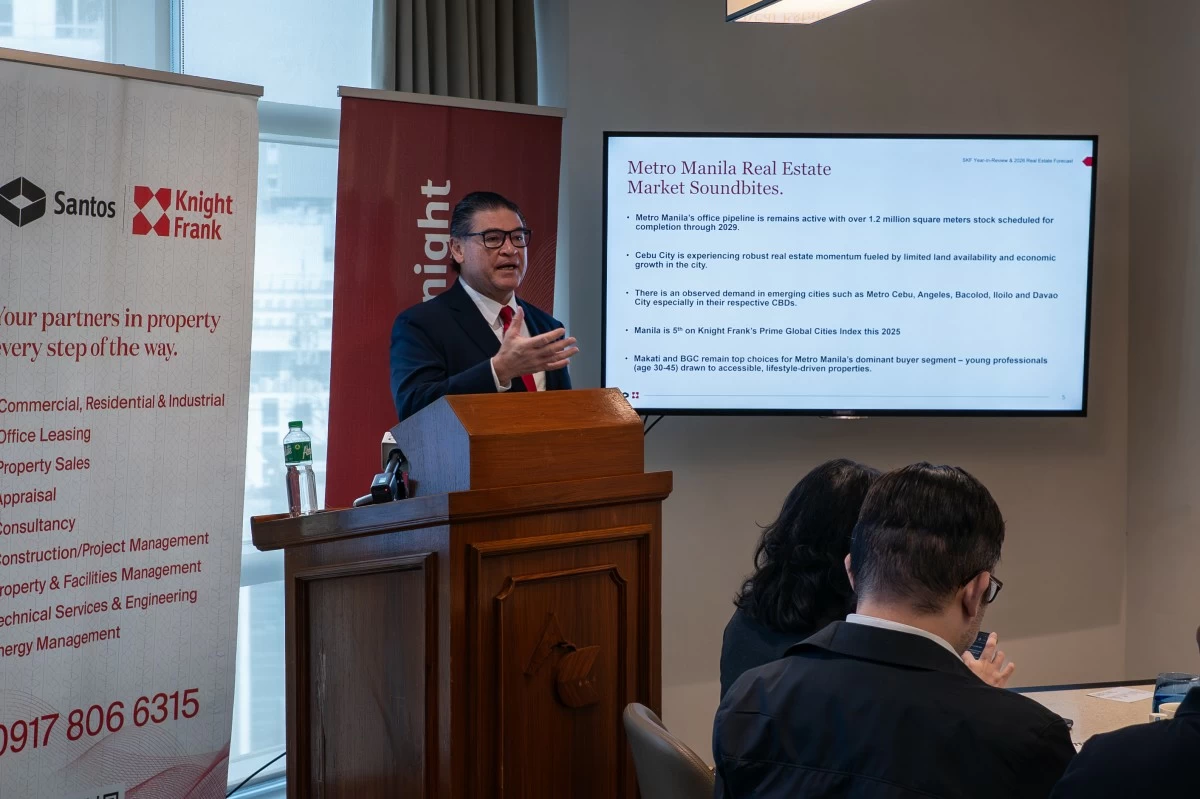
SKF Chairman and CEO Rick Santos
“We’re seeing growth decentralize, with major developments rising in Cebu, Pampanga, Davao, and New Clark City—signaling a more diverse economic trajectory. Across sectors, the market is recalibrating: office supply continues to expand, hospitality is enjoying one of its strongest cycles, retail is moderating, and residential pressures are opening attractive opportunities in the secondary market,” said Rick Santos, chairman and CEO of Santos Knight Frank.
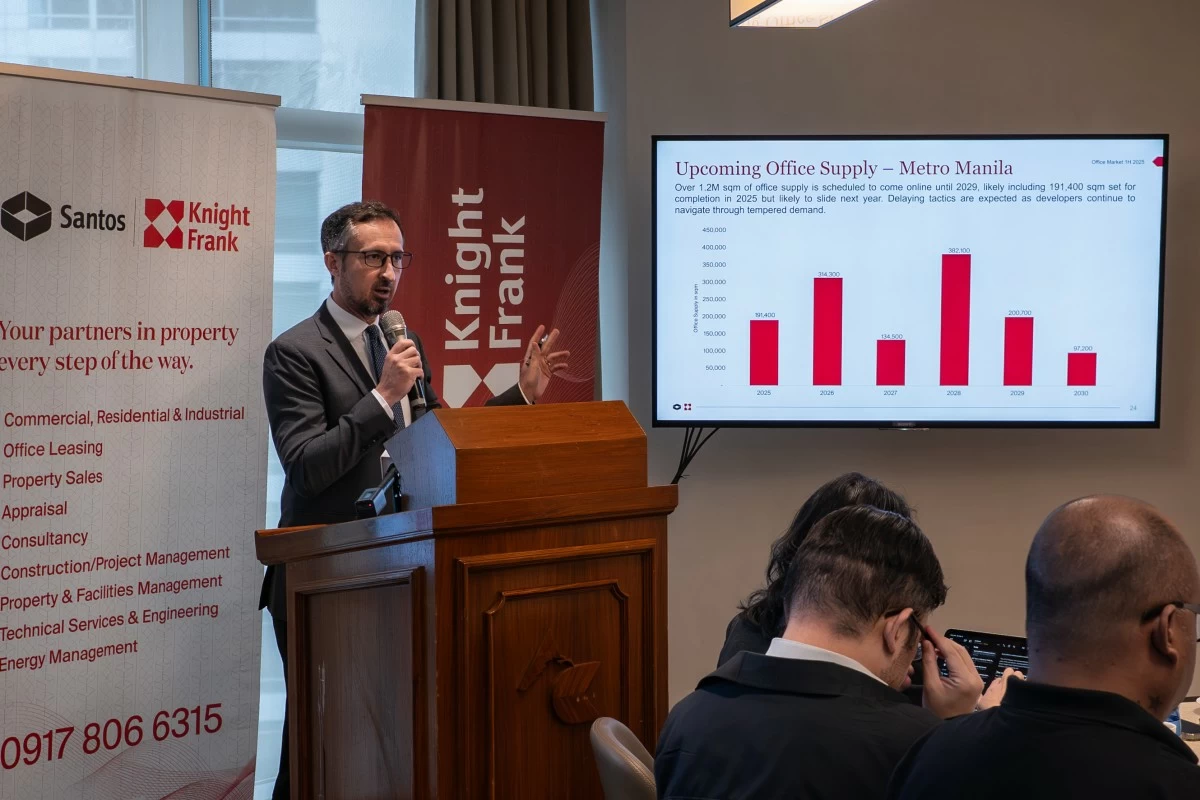
SKF Senior Director for Occupier Strategy and Solutions Morgan McGilvray
In the office sector, Santos Knight Frank Senior Director for Occupier Strategy & Solutions Morgan McGilvray reported the return of the Information Technology and Business Process Management (IT-BPM) firms as the key demand driver for occupancy. However, the trend is not just relevant in Metro Manila, but in the provinces as well. He also noted how sustainability pivoted to the forefront of property developments.
In 2026, McGilvray forecasted that IT-BPM firms, especially Global Capability Centers, would remain as the dominant demand driver, with growth expected from non-US markets. “Provincial growth stays strong as developers shift from speculative builds to build-to-suit for security. Listed and multinational companies will pursue more green initiatives,” he added.
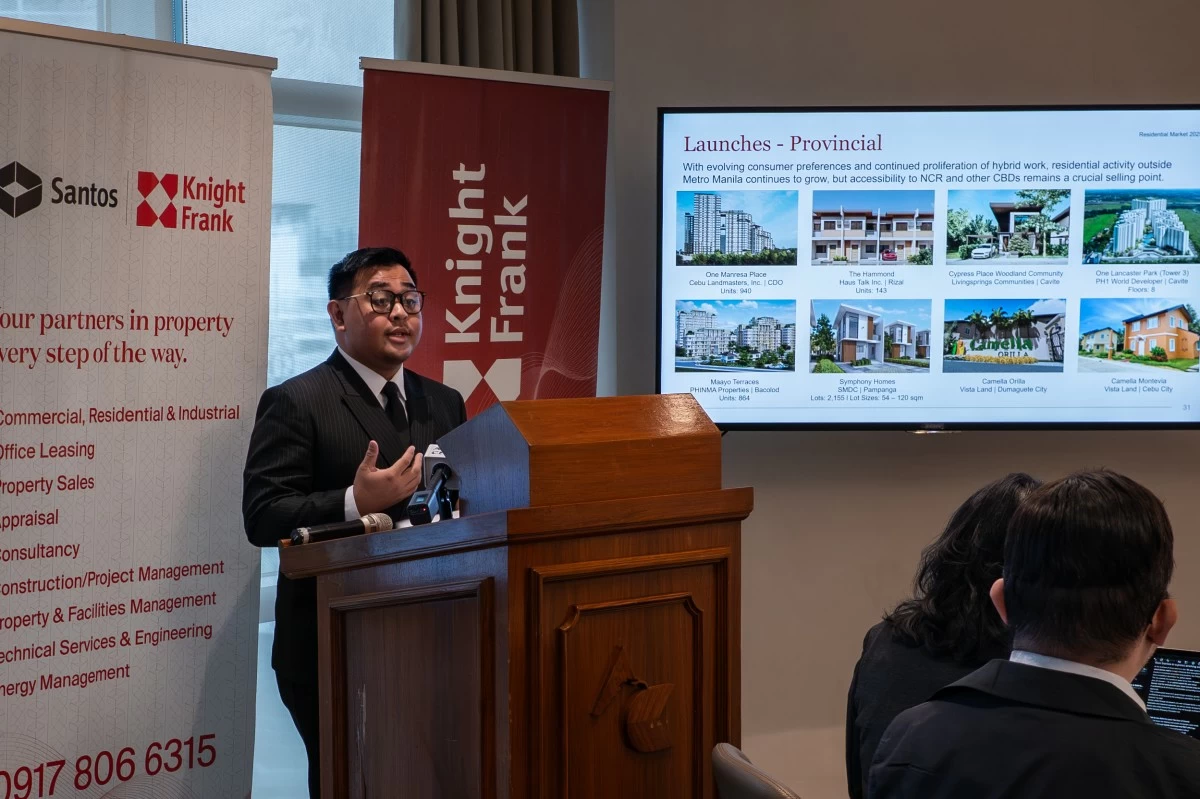
SKF Head of Residential Leasing & Sales Anjo Sumait
Anjo Sumait, the head of Residential Leasing and Sales at Santos Knight Frank, stated that the premium market is Metro Manila's savior. He also noted the continuing activities in the mid-market residential segment outside the capital region. From Metro Manila condo projects, developers were developing more house and lots projects in provincial centers this year.
For 2026, Sumait anticipates that developers will focus on the upscale and luxury segment in Metro Manila and on affordable and mid-priced projects in the provinces. Green projects will also remain a top priority of residential developers.
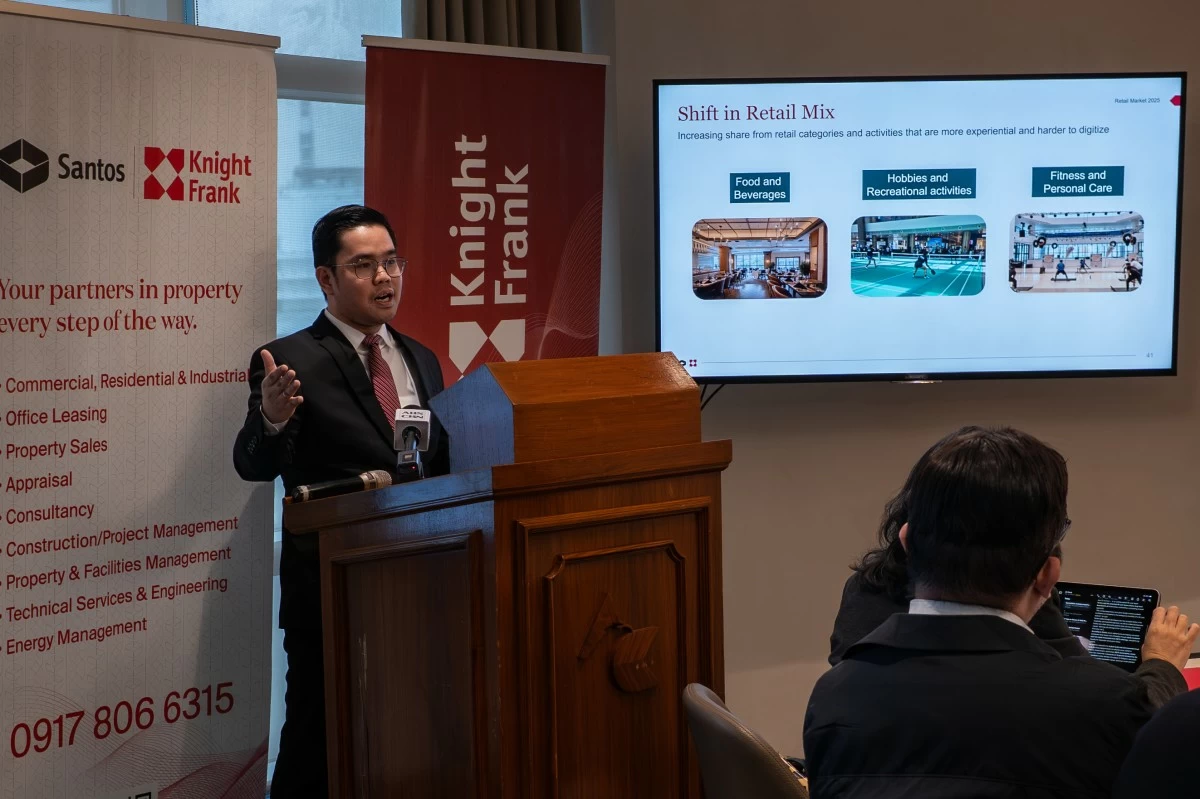
SKF Manager of Investment & Capital Markets Virgilio Velasco
This year, experiential retail was the name of the game for retailers. Santos Knight Frank Manager of Investment and Capital Markets Virgilio Velasco cited the increasing completion and launches of malls in the provinces, as well as the expansion of F&B, hobbies and recreation shops, wellness establishments, and luxury fashion brands.
As the retail segment continues to evolve in 2026, Velasco predicts that developers will repurpose vacant retail spaces into recreational spaces and co-working spaces. Malls are also expected to include green features in their redevelopments.
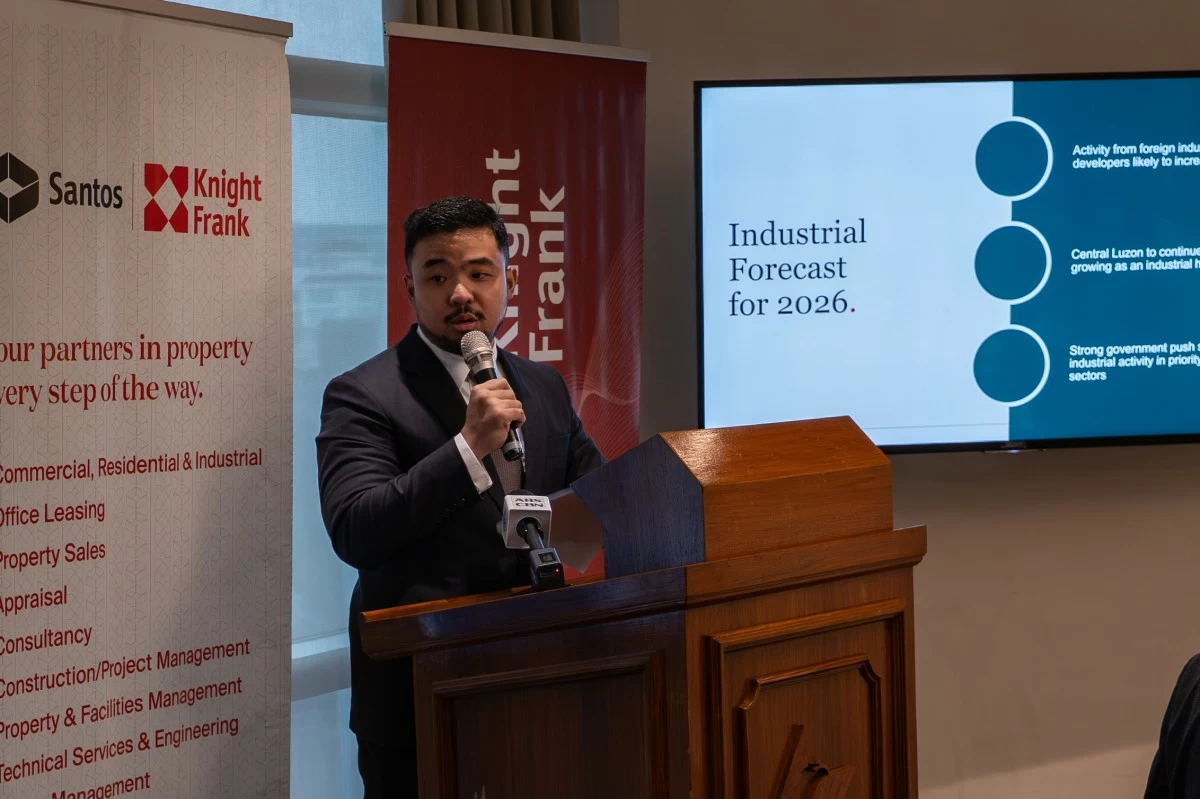
SKF Associate Director for Investment and Capital Markets Toby Miranda
In the hospitality segment, Toby Miranda, Santos Knight Frank associate director for Investment & Capital Markets, presented that domestic tourism continues to drive hospitality demand and that business and leisure trips are no longer distinguishable among visitors.
In the coming year, government initiatives are expected to spur more international tourist arrivals, complementing domestic tourism. Hotels are most likely to offer accommodations for ‘bleisure’ trips. More partnerships between local developers and international hotel operators are seen to bolster the industry.
Miranda noted that major industrial developments took place mainly in Central Luzon in 2025 as the province transforms into an industrial hub next year. There was also a strong government push to spur industrial activity in priority sectors such as local manufacturing, food security, and logistics, under the Proposed Strategic Investment Priority Plan.
Next year, Miranda expects an increase in investments from foreign industrial developers and more specialized facilities to meet the demand beyond storage.