






Manila Bulletin
 Business
Trade & Industry
USDA: Philippine rice imports to plunge by 1.4 million MT due to prolonged ban
Business
Trade & Industry
USDA: Philippine rice imports to plunge by 1.4 million MT due to prolonged ban
Business
Trade & Industry
USDA: Philippine rice imports to plunge by 1.4 million MT due to prolonged ban
USDA: Philippine rice imports to plunge by 1.4 million MT due to prolonged ban
Published Dec 10, 2025 11:31 am


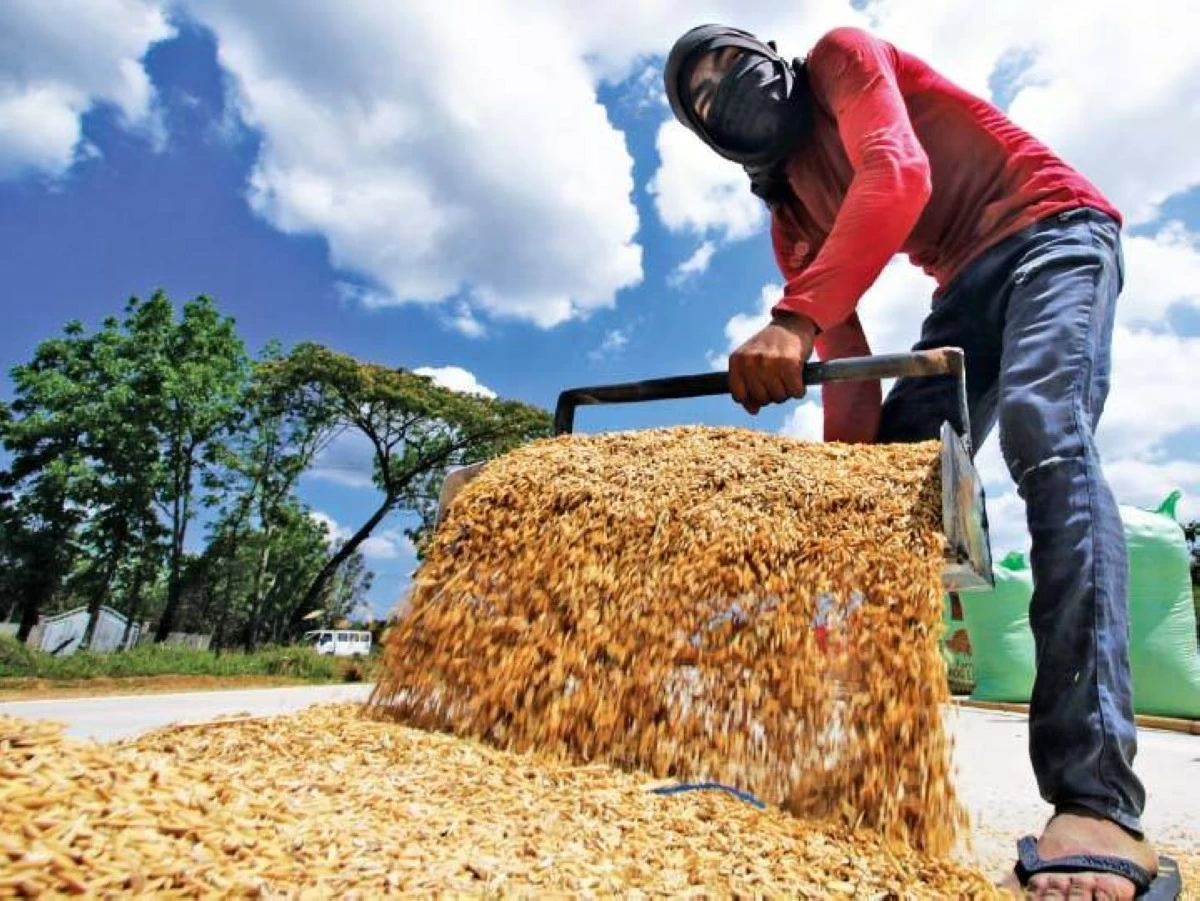
The country’s rice imports for the year are projected to decline by 1.4 million metric tons (MT) following the government’s imposition of a four-month import ban, according to the United States Department of Agriculture (USDA).
In its December report on the global grains trade, the USDA’s Foreign Agricultural Service estimated that the Philippines will import only 3.5 million MT this year, down 29 percent from its revised forecast of 4.9 million MT in the prior report.
The foreign agency attributed the sharp decline to the temporary suspension of rice imports, which started in September.
President Marcos previously ordered a 60-day import ban to avert the decrease in farmgate prices, which have fallen to as low as ₱8 per kilo, driven by the influx of cheaper imported rice.
It was extended to the end of the year after prices continued to plunge, dropping to as low as ₱6 per kilo in some provinces, partly due to the added impact of recent adverse weather conditions.
If the USDA’s projection holds, the Philippines will remain the world’s largest importer of rice, but it will now share the position with Vietnam, which is also expected to import 3.5 million MT this year.
Data from the Bureau of Plant Industry (BPI) showed that 3.34 million MT of rice shipments had arrived in the country as of Dec. 4. Last year, the country imported a total of 4.81 million MT of rice.
For the marketing year 2025 to 2026, the country is expected to retain the top spot with rice imports forecast at 5.5 million MT, while Vietnam will import only 4.1 million MT.
The marketing year for rice starts in July and ends in June.
The government has not yet laid out the import policy for 2026. But, Agriculture Secretary Francisco Tiu Laurel has indicated that the country will “significantly lower import requirements” for the first quarter.
Tiu Laurel previously said the import ban would be lifted only in January, with the suspension reimposed for the following three months in time for the harvest season.
In a separate report, the USDA said the country’s milled rice production will settle at 12.37 million MT, a marginal decline from the initial estimate of 12.40 million MT.
The foreign agency, however, expects the decline to continue into the marketing year 2025 to 2026, with a projected decrease of 300,000 MT.
“After a good start to the Philippines rice crop season, which led to well above-average production estimates, untimely rain fell in early to mid-November stemming from Typhoon Fung-wong. Torrential rains led to localized flooding in the northern Philippines’ major rice-producing provinces, most notably, Central Luzon and the Cagayan Valley,” it said.
Typhoon Fung-wong, known locally as “Uwan,” is estimated to have damaged nearly 30,000 hectares of rice crops, with production losses amounting to ₱732.48 million.
For unmilled rice production, the DA estimates output between 19.61 million and 19.89 million for the year.
The estimate is higher than the 19.09 million MT of palay reported last year, but significantly lower than the initial forecast of surpassing the 2023 record of 20.06 million MT.
Data from the Philippine Statistics Authority (PSA) showed that palay production during the first six months of the year reached 9.08 million MT, while output in the third quarter stood at 3.75 million MT.