






Manila Bulletin
 Philippines
National
'One step closer': National Minimum Wage Bill hurdles House panel
Philippines
National
'One step closer': National Minimum Wage Bill hurdles House panel
Philippines
National
'One step closer': National Minimum Wage Bill hurdles House panel
'One step closer': National Minimum Wage Bill hurdles House panel
Published Dec 10, 2025 05:37 pm


At A Glance
- The House Committee on Labor and Employment has formally approved the consolidated bill establishing a National Minimum Wage System—bringing the country one step closer to crafting a National Minimum Wage Law that will abolish regional wage boards.
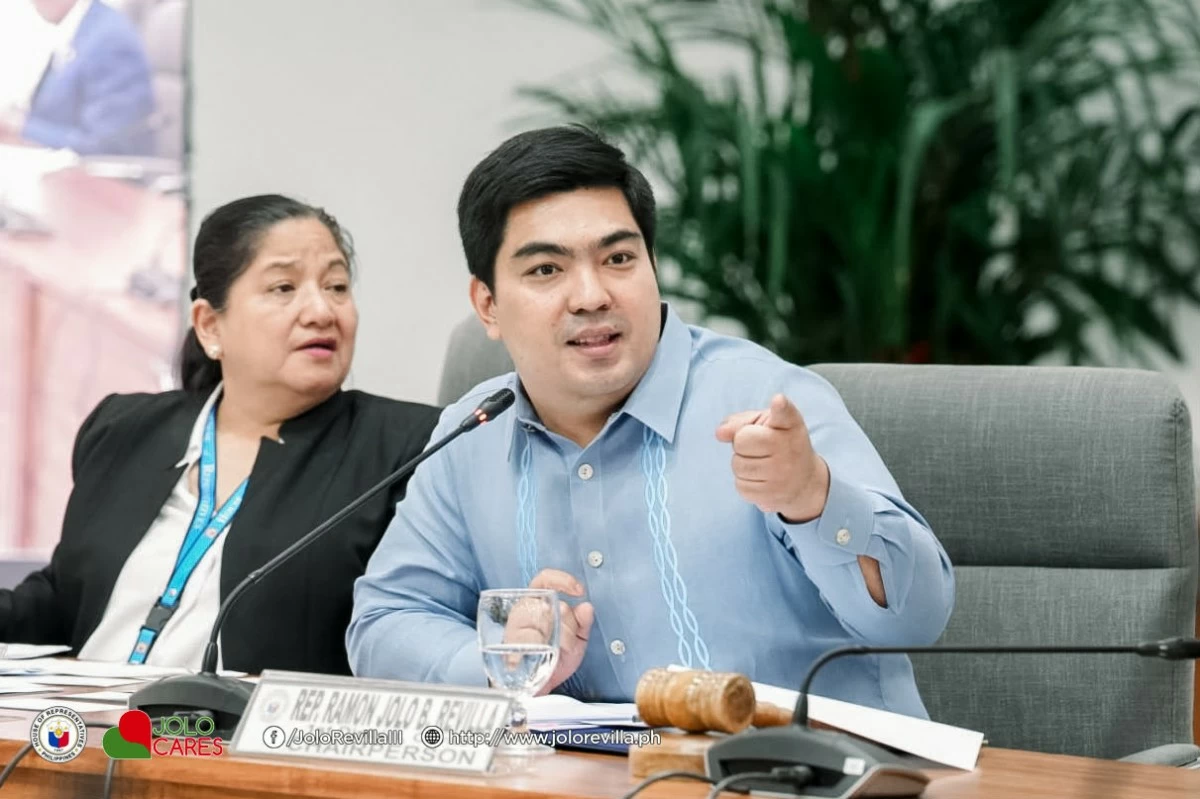
Cavite 1st district Rep. Jolo Revilla (Rep. Revilla's office)
The House Committee on Labor and Employment has formally approved the consolidated bill establishing a National Minimum Wage System—bringing the country one step closer to crafting a National Minimum Wage Law that will abolish regional wage boards.
Committee chairman, Cavite 1st district Rep. Jolo Revilla described the measure as a vehicle toward creating equal wage opportunities across all regions.
Revilla hailed the committee’s action as a significant breakthrough in the long-standing push to end unequal wage treatment among Filipino workers.
He says that the adoption of the substitute bill shows that Congress is moving decisively toward a unified wage-setting system that upholds the principle of equal pay for equal work.
“With the committee’s approval, we are one step closer to ending decades of unfair wage disparities among Filipino workers,” Revilla said, as he noted that the bill was now up for plenary consideration.
“This National Minimum Wage bill reflects our commitment to 'equal pay for equal work', no matter where a worker lives or is employed," he noted.
Under the adopted measure—which consolidated House Bill (HB) Nos 55, 94, 3266, 4102, and 5924—the current multi-tiered regional wage structure will be replaced by a single National Minimum Wage (NMW).
The initial NMW will match the highest prevailing regional minimum wage at the time of effectivity, but in no case will it fall below the NCR rate. Revilla said this ensures that no worker is left behind as the country shifts to a national wage baseline.
To ensure a smooth adjustment, the bill provides a mandatory three-year transition during which all regional minimum wages will gradually align with the national rate.
The transition requires regions to close at least 30 percent of the wage gap in the first year, 35 percent in the second year, and the remaining balance in the third year. By the end of this period, all regions must be fully harmonized with the NMW.
One of the most transformative components of the adopted bill is the abolition of the Regional Tripartite Wages and Productivity Boards (RTWPBs). Once the NMW s fully implemented, these boards will be dissolved, and wage-setting authority will be centralized under a reorganized and strengthened National Wages and Productivity Commission (NWPC).
The NWPC will determine and fix the NMW annually, issue temporary wage adjustment orders during economic disruptions, and convene an annual national tripartite wage conference.
RTWPB personnel will be absorbed, reassigned, or granted appropriate separation or retirement benefits in accordance with civil service rules.
Revilla said the adoption of the bill reaffirms the committee’s commitment to building a transparent, predictable, and data-driven wage system that responds to national conditions rather than fragmented regional mechanisms.
The Department of Labor and Employment's (DOLE) enforcement mechanisms are strengthened as well, including mandatory worker or union representation during inspections.
Penalties for violations will include payment of double the unpaid wages and imprisonment of one to two years.
Revilla said the adoption of the measure marks a historic step toward fairness and dignity for Filipino workers, noting that equalizing wage opportunities nationwide will uplift families, improve labor mobility, and support long-term national development.