






Lung health in the Philippines remains a serious and urgent concern. Respiratory diseases continue to rank among the leading causes of death in the country. As of 2025, pneumonia is the fourth leading cause of death, with more than 33,040 recorded cases. Chronic lower respiratory diseases and respiratory tuberculosis also ranked among the top ten causes of death from January to September 2024, underscoring the persistent burden of respiratory illness among Filipinos.
Manila Bulletin
 Lifestyle
Health and Wellness
Manila welcomes the 2025 APSR, highlighting the country's dedication to elevating Respiratory Care
Lifestyle
Health and Wellness
Manila welcomes the 2025 APSR, highlighting the country's dedication to elevating Respiratory Care
Lifestyle
Health and Wellness
Manila welcomes the 2025 APSR, highlighting the country's dedication to elevating Respiratory Care
Manila welcomes the 2025 APSR, highlighting the country's dedication to elevating Respiratory Care
Published Dec 10, 2025 07:12 pm


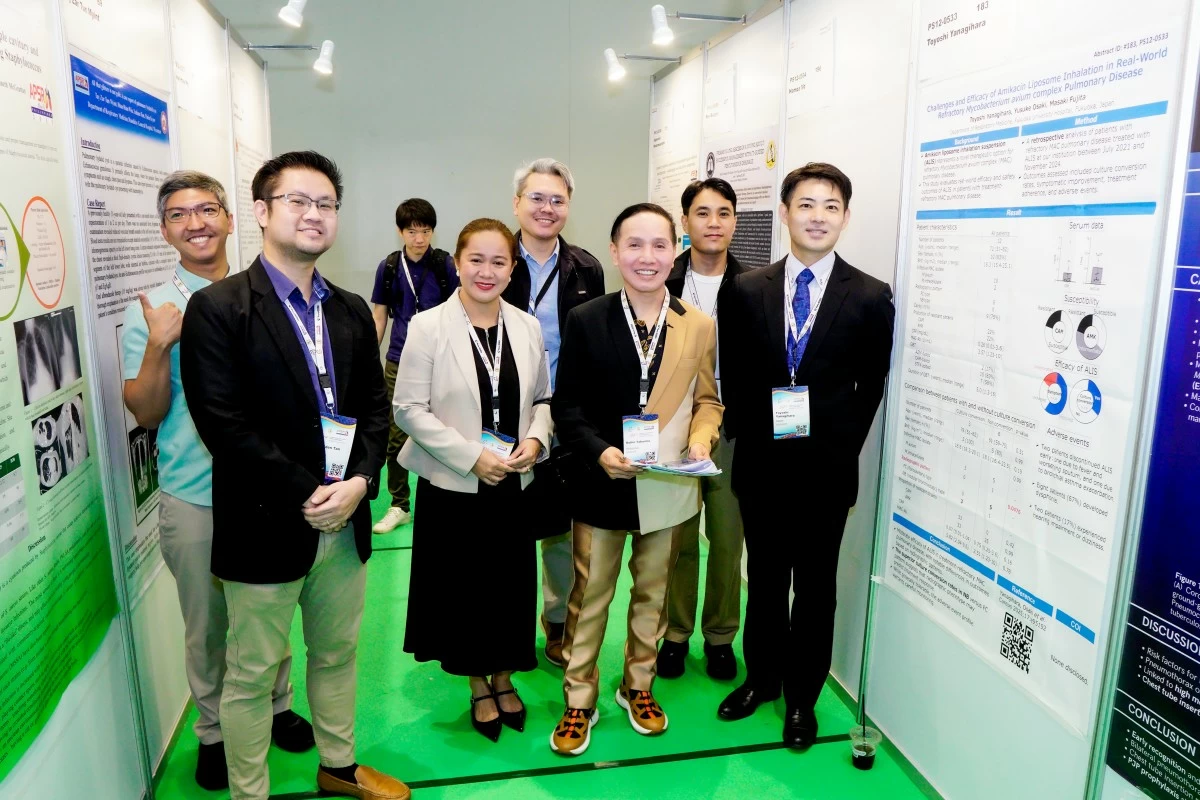
From Left: Dr. Shaira Arinzol, Dr. Dhenver Fenis, Dr. Rollin Tabuena, and Dr. Paul Jison, with the presenters
The Philippines continues to grapple with long-standing challenges in respiratory health—from the persistent burden of asthma and COPD to the growing threats posed by air pollution, infectious diseases, and limited access to advanced pulmonary care.
These issues place significant strain on local clinical settings, where healthcare professionals work tirelessly to manage complex cases amid evolving medical demands. In this landscape, progress in lung health is not just important—it is essential to improving patient outcomes, strengthening healthcare systems, and safeguarding community wellbeing.

From left: Dr. Paul Jison, Dr. Rollin Tabuena, Dr. Shaira Arinzol, and Dr. Dhenver Fenis with resident presenters at Iloilo Mission Hospital
The Asia Pacific Society of Respirology (APSR)
Against this backdrop, the APSR Congress emerges as a timely and meaningful gathering. By bringing together leading experts, researchers, and clinicians from across the Asia-Pacific region, the Congress fosters collaboration, showcases cutting-edge innovations, and equips local practitioners with the latest knowledge in respiratory medicine
The 29th Congress of the Asia Pacific Society of Respirology (APSR) was held on November 10–13, 2025, at the SMX Convention Center, MOA Complex, Pasay City, Philippines. Organized by the Philippine College of Chest Physicians (PCCP), this year’s edition is centered on the theme “Solidarity in Lung Health.” The theme appropriately reflects the realities we face and the collective action required to overcome the various respiratory diseases and pulmonary challenges in the region.
A gathering for exchanging insights, knowledge, and fostering collaborations that transcend geographical boundaries, promoting innovation in respiratory medicine. United by a common purpose to elevate pulmonary care standards and improve patient outcomes amid evolving respiratory challenges, participants come together to illuminate a path toward a future where lung health is universally prioritized.
Attended by various healthcare professionals, researchers, and clinicians in the field of pulmonary medicine from across the world, this year’s event marks a significant moment for the Philippines as it proudly hosts the Asia Pacific Society of Respirology (APSR) Congress. Serving as a platform for global collaboration and scientific exchange, the Congress highlights the country’s growing role in regional respiratory research, education, and clinical advancement. It underscores the Philippines’ commitment to strengthening lung health initiatives and contributing meaningfully to the evolving landscape of respiratory medicine in the Asia-Pacific region.
Shaping the future of Respiratory Health
Among the delegates who graced the ASPR congress was a prominent researcher, pulmonologist, and international bronchoscopy specialist, Dr. Rollin Tabuena, who graduated from the WVSU–College of Medicine in 1994. In 2006, he was also recognized as a “Young Scientist Award by the Department of Science and Technology, and this July 2025, he was given the recognition as the Distinguished Alumni Award in Research by his dear alma mater, West Visayas State University College of Medicine (WVSUCOM) during the 50th foundation anniversary at WVSU COM, Lapaz, Iloilo City.
Tabuena's accolades, recognitions, and extensive research bring valuable Philippine perspectives to the global discussion on respiratory health. His presence at the Congress reinforces the importance of showcasing local expertise on the international stage and aligns with the event’s mission of fostering regional collaboration. By contributing insights grounded in the country’s unique clinical challenges and advancements, he helps strengthen the collective pursuit of improved lung health across the Asia-Pacific.
He authored studies that make significant contributions to the field. One highlights the importance of TB-LAMP in a rare case of tuberculous meningitis (TBM) complicated by secondary normal pressure hydrocephalus (NPH) in an 85-year-old Filipino woman, along with His colleague at Iloilo Mission Hospital, Dr Shaira Ainzol. Another poster presents a 54-year-old immunocompromised woman with pulmonary aspergilloma who experienced recurrent massive hemoptysis, demonstrating that dual-action antifungal therapy can serve as an effective alternative for high-risk patients ineligible for surgery, emphasizing the growing role of medical management in pulmonary aspergilloma. This paper was done at West Visayas State University College of Medicine along with his co-authors, like Dr Ma. Daisy Tabuena and Christine Train Bilbao.
Additionally, a poster presented a rare case of pulmonary hamartoma with left hilar endobronchial extension in a 63-year-old Filipino woman, highlighting the critical importance of distinguishing hamartomas from malignant tumors, especially when symptoms such as airway obstruction or recurrent infections are present. The case was presented by Dr. Dhenver Fenis from Iloilo Mission Hospital, with pathologist Dr. Ray Olac.
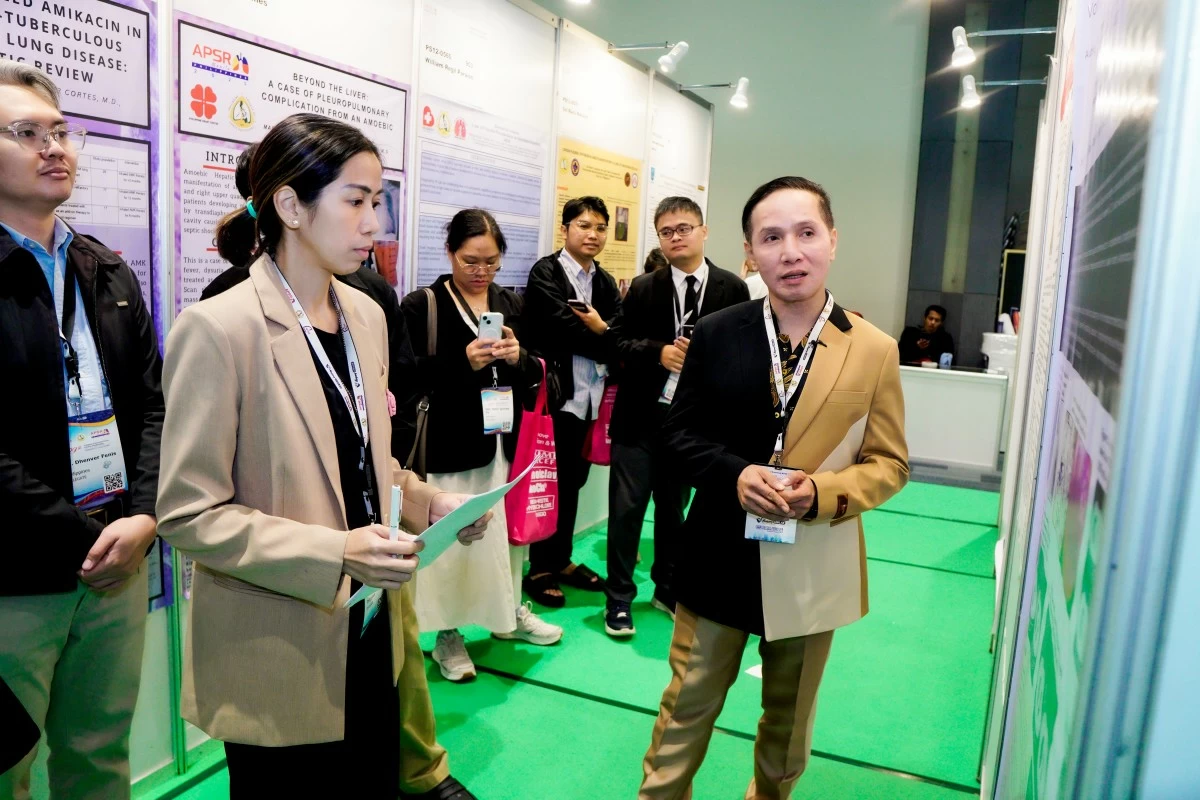
Dr. Rollin Tabuena presents the case report, Aspergilloma, with the moderator
In this role, Dr. Tabuena facilitated one of the poster sessions at the Congress, sharing his expertise and insights while guiding discussions and interactions among presenters and attendees. By moderating the session, he highlighted key research findings, encouraged scholarly dialogue, and fostered a collaborative environment that promoted the exchange of knowledge within the field.
His contributions were one of the highlights of the Congress, reflecting his expertise in pulmonary and critical care, medical education, and leadership within local respiratory societies. Through his active engagement, he not only showcased his areas of strength but also enriched the broader discussions at APSR, fostering meaningful exchanges and advancing the collective understanding of respiratory health in the region.
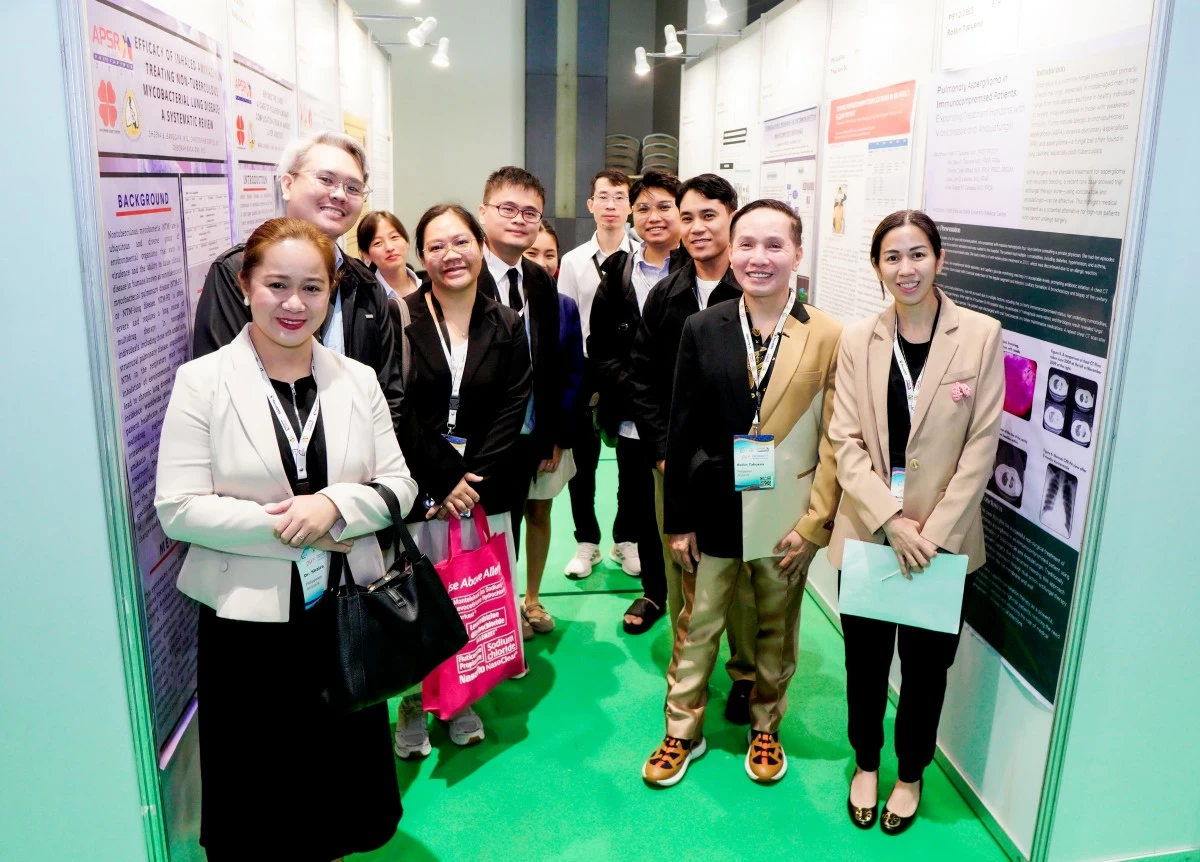
From Left: Dr. Shaira Arinzol, Dr. Dhenver Fenis, Dr. Paul Jison, and Dr. Rollin Tabuena. Dr. Tabuena’s case presentation with fellow presenters and moderators
The Asia Pacific Society of Respirology (APSR) transformed Manila into a hub where the region came together to share stories, explore solutions, and celebrate scientific breakthroughs. Over the three days of the Congress, participants exchanged ideas, strengthened collaborations, and carried the inspiration gained back into their research, practice, and policy efforts at home. The Congress proved to be a memorable and fruitful experience for all attendees, united by a common purpose: advancing respiratory health across the Asia Pacific.
In the face of evolving respiratory challenges, health stewards stood together, driven by a shared passion for excellence, illuminating a path toward a future where lung health is universally prioritized.