







Leaders as healers
Published Dec 10, 2025 12:05 am


THE VIEW FROM RIZAL
When I decided to enter government service some 21 years ago, many of my friends and relatives asked me this question: “Didn’t you waste your years in medical school by opting to become a public servant?”
Reflecting on that question, I realized how relevant it felt as I received the invitation to speak at the commencement of the Southeast Asia Interdisciplinary Institute (SAIDI) Graduate School of Organizational Development and Planning. It prompted me to revisit the deeper reasons behind my career journey—and the threads that connect medicine, public service, and organizational leadership.
Unknown, perhaps, to many, there is a prestigious international institution of higher learning tucked away in a quiet corner of Antipolo City, near the famous Hinulugang Taktak. I understand that SAIDI is a 70-year-old institution and established its presence in Manila in 1965. It moved to Antipolo in 1983, becoming what I loved to refer to as an “Antipoleño-by-choice” – a reference to the more than 75 percent of the residents of this city who came from other places and chose to make it their home.
SAIDI has a prestigious roster of graduates from the Philippines and other countries. Its presence in Antipolo provides another reason why the city has become the preferred home for families looking for an ideal place to raise their children while staying close to their places of work in the National Capital Region.
SAIDI’s alumni are among the country’s leading specialists in the field of organizational development. The invitation to speak before the Class of 2025 gave me the inspiration to reflect on the similarity between what an organizational development expert and a physician do.
The similarity expands when the physician is also a community leader.
My course in medicine had been a good preparation for public service. A doctor, in the first place, is trained to be a public servant. Even while on an internship, a medical student realizes that he or she faces a life where others own his or her time. Being a doctor is a 24/7 kind of job. So is being a local government executive.
Here are other interesting similarities between a doctor and a public servant: both use the gift of listening and understanding.
A doctor begins all diagnoses by feeling the human pulse, listening to the human heart, and understanding how a patient sees their ailment. He won’t jump to a conclusion or make any prescription until he has seen the complaint from every possible angle.
So does a mayor. He cannot and must not pretend to know what his constituents’ problems and aspirations are until he has listened closely to them.
The LGU executive looks at the community he serves the way he would look at the human body. Both are made up of systems. Each system has to be healthy and working well. Every system has to work well with other systems so that the body or the province can be healthy and productive.
The body has a cardiovascular, digestive, excretory, and circulatory system, and several others, all working as a team, independent yet co-dependent. The same is true for organizations, including human communities. The LGU head is actually a practitioner of organizational development, and organizational development practitioners, just like doctors, are also healers.
More than ever, I realize that it was precisely my medical studies that sparked and fueled the aspiration to become a public servant.
My role today is no different from what I was expected to perform after medical school. After all, the local executive is expected to create a sense of organization among human communities that are constantly plagued by “the deadly virus of clashing interests, discordant behavior, competition for scarce resources and the unhinged instincts for survival, gratification and dominance.”
Leading human communities – in whatever form those communities take – is a healing role. And this is exactly what a doctor of medicine does: the physician “helps” the human body to “reorganize” – to get the conflicting systems within the human body to work together again.
The leader of the human organization is tasked to help it heal – to get it to reorganize. He does this in the way the physician does it to the human body. The organizational leader performs the healing role by reconciling clashing interests; by harmonizing discordant human behavior; by wisely allocating scarce resources.
Perhaps, one of the most difficult tasks of healing the human organization is to tame the human drive for survival, gratification, and dominance.
In our view, it is that drive that has triggered a lot of the problems we face today.
More than ever, we need leaders who can help our nation heal.
Let us make this our collective Christmas wish.
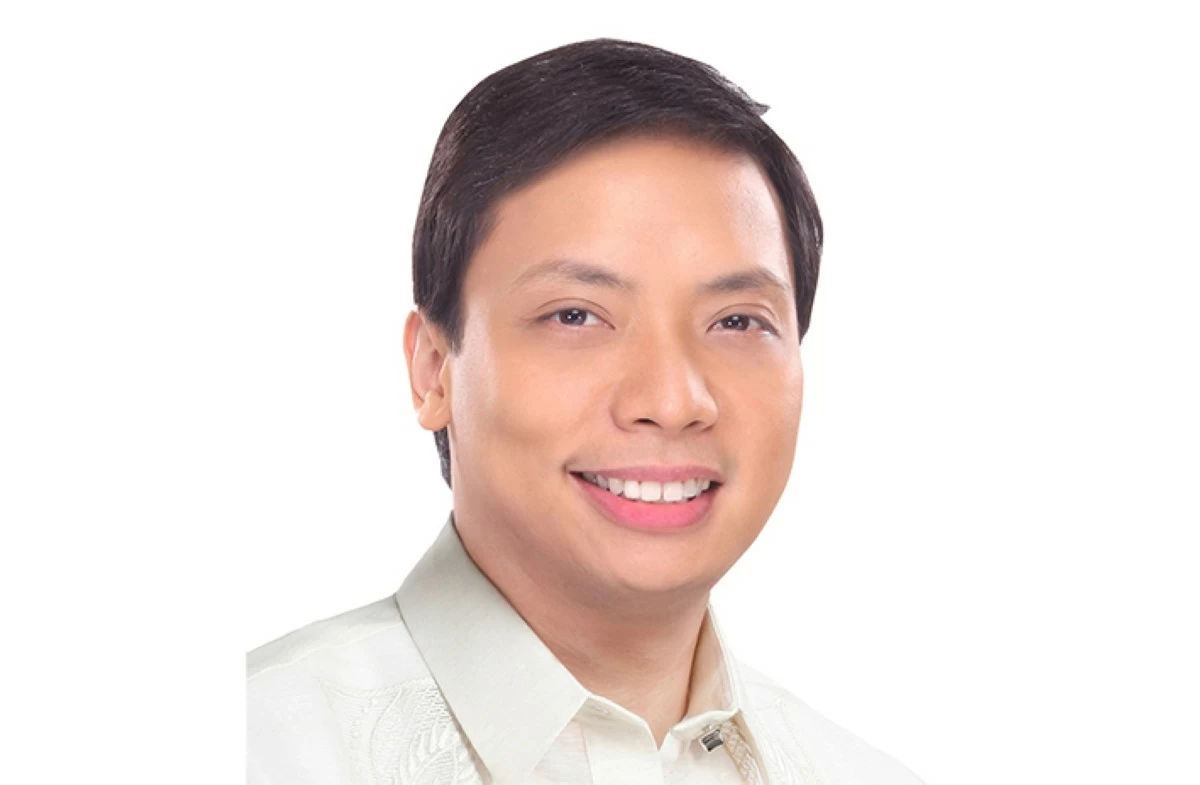
(The author is a Doctor of Medicine, an entrepreneur and the mayor of Antipolo City, former Rizal governor, and DENR assistant secretary, LLDA general manager. Email: [email protected])