






Manila Bulletin
 Philippines
National
A boon to the country: Brian Poe cites benefits of NAIA privatization
Philippines
National
A boon to the country: Brian Poe cites benefits of NAIA privatization
Philippines
National
A boon to the country: Brian Poe cites benefits of NAIA privatization
A boon to the country: Brian Poe cites benefits of NAIA privatization
Published Dec 10, 2025 10:33 pm


At A Glance
- FPJ Panday Bayanihan Party-List Rep. Brian Poe has highlighted the economic benefits that the country will get via the New NAIA Infra Corp. (NNIC) public-private partnership (PPP) project on the rehabilitation of the Ninoy Aquino International Airport (NAIA).
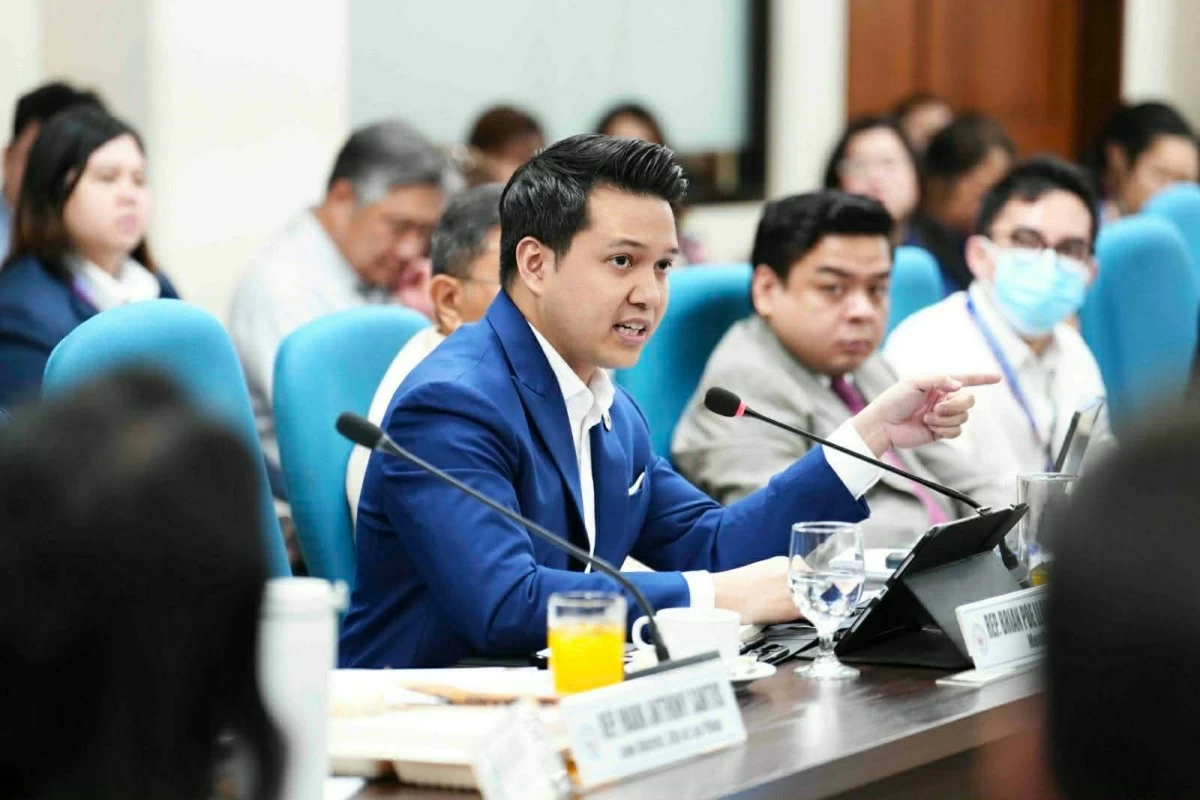
FPJ Panday Bayanihan Party-List Rep. Brian Poe (Rep. Poe's office)
FPJ Panday Bayanihan Party-List Rep. Brian Poe has highlighted the economic benefits that the country will get via the New NAIA Infra Corp. (NNIC) public-private partnership (PPP) project on the rehabilitation of the Ninoy Aquino International Airport (NAIA).
This, as Poe interpellated NNIC General Manager Cesar Chiongon Wednesday, Dec. 10 during the House Committee on Transportation's inquiry on the airport privatization project under House Resolution (HR) No.29.
The public hearing shed light on how the San Miguel-led group planned to remain profitable despite offering a record-breaking 82.16 pecernt gross revenue share to the government—a figure significantly higher than the 33 percent offered by the next competing bidder.
"NNIC is spending ₱30 billion upfront. Annuity is at ₱2 billion over the course of 15 years. You're giving government an 82.16 percent gross revenue share," Poe stated "Just out of curiosity, I mean, with all of these subsidies and 50 percent higher than the competing bidder, are you still profitable?"
Chiong admitted that the consortium was currently operating at a loss--something he attributed to the delayed implementation of passenger terminal fee adjustments and exemptions for tickets purchased prior to Sept. 14.
However, he emphasized that the project is a long-term volume play.
"Our objective is to reach 62 million passengers over the next 4 or 5 years," Chiong noted. He said that while margins were slim, the increase in passenger volume—from 50 million last year to a projected 52 million this year—along with aeronautical fees from increased runway movements, will eventually drive profitability.
"The idea was really to share as much as possible with the government. We will earn, but not that much," he told Poe.
Poe mentioned the broader implication of this private capital infusion. By offloading the cost of NAIA’s rehabilitation to the private sector, government funds can be redirected elsewhere.
"The money that could have gone to renovations here can now renovate our regional airports if the government decides to make that investment. It's a signal to us that if the private sector can do it... [we can] renovate the other regional airports that we need," Poe pointed out.
A key revelation during the hearing was the strategic reassignment of terminals to decongest the airport. Chiong confirmed plans for a new NAIA Terminal 5, which Poe said was a decisive factor in the bid's success.
The NNIC official disclosed that Terminal 5 was envisioned strictly as a domestic passenger terminal.
"As you're aware, sir, out of 50 million passengers, 53 percent of that are actually domestic passengers," Chiong told the committee. He said this shift was designed to return Terminals 1 and 3 to their original design intent as international hubs. Under the new plan, Terminals 2, 4, and 5 will be dedicated to domestic flights.
Addressing passenger "pain points," NNIC announced the imminent rollout of new immigration e-gates--a ₱170.6 billion capital investment commitment that includes upgrading passenger processing technology.
Chiong says that this will assist approximately 6,000 passengers daily.
Poe welcomed the technological upgrades but sought assurance that the cost of these improvements would not be unfairly passed on to travelers. "We have your commitment that they shouldn't be worried about anything?" Poe asked.
Chiong assured the committee that NNIC was bound by strict Key Performance Indicators (KPIs) under the concession agreement, monitored by the Manila International Airport Authority (MIAA). This includes a requirement that 95 percent of passengers must be checked in within 15 minutes.
"If we are not able to deliver, there are some penalties that the government has set," Chiong said.