






Manila Bulletin
 Philippines
National
Yamsuan hails House panel for taking swift action on disaster risk reduction bills
Philippines
National
Yamsuan hails House panel for taking swift action on disaster risk reduction bills
Philippines
National
Yamsuan hails House panel for taking swift action on disaster risk reduction bills
Yamsuan hails House panel for taking swift action on disaster risk reduction bills
Published Dec 9, 2025 01:16 pm


At A Glance
- Parañaque 2nd district Rep. Brian Raymund Yamsuan has hailed the House Committee on Disaster Resilience for its snappy action on pending disaster risk reduction bills in the current 20th Congress.
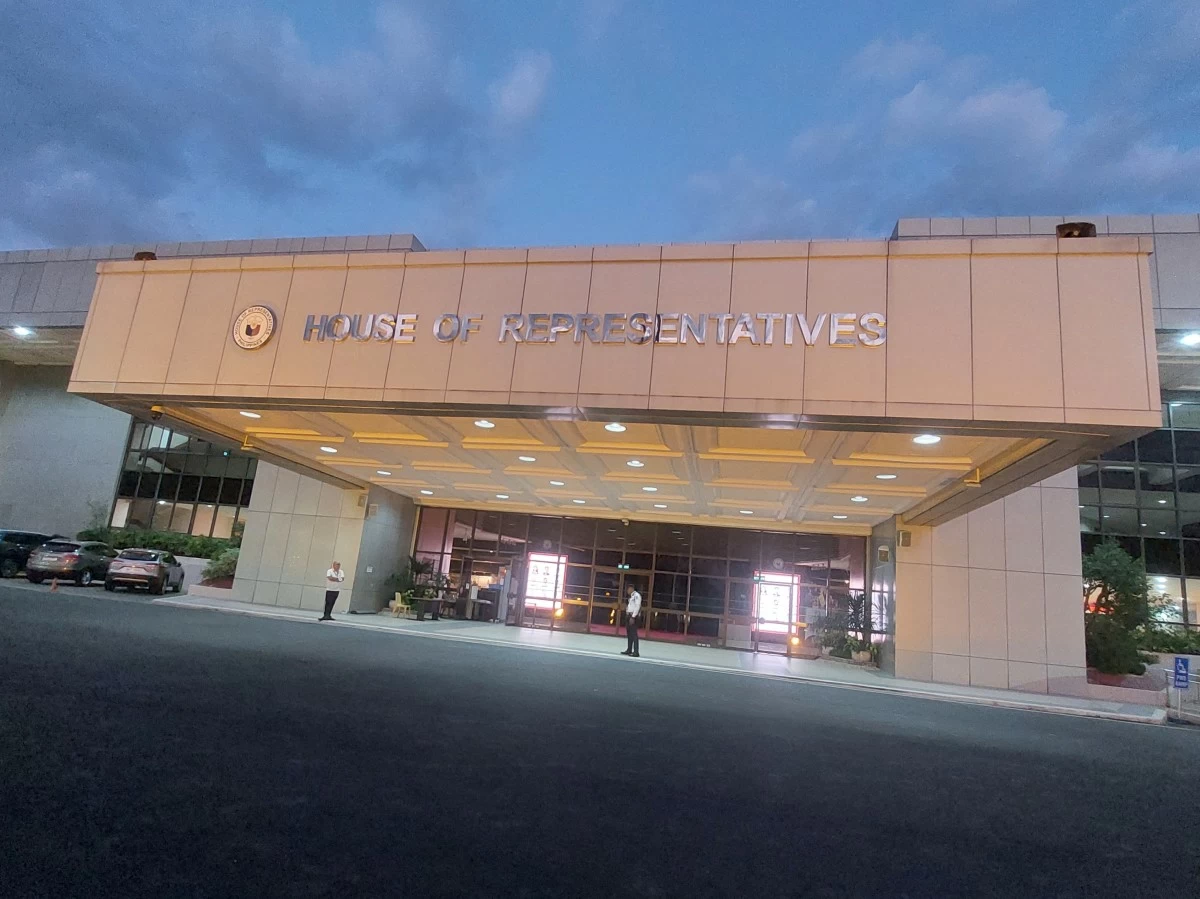
The House of Representatives (PPAB)
Parañaque 2nd district Rep. Brian Raymund Yamsuan has hailed the House Committee on Disaster Resilience for its snappy action on pending disaster risk reduction bills in the current 20th Congress.
This, as Yamsuan underscored the urgent need for the government to institute science-based strategies to mitigate the impact of natural disasters and give vulnerable communities “more than a fighting chance” in minimizing losses resulting from these destructive events.
“The growing intensity and frequency of the calamities we are experiencing compel us to invest in a unified, comprehensive, science-based disaster risk reduction strategy. We should provide our countrymen with more than a fighting chance in minimizing their risks from typhoons, earthquakes and other disasters,” Yamsuan said in a statement Tuesday, Dec. 9.
“Usually ang preparations natin kapag may padating na disaster are evacuation and pre-positioning of relief supplies para mabilis na maihatid sa mga nasalanta. Pero kulang pa rin. Lalo na ngayon na ‘yung mga komunidad na dati naman ay hindi nakakaranas ng bagyo at yung mga lugar na dati namang hindi binabaha, kasama na ang mga evacuation centers, ang siya nang hinahagupit ng mga kalamidad na dinadanas natin,” he added.
(Usually our preparations for an imminent disaster are evacuation and pre-positioning of relief supplies to speed up delivery to calamity victims. But these are inadequate, especially now that communities which before were not struck by typhoons, and areas that were once free from flooding, including evacuation centers, now bear the brunt of the calamities we are experiencing.)
Recently, the disaster resilience panel chaired by Cagayan 3rd district Rep. Joseph Lara ordered the creation of a subcommittee to consolidate all filed disaster risk reduction bills into a single comprehensive disaster resilience strategy applicable to the Philippine setting.
These bills include Yamsuan's very own House Bill (HB) No.4305, or the proposed Multi-Hazard Mapping Act. It aims to institutionalize the creation and regular updating of hazard maps for every city and municipality, and integrate these tools into disaster risk reduction efforts and local development planning.
According to Yamsuan, the bill seeks to build on the gains made by the Project Nationwide Operational Assessment of Hazards (NOAH), which utilized LiDAR (Light Detection and Ranging) scanning to identify risks and danger zones, and create 3-D models to predict flooding and identify flood paths.
Cabinet-level agencies, led by the Department of Environment and Natural Resources (DENR), will also be mobilized under the bill to produce, maintain and update the hazard maps in coordination with the local government units (LGUs).
These science-based measures, Yamsuan said, include the production and regular updating of hazard maps using the latest technologies as well as infrastructure and nature-based solutions to disaster risk reduction.
“The recent destruction wrought by typhoons 'Uwan' and Tino' and the strong earthquakes that shook the Visayas and Mindanao, have overwhelmed frontline responders and strained government resources.
"These disasters that were once rare but now appear to be coming one after another highlight the need for better planning and preparedness,” the former Department of Interior and Local Government (DILG) assistant secretary noted.