






Manila Bulletin
 Business
The Economy
World Bank cuts Philippine growth forecasts, citing weaker investment and domestic shocks
Business
The Economy
World Bank cuts Philippine growth forecasts, citing weaker investment and domestic shocks
Business
The Economy
World Bank cuts Philippine growth forecasts, citing weaker investment and domestic shocks
World Bank cuts Philippine growth forecasts, citing weaker investment and domestic shocks
Published Dec 9, 2025 04:03 pm


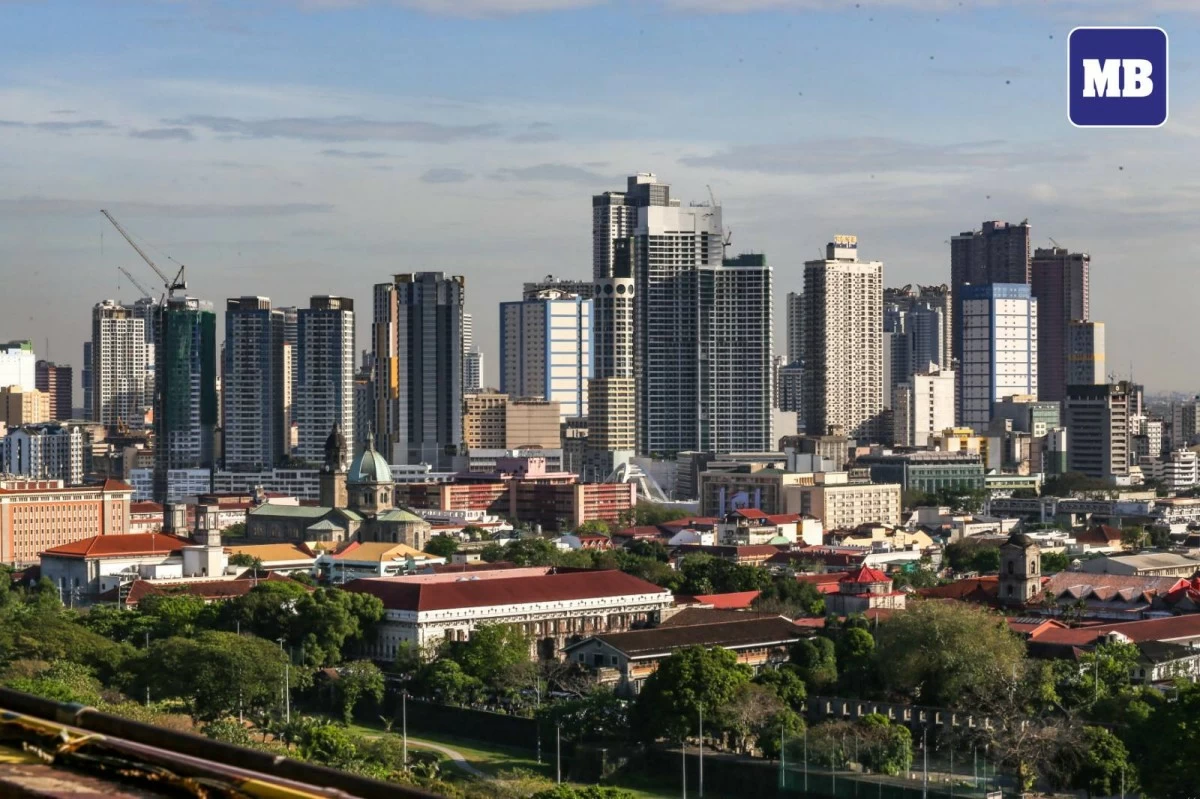
The Philippines is now projected to miss the government’s economic growth targets for this year and the next several years, after the Washington-based World Bank (WB) lowered its growth forecasts for the country from 2025 to 2027.
The WB’s latest Philippines Economic Update (PEU), released Tuesday, Dec. 9, revised the country’s growth forecast for 2025 down to 5.1 percent, citing domestic shocks, weaker investment, and soft global demand, down from an earlier estimate of 5.3 percent. For 2026, growth is projected to reach 5.3 percent, rising further to 5.4 percent in 2027.
The government has set a gross domestic product (GDP) growth target of 5.5 to 6.5 percent for 2025, and six to seven percent for 2026 to 2028.
The WB, however, expects a modest recovery in 2026 to 2027, supported by resilient consumption and easing inflation.
“The Philippines can leverage its strong economic foundations to implement bolder reforms that can unlock faster, more inclusive growth,” said the WB’s division director for the Philippines, Malaysia, and Brunei, Zafer Mustafaoğlu, in a statement.
He added that, “Removing barriers that limit investment and productivity and strengthening competitiveness can create more and better-paying jobs, expand opportunities, and reinforce economic resilience.”
The WB stressed that sustaining economic growth in the years ahead will hinge on stronger implementation of public investment programs, credible fiscal consolidation efforts, and structural reforms aimed at boosting competitiveness in key tradable sectors such as manufacturing, agriculture, information technology (IT), and tourism.
It also underscored the need to harness high-potential urban corridors.
“Growth is expected to recover over the next two years,” the WB said, noting that the rebound will be supported by firm domestic demand. It added that private consumption is projected to pick up as inflation stays low, employment remains strong, and monetary easing brings down interest rates, making borrowing more accessible for businesses and households.
The WB further noted that investment is expected to firm up as public infrastructure projects regain momentum and recent investment-liberalization reforms in telecoms, transport, logistics, and renewable energy (RE) begin to create a more conducive business environment.
“Measures to revive the tradables sector could strengthen recovery,” the WB said. “The Philippines’ recent growth has tilted toward ‘non-tradables’—such as construction, domestic services, and retail. Burdensome regulations have kept manufacturing job creation flat, reduced the number of exporting firms, and left exports trailing regional peers.”
The WB added that boosting competition in logistics and energy, simplifying and digitizing permits, streamlining customs procedures, and improving investment facilitation could lower costs, attract private investment, and revitalize the tradables sector, thereby supporting the Philippines’ growth prospects.
“For long-term, sustained growth, the Philippines needs to ensure that low-income and middle-income regions continue to grow faster than the National Capital Region (NCR) as they have done over the past decades,” said WB senior economist Jaffar Al-Rikabi.
“To do that, high-potential urban areas—urban corridors—need to be harnessed as engines of job creation and productivity that generate spillover benefits across the country,” he added.
(Ricardo M. Austria)