ADVERTISEMENT

Organic farming as a pathway to biodiversity, animal welfare, and climate responsibility

Published Dec 9, 2025 06:08 pm
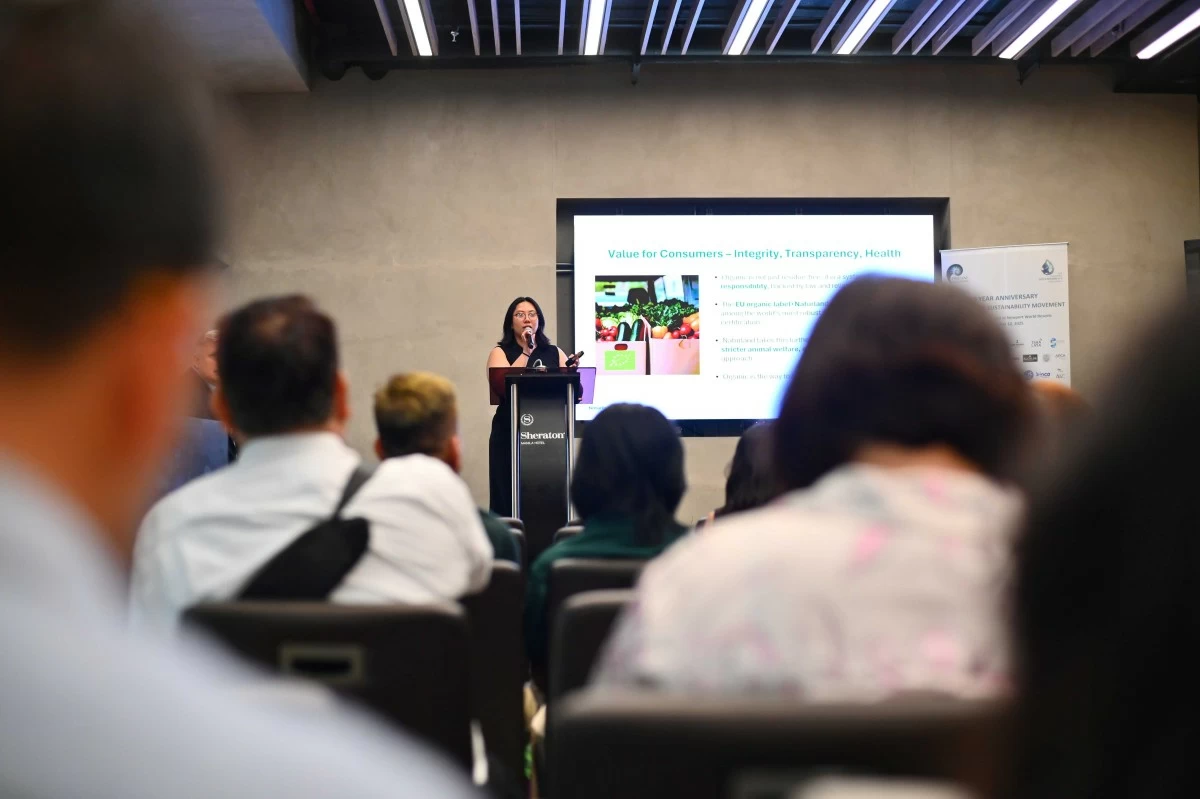
Naturland's Alexandra Castillo talks about strengthening the local organic value chain by making certified EU organic products more accessible in the Philippines.
Naturland e.V., one of the world’s leading international associations for organic agriculture, with support from the European Union (EU), highlighted the growing role of European organic standards.  It also emphasized the importance of organic adoption in building a more resilient food system during the 10th Philippine Sustainability Movement.
“Every time we choose organic, we’re choosing a system that respects people, animals, and the planet,” said Alexandra Castillo, Philippines' Coordinator for Promotions and Market Linkages at Naturland e.V. “Organic practices help protect the soil and water that sustain us and make sure that everyone can enjoy safe, healthy food now and in the future. Together with our partners, we work hand-in-hand with stakeholders across the value chain to turn these standards into everyday practice and support the shift toward organic more sustainable food systems.”
Organic farming promotes animal welfare, biodiversity, as much as it does environmental responsibility. Europe upholds some of the world’s most stringent standards on organic certification and through specific regulations and rigorous inspections, the EU ensures that every stage of production meets these criteria.
With these high standards, organic practices offer practical pathways to achieving sustainability across the entire food value chain–from farmers and suppliers to restaurants and consumers.
Naturland also emphasized that the organic movement presents new opportunities for businesses, especially hotels, restaurants, and retailers. By offering certified organic products, they not only appeal to consumers who care about the quality, safety, and origins of their food, but also build trust through transparency and traceability. The EU Organic Logo and the Naturland seal serve as marks of credibility that signal responsible sourcing and environmental stewardship, values that resonate with today’s consumers.
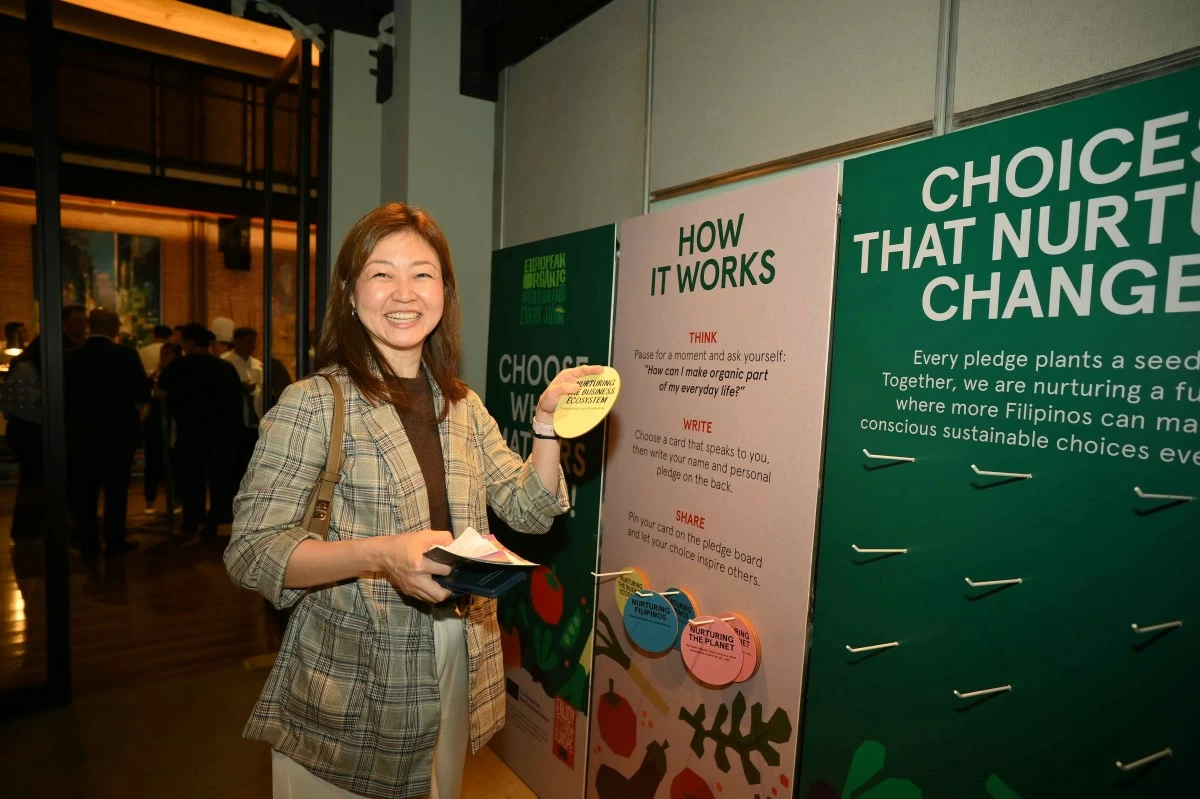
Event attendee pledging to make sustainable choices as part of Naturland's European Organic Nurtuing Every Juan campaign.
Ongoing efforts to grow the organic movement in the Philippines include the “European Organic: Nurturing Every Juan” campaign, implemented by Naturland with support from the EU, which seeks to make European organic products an accessible, everyday choice for consumers.
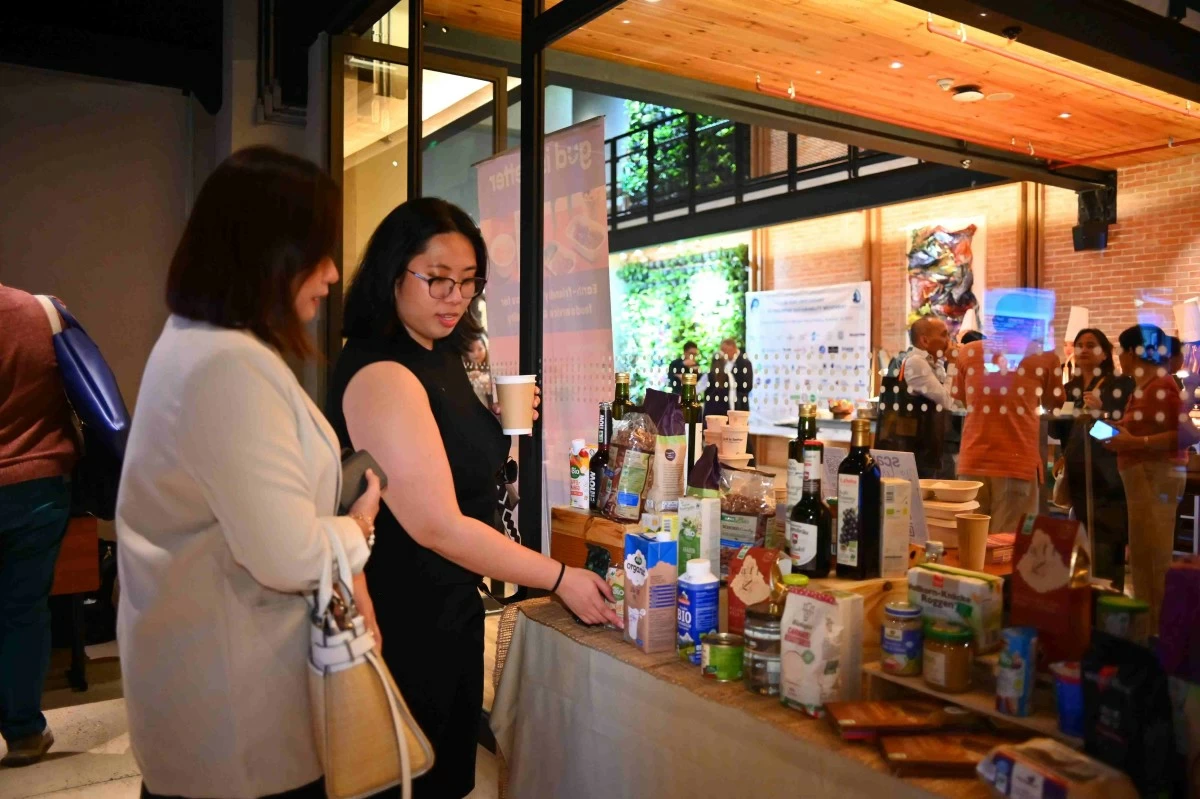
Certified EU organic products on display at the 10th Philippine Sustainability Movement.
Naturland also co-organized the 10th Philippine Sustainability Movement, initiated by Pristine Solutions, a consultancy working to advance sustainability in the country. The event annually gathers sustainability organizations and representatives from the hospitality, culinary, development, business, and public sectors, including Naturland partners PYC Foods and One World Deli.
Over the past decade, the movement has helped increase awareness and drive the adoption of more responsible practices across the country’s hospitality and food sectors. As it looks ahead, it aims to build on this momentum by shaping resilient food systems rooted in transparency, accountability, and shared purpose.
ADVERTISEMENT
.most-popular .layout-ratio{ padding-bottom: 79.13%; } @media (min-width: 768px) and (max-width: 1024px) { .widget-title { font-size: 15px !important; } }

{{ articles_filter_1561_widget.title }}

.most-popular .layout-ratio{ padding-bottom: 79.13%; } @media (min-width: 768px) and (max-width: 1024px) { .widget-title { font-size: 15px !important; } }

{{ articles_filter_1562_widget.title }}

.most-popular .layout-ratio{ padding-bottom: 79.13%; } @media (min-width: 768px) and (max-width: 1024px) { .widget-title { font-size: 15px !important; } }

{{ articles_filter_1563_widget.title }}

{{ articles_filter_1564_widget.title }}

.mb-article-details { position: relative; } .mb-article-details .article-body-preview, .mb-article-details .article-body-summary{ font-size: 17px; line-height: 30px; font-family: "Libre Caslon Text", serif; color: #000; } .mb-article-details .article-body-preview iframe , .mb-article-details .article-body-summary iframe{ width: 100%; margin: auto; } .read-more-background { background: linear-gradient(180deg, color(display-p3 1.000 1.000 1.000 / 0) 13.75%, color(display-p3 1.000 1.000 1.000 / 0.8) 30.79%, color(display-p3 1.000 1.000 1.000) 72.5%); position: absolute; height: 200px; width: 100%; bottom: 0; display: flex; justify-content: center; align-items: center; padding: 0; } .read-more-background a{ color: #000; } .read-more-btn { padding: 17px 45px; font-family: Inter; font-weight: 700; font-size: 18px; line-height: 16px; text-align: center; vertical-align: middle; border: 1px solid black; background-color: white; } .hidden { display: none; }
function initializeAllSwipers() { // Get all hidden inputs with cms_article_id document.querySelectorAll('[id^="cms_article_id_"]').forEach(function (input) { const cmsArticleId = input.value; const articleSelector = '#article-' + cmsArticleId + ' .body_images'; const swiperElement = document.querySelector(articleSelector); if (swiperElement && !swiperElement.classList.contains('swiper-initialized')) { new Swiper(articleSelector, { loop: true, pagination: false, navigation: { nextEl: '#article-' + cmsArticleId + ' .swiper-button-next', prevEl: '#article-' + cmsArticleId + ' .swiper-button-prev', }, }); } }); } setTimeout(initializeAllSwipers, 3000); const intersectionObserver = new IntersectionObserver( (entries) => { entries.forEach((entry) => { if (entry.isIntersecting) { const newUrl = entry.target.getAttribute("data-url"); if (newUrl) { history.pushState(null, null, newUrl); let article = entry.target; // Extract metadata const author = article.querySelector('.author-section').textContent.replace('By', '').trim(); const section = article.querySelector('.section-info ').textContent.replace(' ', ' '); const title = article.querySelector('.article-title h1').textContent; // Parse URL for Chartbeat path format const parsedUrl = new URL(newUrl, window.location.origin); const cleanUrl = parsedUrl.host + parsedUrl.pathname; // Update Chartbeat configuration if (typeof window._sf_async_config !== 'undefined') { window._sf_async_config.path = cleanUrl; window._sf_async_config.sections = section; window._sf_async_config.authors = author; } // Track virtual page view with Chartbeat if (typeof pSUPERFLY !== 'undefined' && typeof pSUPERFLY.virtualPage === 'function') { try { pSUPERFLY.virtualPage({ path: cleanUrl, title: title, sections: section, authors: author }); } catch (error) { console.error('ping error', error); } } // Optional: Update document title if (title && title !== document.title) { document.title = title; } } } }); }, { threshold: 0.1 } ); function showArticleBody(button) { const article = button.closest("article"); const summary = article.querySelector(".article-body-summary"); const body = article.querySelector(".article-body-preview"); const readMoreSection = article.querySelector(".read-more-background"); // Hide summary and read-more section summary.style.display = "none"; readMoreSection.style.display = "none"; // Show the full article body body.classList.remove("hidden"); } document.addEventListener("DOMContentLoaded", () => { let loadCount = 0; // Track how many times articles are loaded const offset = [1, 2, 3, 4, 5, 6, 7, 8, 9, 10]; // Offset values const currentUrl = window.location.pathname.substring(1); let isLoading = false; // Prevent multiple calls if (!currentUrl) { console.log("Current URL is invalid."); return; } const sentinel = document.getElementById("load-more-sentinel"); if (!sentinel) { console.log("Sentinel element not found."); return; } function isSentinelVisible() { const rect = sentinel.getBoundingClientRect(); return ( rect.top < window.innerHeight && rect.bottom >= 0 ); } function onScroll() { if (isLoading) return; if (isSentinelVisible()) { if (loadCount >= offset.length) { console.log("Maximum load attempts reached."); window.removeEventListener("scroll", onScroll); return; } isLoading = true; const currentOffset = offset[loadCount]; window.loadMoreItems().then(() => { let article = document.querySelector('#widget_1690 > div:nth-last-of-type(2) article'); intersectionObserver.observe(article) loadCount++; }).catch(error => { console.error("Error loading more items:", error); }).finally(() => { isLoading = false; }); } } window.addEventListener("scroll", onScroll); });

Sign up by email to receive news.