






Manila Bulletin
 Business
Lighting a path forward for families in Cebu through the free house-wiring project of AboitizPower's Visayan Electric
Business
Lighting a path forward for families in Cebu through the free house-wiring project of AboitizPower's Visayan Electric
Business
Lighting a path forward for families in Cebu through the free house-wiring project of AboitizPower's Visayan Electric
Lighting a path forward for families in Cebu through the free house-wiring project of AboitizPower's Visayan Electric
AboitizPower distribution utility launches a project that helps bring the country closer to full, inclusive electrification
Published Dec 9, 2025 03:12 pm


At A Glance
- Understanding the barriers to switching on the light in indigent homes and knowing what this meant for the families living within, Visayan Electric created a path forward by condusting its free house-wiring project, designed specifically for households identified through thorough assessment as indigent and in need of support.

Visayan Electric’s free house-wiring electrification project. Accredited electricians commence with the installation of electrical systems — including light fixtures — in identified indigent households. This ensures safety as families enjoy having access to reliable power for the first time.
In many rural and indigent communities across the Visayas, families dream of having electricity but are held back on the last mile of energization. Because of the daily burdens of everyday needs, they cannot afford the most basic requirement inside their own homes: safe and compliant electrical wiring. It is a quiet barrier that keeps a house in the dark even when the power lines are already running outside.
Local leaders often describe this gap as heartbreakingly simple. Households want to be energized, distribution utilities are ready to connect them, yet the cost of proper wiring forces many families to postpone that hope, many for years.
Distribution utility Visayan Electric Company Inc. (Visayan Electric), a subsidiary of Aboitiz Power Corporation (AboitizPower) which serves eight cities and municipalities across Metro Cebu, already has a barangay electrification rate of 100% in their franchise area. But at the household level, understanding the barriers to switching on the light in indigent homes and knowing what this meant for the families living within, Visayan Electric created a path forward.
Visayan Electric’s free house-wiring project
Last September, the company launched its free house-wiring project, designed specifically for households identified through thorough assessment as indigent and in need of support. The initiative brings accredited electricians into the homes of beneficiaries to install safe, compliant electrical systems at no cost to the family.
Their survey identified 3,933 households as potential beneficiaries. The first phase covers 2,013 homes in Naga City and 718 in San Fernando.
The project draws its support from an electrification fund under the Department of Energy’s Energy Regulations No. 1-94, which channels financial benefits from host energy facilities back into their communities. These resources are earmarked for programs that expand access to safe and reliable power.
In Naga City, the Korea Electric Power Corporation is among the key contributors to the initial fund. The amount was remitted to Visayan Electric, the distribution utility tasked with carrying out local electrification efforts. An initial budget of Php 28 million set the project in motion and provided a strong starting point for implementation.
Once a house is properly wired, Visayan Electric completes the energization process. That single switch brings an immediate shift in how families live. Children can finally study under steady light. Parents can use electric fans during humid evenings. Households can run basic appliances, a simple change that dramatically improves comfort and productivity.
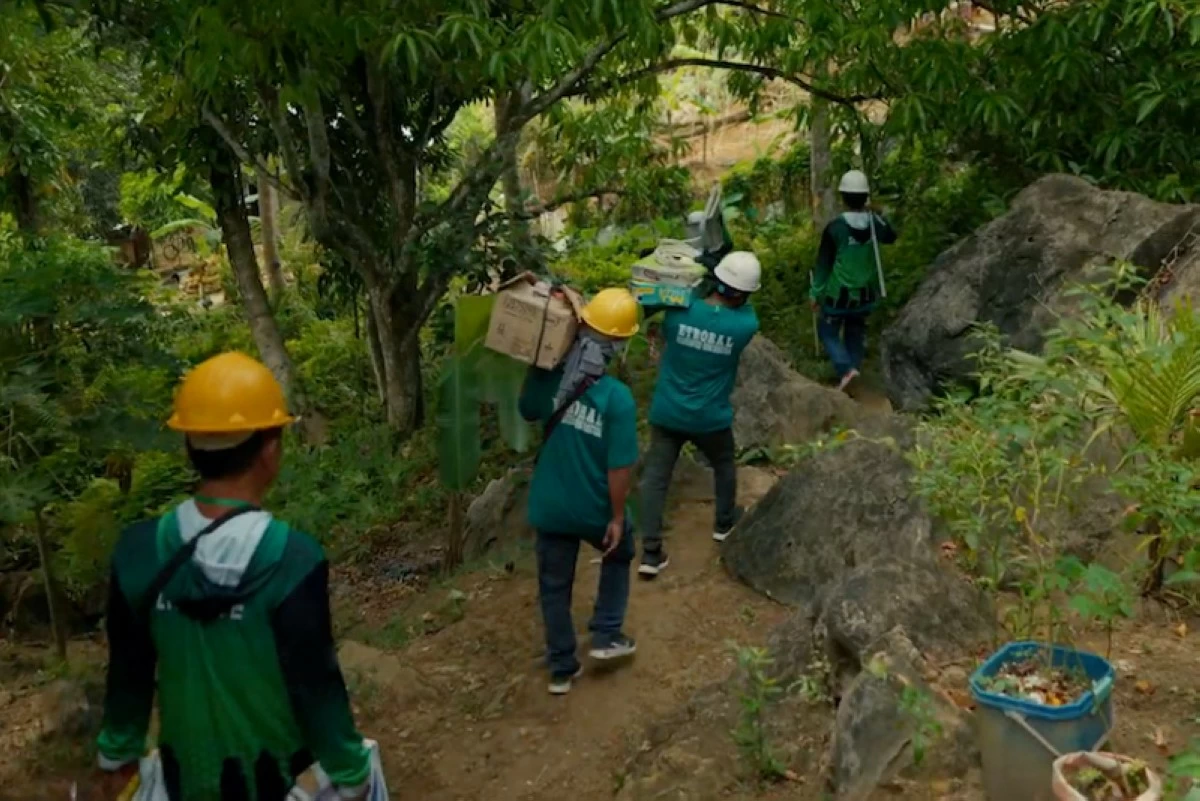
Reaching indigent households. Visayan Electric’s house-wiring electrification project saw a team of accredited electricians travel by foot just to reach far-flung communities that needed to be energized.
When electricity reaches a home
In communities where the project has taken root, progress becomes visible in quiet but meaningful ways. In Barangay Lanas in Naga City, residents who had lived without electricity finally saw their homes light up.
“We’re immensely grateful that our barangay was chosen as a beneficiary of this electrification program,” said Barangay Captain Emily Baricuatros. “Many of the residents did not have their own electricity supply, especially those from Sitio Langsub. Although we’ve put up utility poles in the area, connection expenses are quite high, which kept them from having electricity until now.”
One of the beneficiaries, twenty-five-year-old Angel Mae Alfante, said that electricity changed the quality of their night. As a mother of a young child, evenings were once a mix of caution and inconvenience. She often rationed the use of small rechargeable lamps. Now her home can stay lit without fear of running out of power.
Beyond individual stories, national studies echo the same truth. A study from the Department of Energy, with data from the Philippine Statistics Authority, shows a measurable link between electricity access and income. With just eight hours of daily electricity, household income rises by 15.8 percent and spending by 14.8 percent. At 16 hours, income increases by 33.4 percent. With full day access, income grows by more than 56 percent. The connection is clear: when electricity becomes reliable, families gain time, opportunity, and the ability to invest in their future.
Education follows the same pattern. Research from the University of the Philippines Center for Integrative and Development Studies found that energized elementary schools performed 12 percent better on the National Achievement Test compared to those without electricity. Similarly, students in secondary schools with power scored 10 percent higher than those lacking access.
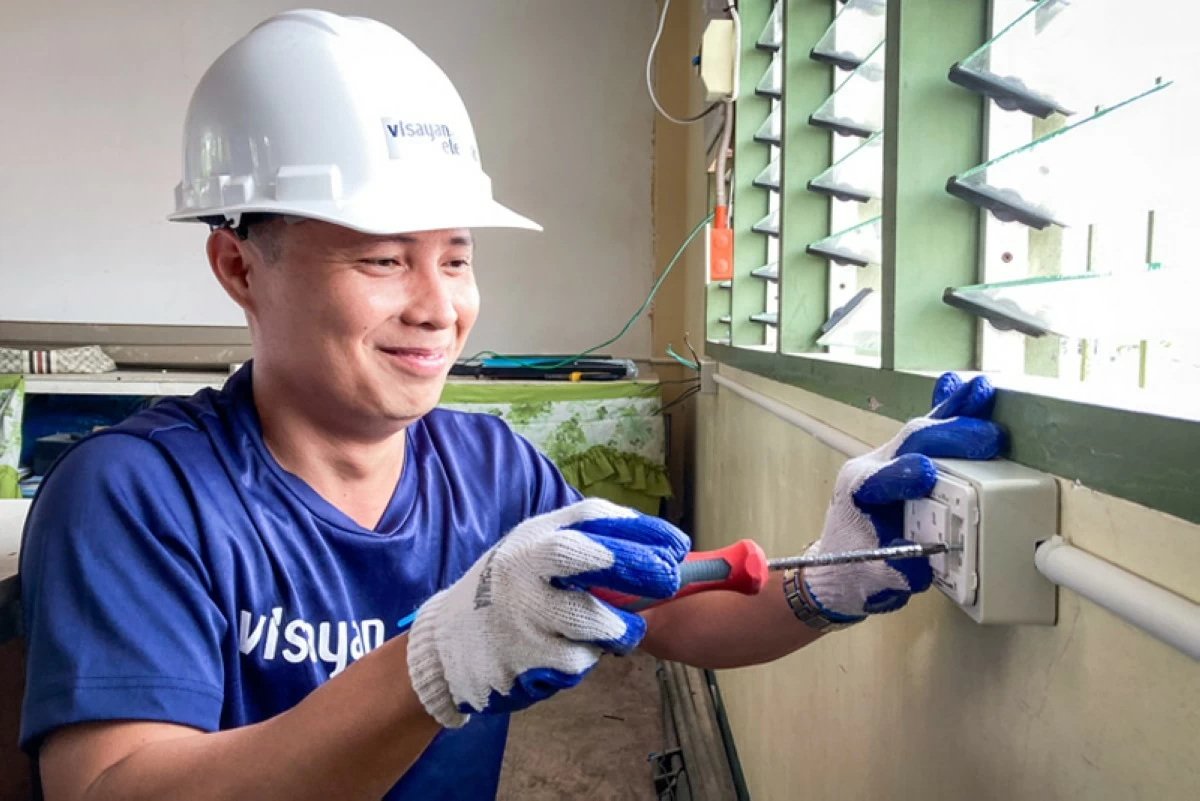
Rewiring of schools. Volunteer engineers of AboitizPower’s Visayan Electric have modernized the electrical wiring systems of over 5,300 classrooms and school facilities, minimizing the risk of fire hazards and electrocution accidents.
Progress that grows with communities
Visayan Electric has been working on electrification long before this new project. Since 2010, the company’s engineers have taken time each year to rewire public schools in need of safer electrical systems. Over five thousand classrooms have been upgraded to modern standards, reducing fire risks and creating safer learning environments.
Today, the initiative stands to help Transform Energy for a Better World one home at a time. It reconnects families to opportunity and ties their lives and livelihoods to a wider story of national development. It shows how a distribution utility can be a partner, not only in power supply but also in building conditions where communities can thrive and be safe.
As a distribution utility under AboitizPower, Visayan Electric builds on the mission of advancing business and communities. Working alongside government efforts, it helps bridge the toughest gaps in access so that the last mile toward energization does not become a lifetime of waiting. Progress here moves quietly but steadily, shaped by consistent work and the belief that every Filipino family deserves the power to move forward.
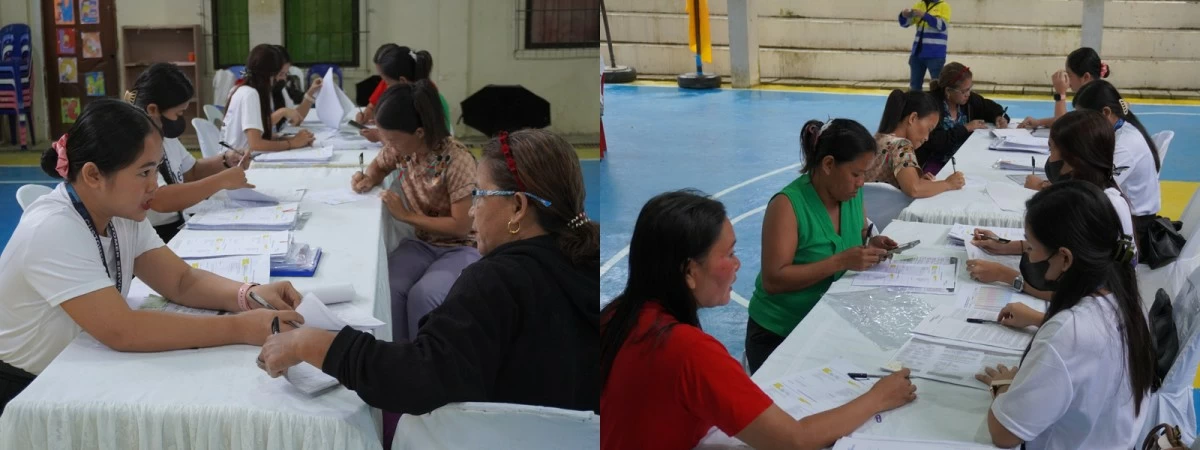
Free house-wiring project launch. Visayan Electric partnered with local governments and other public offices in assisting families in Cebu to secure permits for their house-wiring and electrical connection.