






Manila Bulletin
 Business
The Stock Market
Cebu Pacific adding 7 new planes, confident people will travel more
Business
The Stock Market
Cebu Pacific adding 7 new planes, confident people will travel more
Business
The Stock Market
Cebu Pacific adding 7 new planes, confident people will travel more
Cebu Pacific adding 7 new planes, confident people will travel more
Published Dec 9, 2025 06:07 pm


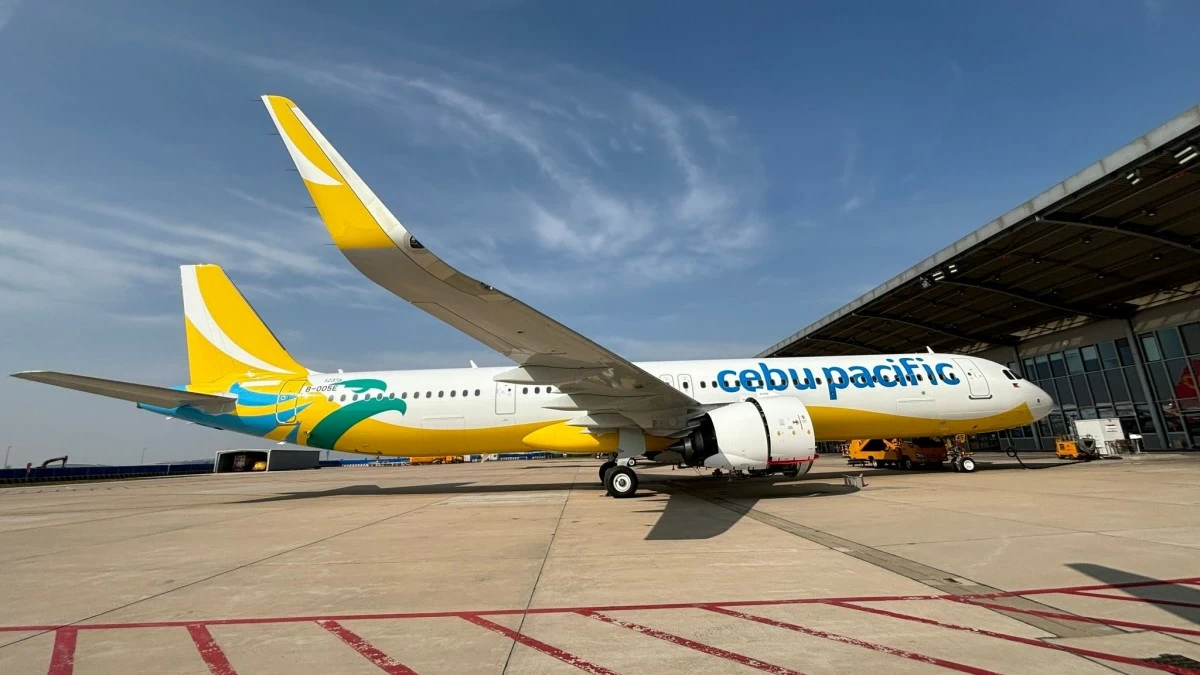
Budget carrier Cebu Pacific is adding seven new aircraft to its fleet next year, betting big on rising travel demand despite economic headwinds.
Cebu Pacific President and Chief Commercial Officer Xander Lao said they are bringing in five narrowbody jets and two widebody aircraft for the coming year.
The narrowbodies will consist of a mix of Airbus A320s and A321s, alongside two 459-seater A330neos.
Cebu Pacific will retain a fleet of 100 next year, as seven aircraft are expected to exit.
Having a large fleet operating at the highest level bodes well for the airline as it aims to increase its seat offerings next year by six to 10 percent.
Cebu Pacific projects seat capacity for the year will grow by up to 12 percent, reaching around 32 million from 29 million in 2024.
The airline’s seat load factor, which measures the percentage of available seats occupied by passengers, stands at 84.3 percent as of October.
It is targeting to fly around 29 million passengers this year, up 20 percent from last year’s record of 24.5 million.
Based on data for the first 10 months, the airline has served 22.03 million, up 12 percent jump from 19.61 million passengers in the same period last year.
Cebu Pacific continues to see an upward trend in air travel this year, even as the Philippine economy experienced slowdown in recent months.
The country’s gross domestic product (GDP) grew by four percent in the third quarter, the slowest expansion in over four years, partly due to the slowdown in government spending as a consequence of the flood control scandal.
A strong belief in the country’s economic growth was among the key drivers cited when Cebu Pacific inked a historic ₱1.4-trillion deal with European jetmaker Airbus to purchase 152 A32neo aircraft.
“This is an enormously bold step. We wouldn’t be doing it without having confidence in the direction the country is going,” Cebu Pacific chief executive officer Michael Szucs was quoted as saying before President Marcos in July last year.
More than a year later, Lao said the airline remains confident in the country's long-term economic growth.
“We do think that we are still a consumer spending-based economy, pretty young economy. And travel penetration is still very low here in the Philippines. So we think that all the factors that are needed for a successful airline story here in the Philippines are there,” he said.
Lao also said the government is already taking the necessary steps, through its ongoing investigations into the scandal, to restore the confidence of both consumers and investors.
Moreover, he said ongoing infrastructure efforts such as improvement works at the Ninoy Aquino International Airport (NAIA) and the construction of New Manila International Airport in Bulacan will pave the way for stronger air travel demand in the near future.
“That's what keeps us hopeful,” he said.