







Anti-Dynasty Law enactment imperative for democratic renewal
Published Dec 9, 2025 12:05 am
|
Updated Dec 8, 2025 04:00 pm


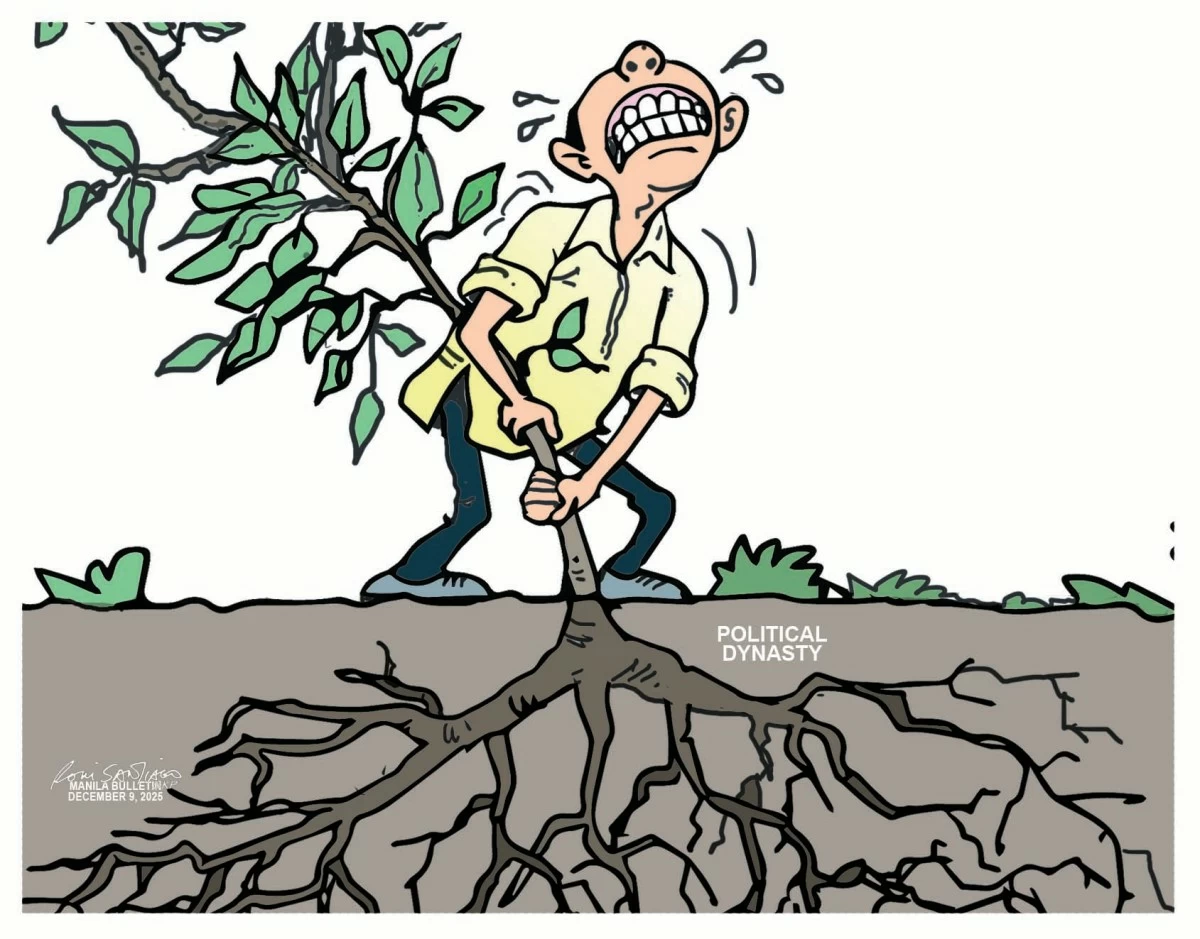
The rising tide of public indignation over systemic corruption has once again pushed into the national spotlight a long-neglected promise of the 1987 Constitution: the enactment of an enabling law that would effectively curb political dynasties.
Nearly four decades since that charter enshrined the principle of equal access to public service, Congress has yet to pass the legislation needed to bring this mandate to life. The renewed public clamor compels our lawmakers to confront a reality that has become increasingly difficult to ignore. When left unchecked, political dynasties pose a profound threat to good governance, accountability, and the very spirit of our democracy.
The urgency of addressing political dynasties stems from their deeply entrenched presence across the political landscape. In many provinces, cities, and municipalities, the rotation of public office among family members has become predictable: father to daughter, brother to sister, spouse to spouse, generation after generation. These long-standing monopolies undermine the essential democratic requirement of competition. When political seats become family inheritances rather than public trusts, governance is diminished; public office becomes a patrimony instead of a responsibility.
Political dynasties, especially the more entrenched ones, create environments where accountability is diluted. When the same surname dominates local government units for decades, checks and balances weaken. Oversight mechanisms become virtually nonexistent. Public officials may feel shielded by the influence of relatives occupying parallel or higher positions. This creates fertile ground for corruption to take root, grow, and metastasize across generations. The result is a cycle of governance where the public welfare becomes secondary to the preservation of family power.
This is especially deleterious in local government units (LGUs) where control over budgets, infrastructure priorities, and public employment can be wielded to sustain dynastic rule. When villages, cities and towns, and provinces receive resources not based on need but on the degree of political loyalty, inequality deepens and civic participation erodes. Bayanihan, once a binding community spirit, is overwhelmed by patronage.
In Congress, the preponderance of dynastic representation has also shaped national policymaking. Even the party-list system that was eyed by the framers of the Constitution as an option for nurturing the emergence and growth of cause-oriented political parties has been engulfed by the malady of political dynasties. As a result, legislative priorities have become skewed toward protecting local fiefdoms rather than promoting institutional reforms.
The failure to pass an anti-dynasty law — despite its clear constitutional mandate — is itself evidence of how deeply the system resists self-correction.
The beneficial effects of legislation to curb political dynasties would be transformative. First, it would restore genuine electoral competition, opening pathways for new leaders, young professionals, community advocates, and voices long unheard. Second, it would strengthen accountability by preventing the consolidation of power in the hands of a few families. Third, it would encourage issue-based politics rather than personality-based contests, elevating the quality of public discourse. Finally, it would reaffirm the Constitution’s vision of a democratic state where leadership is earned through merit, not lineage.
An anti-dynasty law is not a cure-all, but without it, many of our other governance reforms ring hollow. Its passage would signal a renewed commitment to the constitutional promise that sovereignty truly resides in the people, not in family clans.
The nation has waited long enough. At a time when public frustration with corruption is reaching a critical peak, Congress must seize this moment. Enacting an anti-dynasty law is not merely a legal obligation. It is a moral imperative and a vital step toward rebuilding trust in our democratic institutions.