






Manila Bulletin
 Philippines
National
Senate to pursue independent commission despite Palace's lack of interest, says Sotto
Philippines
National
Senate to pursue independent commission despite Palace's lack of interest, says Sotto
Philippines
National
Senate to pursue independent commission despite Palace's lack of interest, says Sotto
Senate to pursue independent commission despite Palace's lack of interest, says Sotto
Published Dec 8, 2025 04:37 pm


At A Glance
- The Senate will continue to pursue the proposed creation of the Independent People's Commission (IPC) despite Malacañang apparent lack of interest in it.
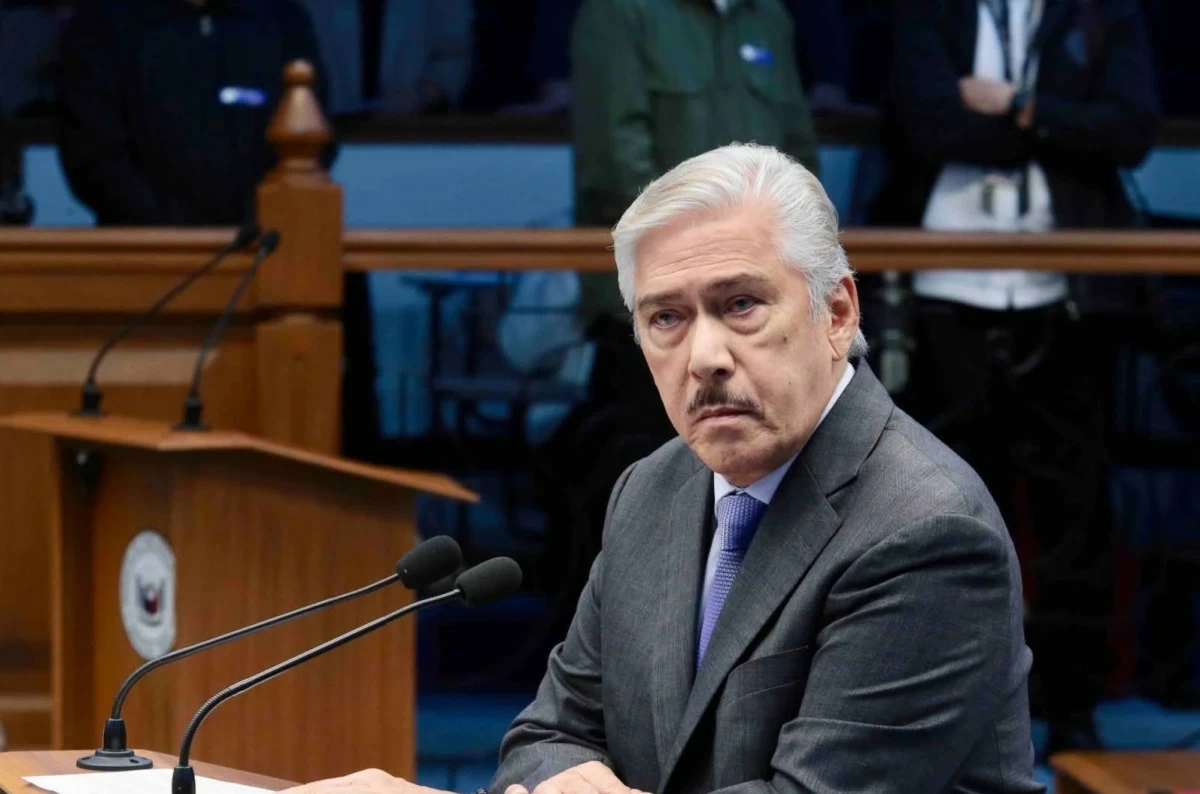
Senate President Vicente "Tito" Sotto III (Facebook)
The Senate will continue to pursue the proposed creation of the Independent People’s Commission (IPC) despite Malacañang apparent lack of interest in it.
"Yes we will [pursue the bill]," Senate President Vicente "Tito" Sotto III told reporters on Monday, Dec. 8.
"They have yet to study it anyway. We can discuss it with them at the proper time," Sotto said, referring to Senate Bill (SB) No.1512.
If and when institutionalized, the IPC will continue the work of the Independent Commission for Infrastructure (ICI) once the latter gets dissolved. Created via Executive Order (EO) No.94, the ICI has been probing the flood control projects corruption scandal since mid-September.
A similar bill filed in the other legislative chamber, the House of Representatives, sought the creation of the Independent Commission Against Infrastructure Corruption (ICAIC). It has been approved at the committee level.
Last week, Ombudsman Jesus Crispin “Boying” Remulla said the ICI could wrap up its work in one to two months' time. This threw off solons from both chambers given the sheer scale of reported infrastructure corruption in the country.
Former Senate President Franklin Drilon believes that it would be a grave mistake on President Marcos' part if he doesn’t support the passage of the IPC bill.
"Congress should create an independent fact-finding ICI with a sunset clause. People are angry at the massive corruption and will get ANGRIER if the ICI bill is vetoed. PBBM is playing with fire," Drilon said in a statement.
Palace Press Officer Undersecretary Claire Castro was quoted as saying Monday that the creation of the IPC may duplicate the work handled by the Ombudsman and Department of Justice (DOJ).
Lost enthusiasm
Senate President Pro Tempore Panfilo "Ping" Lacson--known for his hardline stance against corruption--cannot make heads or tails of Malacañang's lack of enthusiasm.
"I wonder why Malacanang’s enthusiasm is lost all of a sudden. I still believe that the ICI is serving its purpose in flushing out useful information, to say the least, for the Ombudsman and DOJ to proceed with their preliminary investigation and come up with solid cases against those responsible in the plunder of public funds," he said.
"This, even when Congress has taken positive steps to follow the lead of the President in getting to the bottom of the unprecedented infrastructure anomalies never unearthed before by any of the past administrations," noted Lacson.
Critics of the ICI have noted that it only serves as special investigator--something that the Ombudsman has the capacity to do in connection with the corruption scandal. It also lacks certain powers that hinder its efficiency--the reason why the ICAIC bill was filed in the House.
ICI 'selective justice' slammed
Also on Monday, the National Institute for Transparency and Accountability (NITA) sounded the alarm on what it described as the deteriorating standard of fairness within the ICI.
According to NITA Executive Director Carlos Ayala, the commission displayed “selective justice” after it publicly singled out former senator Ramon “Bong” Revilla Jr. for potential prosecution in the flood-control scandal. This, despite relying on a testimony the ICI itself deemed hearsay and unsupported by the required quantum of evidence.
Ayala pointed out that the affidavit of former DPWH undersecretary Roberto Bernardo and the very foundation of the accusations, had no corroborating witnesses, documents, or physical evidence.
Yet the ICI’s treatment of those mentioned in the affidavit was markedly uneven, as per Ayala. Alongside Revilla, Bernardo also named Senators Francis “Chiz” Escudero, Mark Villar, Jinggoy Estrada, Joel Villanueva, and former Senators Grace Poe, Nancy Binay, Sonny Angara, and Bam Aquino—but none of them were recommended for charges.
“If the testimony is weak, it should be weak for all. If it is hearsay, it is hearsay for all. So why is only Senator Revilla being moved toward prosecution?” Ayala asked.
NITA further emphasized glaring inconsistencies in Bernardo’s account involving Revilla. Although Bernardo characterized the former senator as a “close friend,” his narrative describes an implausible scenario wherein the ex-DPWH official supposedly waited several hours for the handover of hundreds of millions of pesos sans witnesses, coordination, or security or documentation.
“No experienced public official would behave in such a reckless manner,” Ayala said. “This story collapses under common sense. It raises the disturbing possibility that Revilla is being fashioned into a political scapegoat.”
Compounding the controversy is the ICI’s failure to summon Revilla for testimony before publicly naming him in press briefings. Ayala stressed that this amounted to a denial of due process, especially as the Ombudsman appeared to be echoing the ICI’s posture.
“How can charges be considered when the sole testimony is hearsay, and the subject was not afforded the chance to respond? Is the investigative machinery being used unevenly, or worse, politically?” he asked.
Political alliances shifting?
Ayala also addressed rising speculation about shifting political alliances. While the Revilla and Remulla families have traditionally been perceived as allies, rumors now suggest the Ombudsman may pursue cases against current House members Jolo Revilla, Bryan Revilla, and Lani Mercado-Revilla, using the same weakened testimony.
“If multiple members of one family are suddenly dragged into cases built on hearsay, that no longer resembles accountability—it resembles persecution,” he warned.