







Importers warn of pork shortage in 2026 amid MAV shake-up
Published Dec 8, 2025 12:00 am
|
Updated Dec 6, 2025 12:40 pm


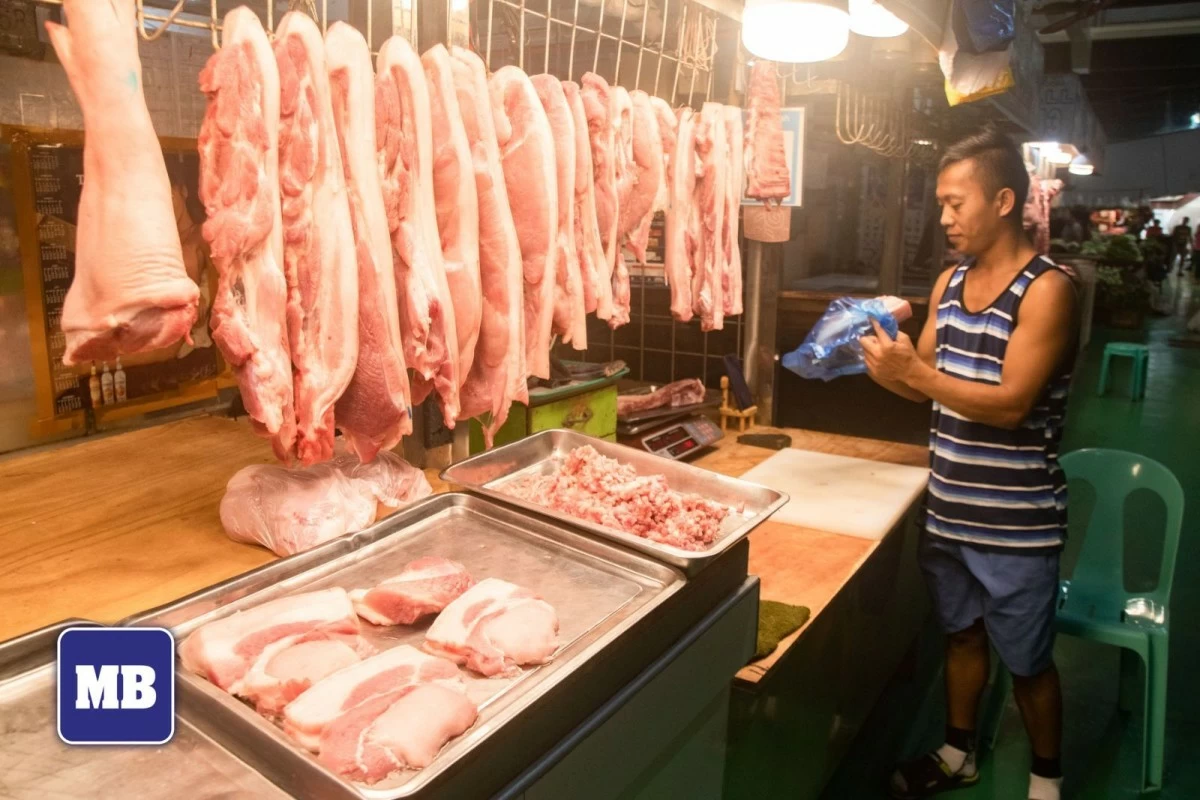
The Department of Agriculture sets a minimum farmgate price for live hogs to help local raisers recover from an influx of cheaper imports.
Local importers and traders are warning of a potential supply crunch for meat products next year that could significantly drive up market prices, following the Department of Agriculture’s (DA) move to amend the nearly 30-year-old minimum access volume (MAV) for imported pork.
The Meat Importers and Traders Association (MITA) expressed concern that an “arbitrary reallocation or reset” in the country’s MAV policy would be “unfair and inequitable.”
“These sudden shifts have created substantial uncertainty, as imports may now fall under out-quota rates, significantly affecting landed costs and contractual commitments. This disruption will negatively affect supply next year,” MITA said in a letter addressed to Cabinet Secretaries who make up the interagency MAV Management Committee.
MAV is a trade mechanism adopted by the Philippines, in line with its commitment to the World Trade Organization (WTO), to allow the entry of agricultural commodities at a lower tariff rate.
For pork, imports within MAV enjoy a 15-percent tariff, while those outside the quota are charged a 25-percent tariff.
Agriculture Secretary Francisco Tiu Laurel has said that this policy has long been exploited by a handful of importers, allowing them to exert substantial influence over the market price of imported pork.
He said that redistributing the quota to both big and small traders would promote competition, leading to more competitive prices and making pork more affordable for consumers.
MITA argued that such a move would be counterintuitive at this time, given that the available MAV volume of 54,210 metric tons (MT) is already insufficient for the industry.
The group noted that pork production stood at one million metric tons (MT) in 1994, or two years before MAV rules were implemented, and peaked at 1.9 million MT in 2019. But due to African swine fever (ASF), output has since fallen back to 1994 levels.
“It took the hog industry 25 years to grow by 900,000 tons. How long will recovery take? Certainly not within the remaining years of the current administration,” it said.
MITA earlier recommended increasing pork MAV by 500,000 MT to compensate for the production loss, but the proposal has yet to be acted upon.
Last month, Tiu Laurel said he had proposed expanding the quota by 150,000 MT under the MAV-plus scheme. This, however, would only be on “standby” since farmgate prices are not yet conducive to more imports.
“We strongly and urgently recommend retaining the current MAV guidelines and instead invoking MAV-plus for pork,” said MITA.
The group said the additional quota may be prioritized primarily for processors, with a portion designated for first-come-first-served imports.