






Manila Bulletin
 Business
Trade & Industry
Singapore tech giant eyes plugging Philippine water industry's leaky pipes
Business
Trade & Industry
Singapore tech giant eyes plugging Philippine water industry's leaky pipes
Business
Trade & Industry
Singapore tech giant eyes plugging Philippine water industry's leaky pipes
Singapore tech giant eyes plugging Philippine water industry's leaky pipes
Using AI to fight scarcity:
By Derco Rosal
Published Dec 6, 2025 08:00 am


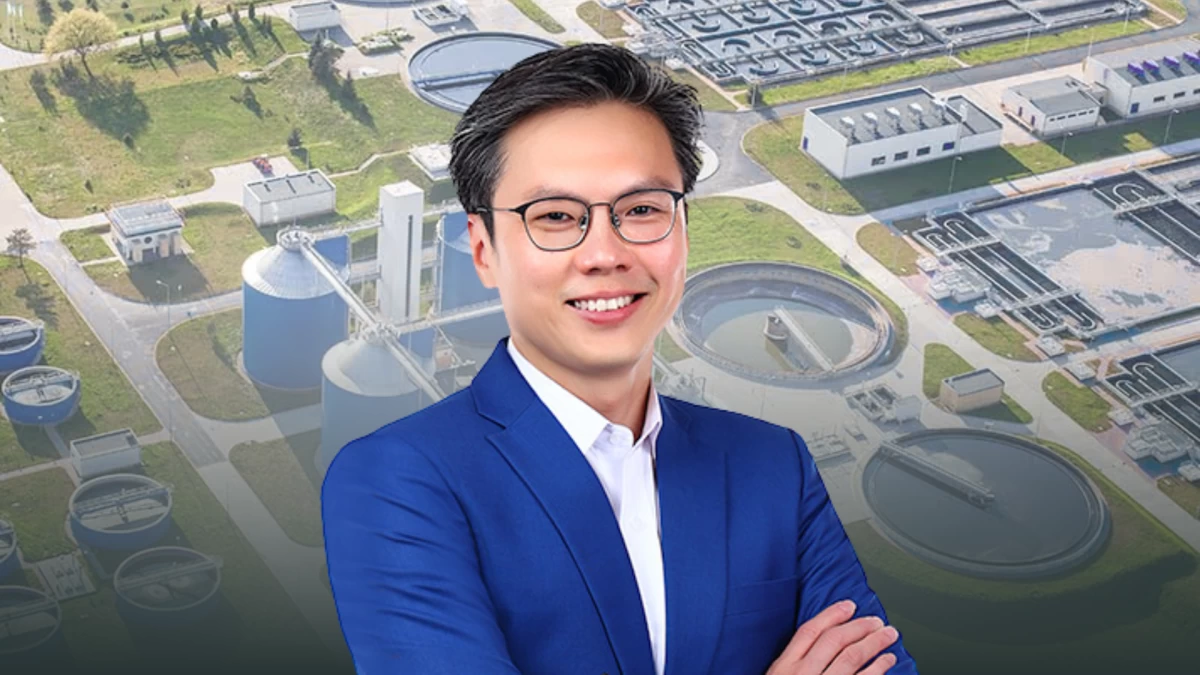
TeamSolve Founder and Chief Commercial Officer Robin Wong
The idea that the Philippines is grappling with a water crisis is not an exaggeration. In Bulacan, for example, residents often wait past midnight for running water, only for it to arrive rusty.
The country’s vulnerability, compounded by being a frequent stop for typhoons, only exacerbates the problem.
Singapore, too, once faced a water crisis—but managed to overcome this proverbial drought through advanced technology. For one, the island state has turned wastewater into safe drinking water using next-generation filtration and treatment systems.
Robin Wong, founder and chief commercial officer (CCO) of Singapore-based AI water technology firm TeamSolve, is now bringing their solutions to the Philippines to tackle the country’s long-standing water-sector issues: leakages and scarcity.
Recent data showed the country’s water threshold or availability has fallen to 1,373 cubic meters per person, well below the global water-stress benchmark of 1,700 cubic meters.
Water stress has also deepened, as nearly half of the country’s water districts are losing a third of their supply to aging pipes, leaks, and other system inefficiencies.
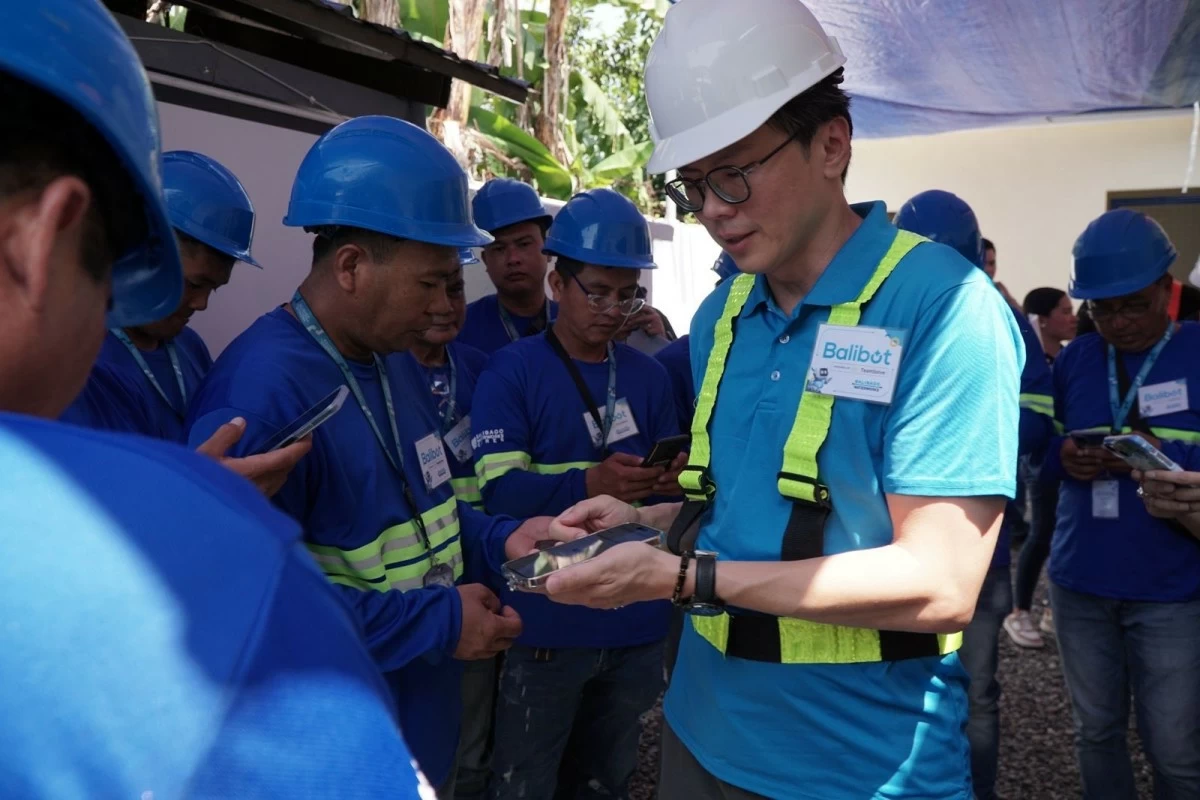
Robin Wong’s TeamSolve is bringing advanced AI water technology from Singapore to the Philippines. ‘You cannot afford to have high leakage anymore,’ he states.
TeamSolve officially launched the Balibot App in the Philippines following successful field trials with provincial water distributor Balibago Waterworks. TeamSolve has invested in software development and AI engineers, while Balibago took part in testing and validating the effectiveness of the tool.
Wong said the deal to roll out the system across Balibago’s enterprise was made with a clear view of its returns, including resilience gains and the long-term goal of cutting asset and lifecycle costs.
By following through on promised upgrades in operations and maintenance, Wong said the water firm expects to trim operating expenses by about a quarter while boosting revenue through increased water savings.
“Water savings mean more water they can sell,” Wong noted. “This is increasingly important with climate change because water sources are drying up. Deep wells are drying up. You absolutely must fix your leaks here. You cannot afford to have high leakage anymore.”
Balibot allows plumbers to conduct surveys, calculate leak volumes, and upload photos in record time.
“Patterns in leak data reveal hotspots—sometimes all the leaks happen in one barangay, so something is wrong there,” Wong said. Balibot, the local brand of the firm’s core product Knowledge Twin, makes use of a water utility’s historical maintenance records, user manuals, and expert inputs.
Fixing broken pipelines is handled differently when Balibot suddenly shows up in the typical routine of plumbers.
What used to be solved from scratch, the AI-powered app now takes miles of steps ahead and, like a field expert, recommends the best step to fix any disruption based on its replica of the data the water utilities have in their books.
“It can say: Nine out of ten times this flashing red light was fixed by changing the fuse,” Wong said. Using the app can be likened to how people converse in messaging apps such as Viber or WhatApp. Yes, no perplexing dashboard to navigate.
Since its launch in August, more than 200 leaks have been resolved, saving around 20,000 cubic meters of water, according to Wong.
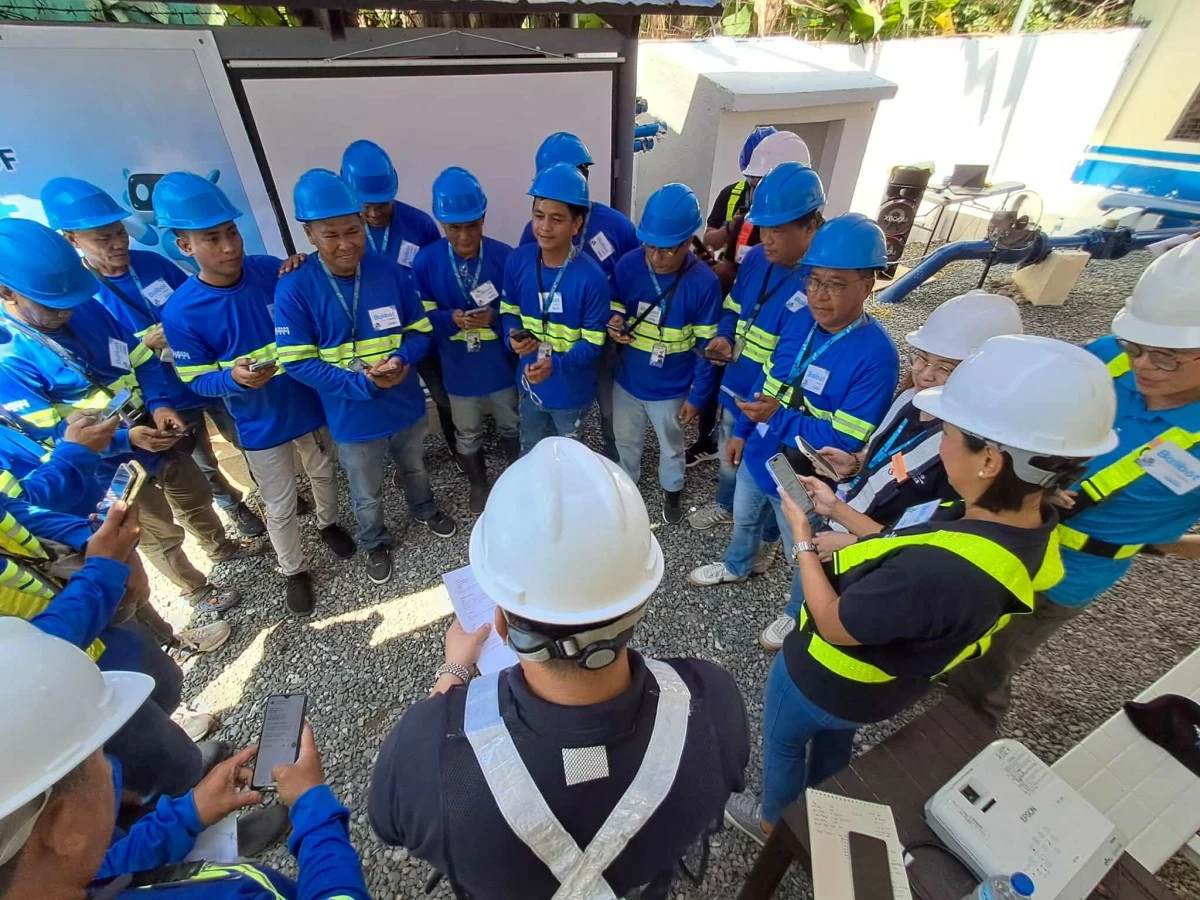
The Balibot App, likened to a messaging service, allows plumbers to quickly calculate leak volumes and upload data, cutting repair time by half.
Plumbers who once slogged through time-consuming manual surveys now work faster.
“Digitalization and AI have shortened the time for leak surveys and repairs by half,” Wong said. He described the shift as freeing plumbers from neck-deep manual tasks, allowing them to focus on fixing leaks efficiently.
TeamSolve is Wong’s second startup, following the successful exit of a Digital Twin for water utilities nearly a decade ago. What prompted his team to build another firm? It is the human’s natural tendency to create or break things.
“There was a human spirit in wanting to innovate and build and break things, rather than sitting still or becoming too comfortable working for corporations,” he said.
Notably, the venture has already attracted massive backing. The Singapore government injected $1 million, while American investors added another $1 million to help build and market the product.
Balibot is being rolled out in phases, starting with seven of Balibago’s 93 branches. Balibago, which manages more than 300 pumping stations, has served as an early adopter, helping refine the AI’s user experience.
While AI often sparks fears of replacing human labor, Wong emphasized the opposite: “It’s never about replacing people. It’s about helping the workforce—plumbers, technicians, engineers—do their jobs better.”
He added that AI can help utilities in poorest and middle-income countries leapfrog traditional steps, improving performance quickly.
For districts using the app, TeamSolve projects a payback within six to nine months. In dollar terms, the system can plug holes in the system, saving water districts around $100,000 in just half a year.
Coming soon: Maynilad, Manila Water deals
With an investment of at least $500,000 (roughly ₱29.4 million), TeamSolve aims to recoup costs by offering subscriptions to other water utilities, including major players like Maynilad Water Services, Inc. and Manila Water Company, Inc.
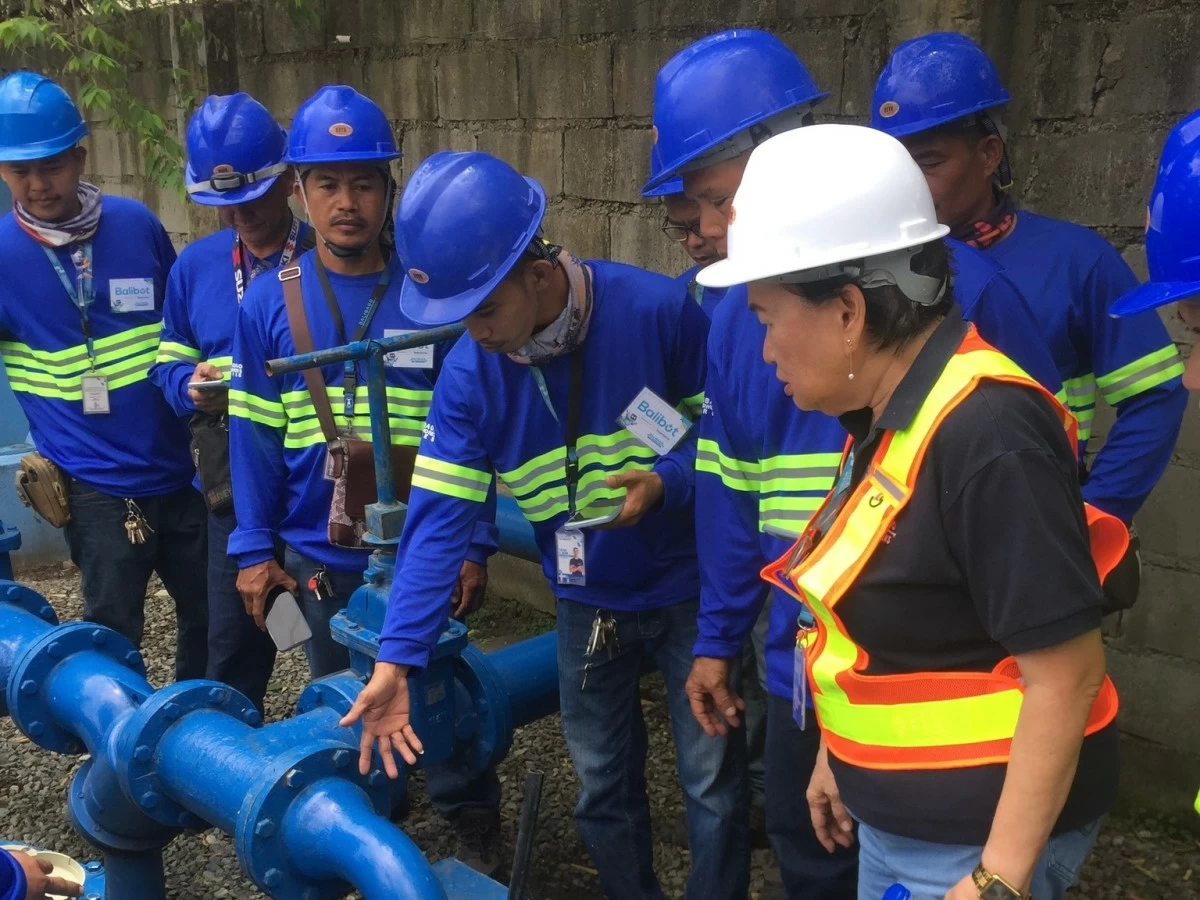
Since its launch, the Balibot app has helped resolve over 200 leaks, saving an estimated 20,000 cubic meters of water for early adopter Balibago Waterworks.
Pilots are expected to start within three months, with a fast-paced implementation process.
“We are competing against doing nothing,” Wong told this author. “In the water sector alone, I think we are the only ones doing what we are doing. There are no others.”
As such, TeamSolve is setting its sights to onboard at least 50 more water utilities in 2026, beyond Balibago.
Currently, the Balibot has yet to pinpoint leak locations, but it can scale to more sophisticated predictive features. Wong described it as “a layer of intelligence that can plug into different platforms as you progress digitally.”
TeamSolve now has around 10 installations in the United States (US), five in Australia, and two in the Philippines—Balibago and Palawan. The company is also expanding to Malaysia, Africa, and the Pacific Islands.
By the end of November, in partnership with the Manila-based Asian Development Bank (ADB), the app will be piloted in the Pacific Islands to reduce downtime caused by a severe shortage of skilled personnel.
True enough, AI would not replace workers especially in places that lack thereof. Wong said AI augments the knowledge of workers from island countries who “don’t always have the skill level to maintain systems.”
“That’s why you need AI as a first line of defense,” Wong remarked. Balibot could be of service to humans when faster troubleshooting and recording incidents are needed.
Even as evil uses of AI just lurk in the corner, Wong said the world needs more people on the “green side rather than the red side.”
Wong’s philosophy is simple: Do good, and the financial returns will follow. “I’m not obsessed with making money—it will happen. But you’ve got to be driven by a higher-order purpose,” he said.
Perhaps this pursuit could soon create deeper, larger waves in the Philippine water industry, washing away the mud and stains in the system.