

ADVERTISEMENT

'Anito' soars high at the Asia TV Forum and Market

Animated film centering on Filipino legends wins the People's Choice Award

Published Dec 5, 2025 11:37 am

At A Glance

  • Our mythological stories that were handed down to us deserve to be told to the next generation.
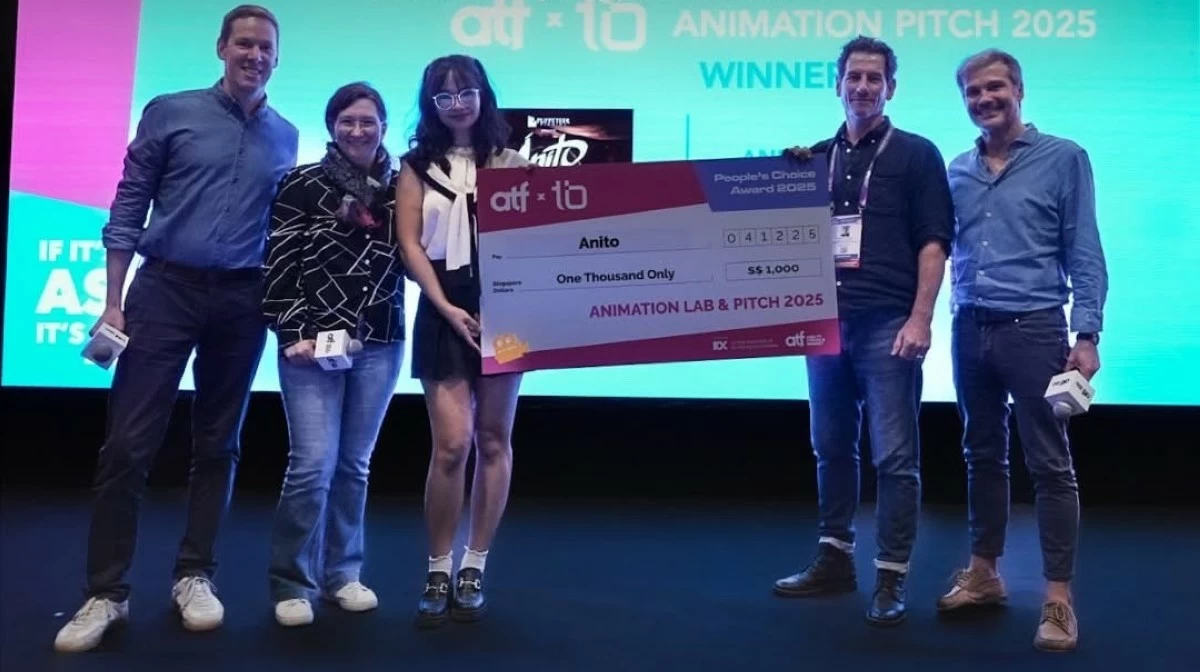
CROWD'S PICK 'Anito' wins People's Choice Award
John Arthur Mercader and his wife, Louie, are focused on creating the 3D full-length animated film, “Anito,” and making it a franchise, a TV series, and even a theme park someday. At the moment, they are gathering investors and funders, and what better way to do so than by representing the Philippines at the ATF x TTB Animation Lab and Pitch 2025 in Singapore last Dec. 4.
“Anito” follows a young boy, Aaren, as his life is turned upside down when he encounters a mystical spirit realm teeming with both fantastical and fearsome creatures of Filipino legends. Lost and hunted by creatures, he struggles to find his way home.
Creative producer Louie Mercader
It is important to show Filipino mythology and culture to the world. “Everybody knows about European folklore: the vampires, their gods and goddesses, giants, dwarves, elves,” shares creative producer Louie.
“Growing up in the Philippines, we have a lot of stories that are now just slowly getting buried, and they are all as rich and interesting as them,” says the 28-year-old mother of two. “Now that our audiences are craving for more diverse stories, and people are looking for more worlds to be built, now more than ever is the opportune time to bring the Philippines into the world.”
In Singapore, we saw how Louie and French creative producer François Belot were pitted against animation projects from Malaysia, Latvia, New Zealand, Singapore, Italy, and Ireland. “This is a good chance to finally penetrate the global market, and with its rich story combined with Arthur's talent, ‘Anito’ will position the Philippines for success and will only open more opportunities for more stories to be told,” she muses. It is Arthur and Louie’s love letter to the Philippine culture that will prove that Southeast Asian stories belong on the global stage.
The animation industry in the Philippines is built on service work. “We have the most talented artists, and we service the world's biggest IPs,” stresses Louie. “What we really need as an industry is to realize that there really is no competition here.”
The Puppeteer Animation Studios Inc. has partnered with Netflix, Lego, Warner Bros., and other companies to create 3D art and cinematics for films, games, TV, and commercials. They are also behind the animation of the Philippine adaptation of “It’s Okay to Not Be Okay.”
“The international market is hungry for diverse stories, high art, and immersive worlds, which ‘Anito’ provides,” says Louie. “We are quite ambitious with this film, which we will then turn into a cinematic franchise,” she added.
The characters and their unique stories have a lot of potential. “We just need the film made, and it will speak for itself,” says the University of Santo Tomas alumna.
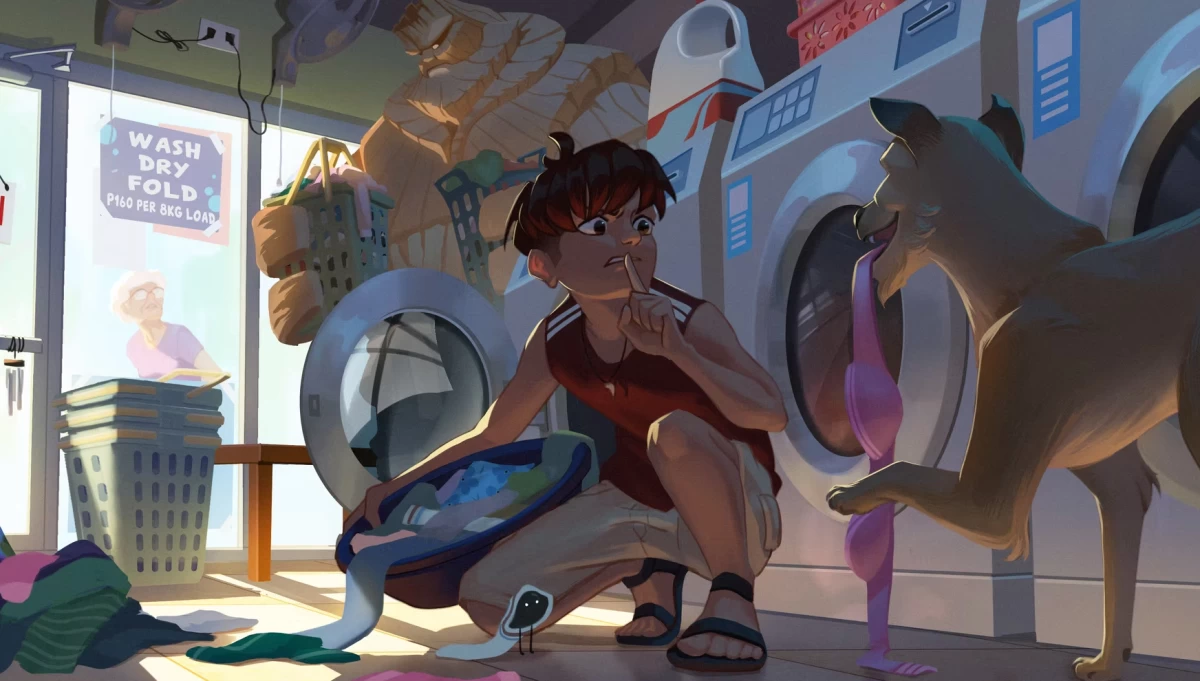
LANDING INTO ADVENTURE 'Anito' follows Aaren as he encounters a mystical spirit realm.
“Anito” is targeted to be released in 2028. “The challenge we're facing right now, really, as a young company, is to keep the studio alive,” reports the chief business development officer.
They need financial partners that are exploring original IP collaborations. “We are a team of young artists, independent and incredibly talented,” tells Louie. “We have the team, equipped and trained for a feature film production; it will take all of us (and more) to work together to produce ‘Anito’ and make the 2028 release happen.”
Louie underwent an animation lab and pitching workshop with Ties That Bind (TTB), the leading training program for European-Asian co-production. “Anito” won the People’s Choice Award 2025.
In the opening ceremony, senior minister of State of the Ministry of Digital Development and Information, Tan Kiat How, states, “Over the years, with the active involvement of international and global industry partners, Singapore has developed into a trusted co-production partner. Singapore-based companies were partners across Asia, Europe, and beyond.”
Singapore is launching the Talent Accelerator Program, a new initiative that provides support for medium professionals from developing strong ideas to producing content and taking it to international markets.
Their government will invest 200 million SGD for the next three years. “This is a major commitment to grow our creative talent, strengthen co-production partnerships, and build a more resilient media industry,” he said.
The focus is clear: To help the talent develop stories with global ambition from the very start. A single unified program that will support development, production, and distribution is in the works so that “promising ideas have a clearer pathway to reach global audiences.”
Our mythological stories that were handed down to us deserve to be told to the next generation. “Anito” is bringing Philippine animation to the world, and the Puppeteer Animation Studios’ noble initiative needs to be fully supported. You can check the “Anito” website at https://www.puppeteerstudios.com/anito

Related Tags

Arts and Culture
ADVERTISEMENT
.most-popular .layout-ratio{ padding-bottom: 79.13%; } @media (min-width: 768px) and (max-width: 1024px) { .widget-title { font-size: 15px !important; } }

{{ articles_filter_1561_widget.title }}

.most-popular .layout-ratio{ padding-bottom: 79.13%; } @media (min-width: 768px) and (max-width: 1024px) { .widget-title { font-size: 15px !important; } }

{{ articles_filter_1562_widget.title }}

.most-popular .layout-ratio{ padding-bottom: 79.13%; } @media (min-width: 768px) and (max-width: 1024px) { .widget-title { font-size: 15px !important; } }

{{ articles_filter_1563_widget.title }}

{{ articles_filter_1564_widget.title }}

.mb-article-details { position: relative; } .mb-article-details .article-body-preview, .mb-article-details .article-body-summary{ font-size: 17px; line-height: 30px; font-family: "Libre Caslon Text", serif; color: #000; } .mb-article-details .article-body-preview iframe , .mb-article-details .article-body-summary iframe{ width: 100%; margin: auto; } .read-more-background { background: linear-gradient(180deg, color(display-p3 1.000 1.000 1.000 / 0) 13.75%, color(display-p3 1.000 1.000 1.000 / 0.8) 30.79%, color(display-p3 1.000 1.000 1.000) 72.5%); position: absolute; height: 200px; width: 100%; bottom: 0; display: flex; justify-content: center; align-items: center; padding: 0; } .read-more-background a{ color: #000; } .read-more-btn { padding: 17px 45px; font-family: Inter; font-weight: 700; font-size: 18px; line-height: 16px; text-align: center; vertical-align: middle; border: 1px solid black; background-color: white; } .hidden { display: none; }
function initializeAllSwipers() { // Get all hidden inputs with cms_article_id document.querySelectorAll('[id^="cms_article_id_"]').forEach(function (input) { const cmsArticleId = input.value; const articleSelector = '#article-' + cmsArticleId + ' .body_images'; const swiperElement = document.querySelector(articleSelector); if (swiperElement && !swiperElement.classList.contains('swiper-initialized')) { new Swiper(articleSelector, { loop: true, pagination: false, navigation: { nextEl: '#article-' + cmsArticleId + ' .swiper-button-next', prevEl: '#article-' + cmsArticleId + ' .swiper-button-prev', }, }); } }); } setTimeout(initializeAllSwipers, 3000); const intersectionObserver = new IntersectionObserver( (entries) => { entries.forEach((entry) => { if (entry.isIntersecting) { const newUrl = entry.target.getAttribute("data-url"); if (newUrl) { history.pushState(null, null, newUrl); let article = entry.target; // Extract metadata const author = article.querySelector('.author-section').textContent.replace('By', '').trim(); const section = article.querySelector('.section-info ').textContent.replace(' ', ' '); const title = article.querySelector('.article-title h1').textContent; // Parse URL for Chartbeat path format const parsedUrl = new URL(newUrl, window.location.origin); const cleanUrl = parsedUrl.host + parsedUrl.pathname; // Update Chartbeat configuration if (typeof window._sf_async_config !== 'undefined') { window._sf_async_config.path = cleanUrl; window._sf_async_config.sections = section; window._sf_async_config.authors = author; } // Track virtual page view with Chartbeat if (typeof pSUPERFLY !== 'undefined' && typeof pSUPERFLY.virtualPage === 'function') { try { pSUPERFLY.virtualPage({ path: cleanUrl, title: title, sections: section, authors: author }); } catch (error) { console.error('ping error', error); } } // Optional: Update document title if (title && title !== document.title) { document.title = title; } } } }); }, { threshold: 0.1 } ); function showArticleBody(button) { const article = button.closest("article"); const summary = article.querySelector(".article-body-summary"); const body = article.querySelector(".article-body-preview"); const readMoreSection = article.querySelector(".read-more-background"); // Hide summary and read-more section summary.style.display = "none"; readMoreSection.style.display = "none"; // Show the full article body body.classList.remove("hidden"); } document.addEventListener("DOMContentLoaded", () => { let loadCount = 0; // Track how many times articles are loaded const offset = [1, 2, 3, 4, 5, 6, 7, 8, 9, 10]; // Offset values const currentUrl = window.location.pathname.substring(1); let isLoading = false; // Prevent multiple calls if (!currentUrl) { console.log("Current URL is invalid."); return; } const sentinel = document.getElementById("load-more-sentinel"); if (!sentinel) { console.log("Sentinel element not found."); return; } function isSentinelVisible() { const rect = sentinel.getBoundingClientRect(); return ( rect.top < window.innerHeight && rect.bottom >= 0 ); } function onScroll() { if (isLoading) return; if (isSentinelVisible()) { if (loadCount >= offset.length) { console.log("Maximum load attempts reached."); window.removeEventListener("scroll", onScroll); return; } isLoading = true; const currentOffset = offset[loadCount]; window.loadMoreItems().then(() => { let article = document.querySelector('#widget_1690 > div:nth-last-of-type(2) article'); intersectionObserver.observe(article) loadCount++; }).catch(error => { console.error("Error loading more items:", error); }).finally(() => { isLoading = false; }); } } window.addEventListener("scroll", onScroll); });

Sign up by email to receive news.