ADVERTISEMENT

Angara visits Las Piñas schools to highlight success of ARAL program, feeding initiatives

Published Dec 5, 2025 11:51 am  |  Updated Dec 5, 2025 01:46 pm
DepEd Secretary Angara visits Talon and Moonwalk ES to showcase success in ARAL literacy and feeding programs. (Photo from DepEd)
Department of Education (DepEd) Secretary Sonny Angara on Friday, December 5, visited two high-performing public schools in Las Piñas City to observe successful literacy and feeding initiatives that the agency aims to scale up nationwide.

Las Piñas schools earn praise for award-winning school-based feeding program in NCR. (Photo from DepEd)
Angara’s visits included Moonwalk Elementary School and Talon Elementary School, both recognized for exceptional implementation of key DepEd programs: the ARAL literacy intervention, school-based feeding, and overall improvements in learner performance.
Talon ES: Top performer in ARAL reading gains, NAT scores
At Talon ES, Angara highlighted the school’s significant progress in learner reading proficiency under the ARAL Program, now being implemented nationwide for the first time.

Angara highlights Las Piñas schools as a model for reading proficiency under the nationwide ARAL Program. (Photo from DepEd)
“So parang may kanya-kanyang tutor ang lahat ng bata sa pampublikong paaralan na nangangailangan ng tulong o yung mga struggling readers na nahihirapang magbasa (It’s like every child in public schools who needs help, or those struggling readers who have difficulty reading, has their own tutor),” Angara said in an interview.
Data from the school show that 575 learners were identified for ARAL at the beginning of SY 2025–2026. After the Mid-Year Assessment, only 233 remained.
“Siguro iba-iba ang implementasyon sa iba’t ibang paaralan, pero dito sa Talon ES, one of the most successful (Perhaps the implementation varies across schools, but here at Talon ES, it’s one of the most successful),” Angara said, noting that because of the interventions of teachers and ARAL tutors, 300 out of 500 students have already learned how to read.
Meanwhile, 342 learners (71.65 percent) successfully exited the program after meeting grade-level benchmarks. The school maintains a favorable 1:3 to 1:6 tutor-learner ratio, allowing individualized literacy support.

Angara pushes for strong tutor-learner ratios and community support boosting reading outcomes at Talon ES. (Photo from DepEd)
Talon ES also recorded the highest number of learners with improved reading efficiency across the National Capital Region (NCR), supported by intensive progress monitoring, dedicated tutoring spaces, and strong parent-school collaboration.
In academics, the school ranked No. 1 in the Schools Division Office (SDO) for the 2024–2025 National Achievement Test, posting strong MPS scores in English (80.30), Filipino (76.05), and other major subjects.
“Ang goal ng mga ARAL Program leaders dito ay by the end of the school year, eh zero na sana yung struggling readers (The goal of the ARAL Program leaders here is that by the end of the school year, there will be zero struggling readers),” Angara added.
He emphasized that one of the strongest features of the ARAL Program is its favorable tutoring ratio, ensuring no overcrowding and allowing tutors to handle only three learners at a time.
ARAL sessions at Talon ES are conducted four times a week, before and after regular classes, in print-rich learning spaces such as laboratories and canteen areas. Community efforts—including SPTA-provided snacks and barangay-assisted home visits—help ensure attendance and consistency.
Moonwalk ES: Among NCR’s best in feeding program implementation
Meanwhile, Moonwalk ES was commended for ranking 2nd Best School-Based Feeding Program (SBFP) implementer in the region and for its exemplary coordination in supporting nutritionally at-risk learners.
In an interview, Angara shared that the school-based feeding program is being strengthened — including the participation of teenage mothers — through coordination with agencies such as the Department of Health (DOH) and the Department of Social Welfare and Development (DSWD).

DepEd Secretary Sonny Angara hopes to replicate Las Piñas schools’ literacy and nutrition initiatives nationwide. (Photo from DepEd)
The school’s effective SBFP implementation has contributed to improved attendance, learner readiness, and overall classroom performance.
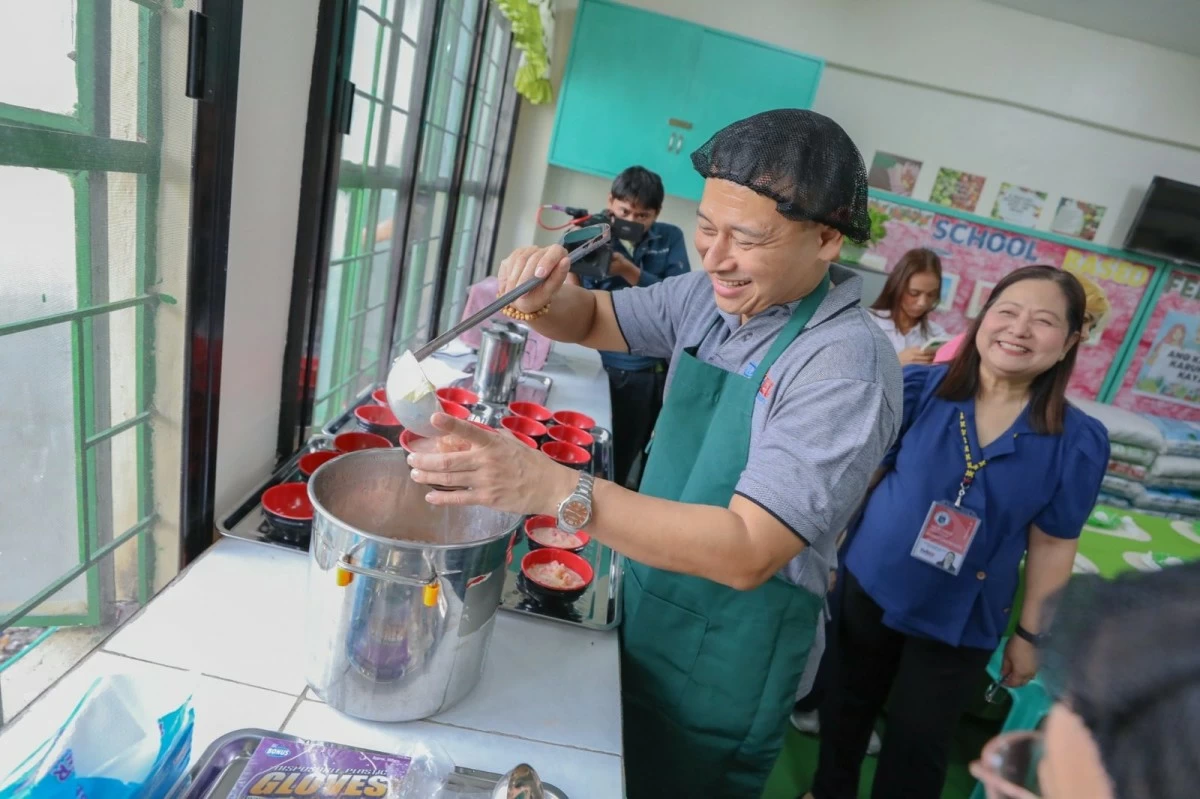
School visits in Las Piñas underscore holistic approach: academics, nutrition, and community collaboration. (Photo from DepEd)
DepEd eyes replication of best practices nationwide
Angara said the visit serves as an opportunity to learn from on-the-ground successes that can be replicated across other school divisions.
During his visits, he also engaged with school heads, teachers, and learners to gather insights into effective literacy interventions, classroom management strategies, and school-community partnerships.
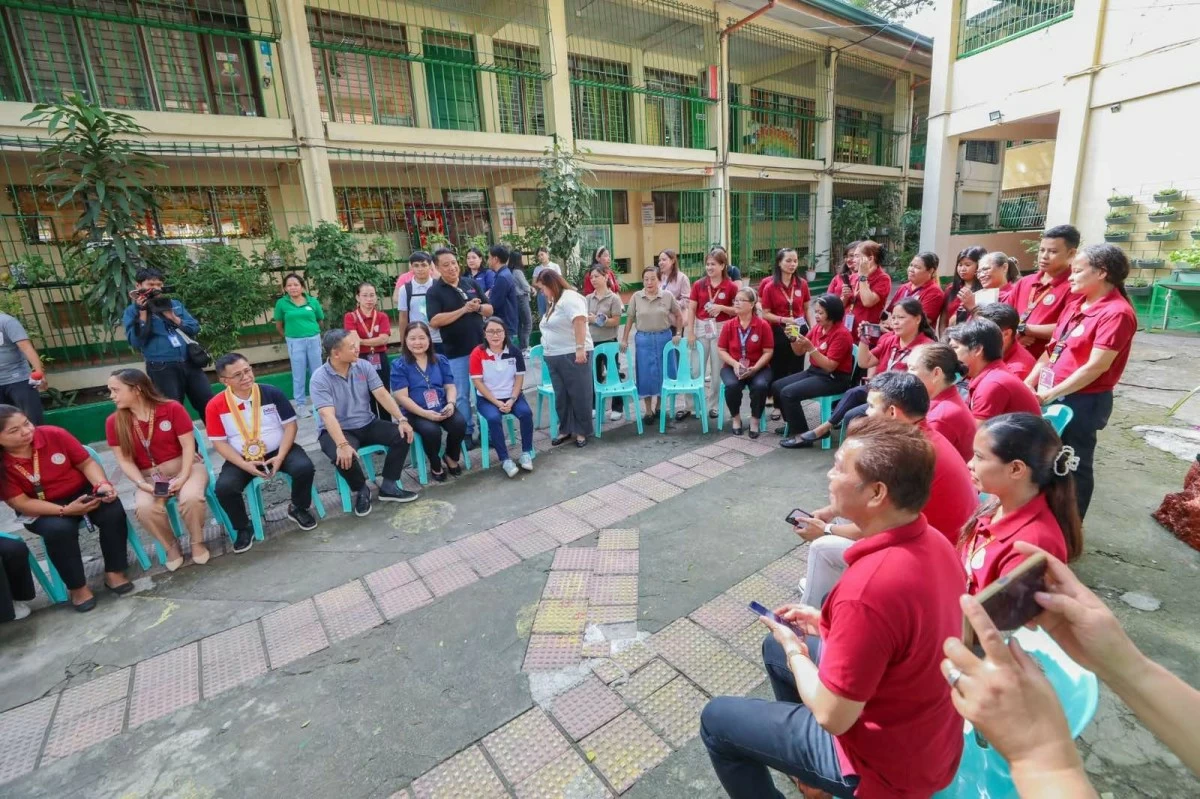
From literacy gains to improved attendance, DepEd eyes nationwide scaling of successful ARAL and feeding programs. (Photo from DepEd)
“Total effort ito — school, teachers, parents, community,” Angara said.

Related Tags

DepEd Sonny Angara ARAL Program school-based feeding program reading proficiency Philippines DepEd literacy intervention learning crisis Las Piñas schools Moonwalk ES Talon ES
ADVERTISEMENT
.most-popular .layout-ratio{ padding-bottom: 79.13%; } @media (min-width: 768px) and (max-width: 1024px) { .widget-title { font-size: 15px !important; } }

{{ articles_filter_1561_widget.title }}

.most-popular .layout-ratio{ padding-bottom: 79.13%; } @media (min-width: 768px) and (max-width: 1024px) { .widget-title { font-size: 15px !important; } }

{{ articles_filter_1562_widget.title }}

.most-popular .layout-ratio{ padding-bottom: 79.13%; } @media (min-width: 768px) and (max-width: 1024px) { .widget-title { font-size: 15px !important; } }

{{ articles_filter_1563_widget.title }}

{{ articles_filter_1564_widget.title }}

.mb-article-details { position: relative; } .mb-article-details .article-body-preview, .mb-article-details .article-body-summary{ font-size: 17px; line-height: 30px; font-family: "Libre Caslon Text", serif; color: #000; } .mb-article-details .article-body-preview iframe , .mb-article-details .article-body-summary iframe{ width: 100%; margin: auto; } .read-more-background { background: linear-gradient(180deg, color(display-p3 1.000 1.000 1.000 / 0) 13.75%, color(display-p3 1.000 1.000 1.000 / 0.8) 30.79%, color(display-p3 1.000 1.000 1.000) 72.5%); position: absolute; height: 200px; width: 100%; bottom: 0; display: flex; justify-content: center; align-items: center; padding: 0; } .read-more-background a{ color: #000; } .read-more-btn { padding: 17px 45px; font-family: Inter; font-weight: 700; font-size: 18px; line-height: 16px; text-align: center; vertical-align: middle; border: 1px solid black; background-color: white; } .hidden { display: none; }
function initializeAllSwipers() { // Get all hidden inputs with cms_article_id document.querySelectorAll('[id^="cms_article_id_"]').forEach(function (input) { const cmsArticleId = input.value; const articleSelector = '#article-' + cmsArticleId + ' .body_images'; const swiperElement = document.querySelector(articleSelector); if (swiperElement && !swiperElement.classList.contains('swiper-initialized')) { new Swiper(articleSelector, { loop: true, pagination: false, navigation: { nextEl: '#article-' + cmsArticleId + ' .swiper-button-next', prevEl: '#article-' + cmsArticleId + ' .swiper-button-prev', }, }); } }); } setTimeout(initializeAllSwipers, 3000); const intersectionObserver = new IntersectionObserver( (entries) => { entries.forEach((entry) => { if (entry.isIntersecting) { const newUrl = entry.target.getAttribute("data-url"); if (newUrl) { history.pushState(null, null, newUrl); let article = entry.target; // Extract metadata const author = article.querySelector('.author-section').textContent.replace('By', '').trim(); const section = article.querySelector('.section-info ').textContent.replace(' ', ' '); const title = article.querySelector('.article-title h1').textContent; // Parse URL for Chartbeat path format const parsedUrl = new URL(newUrl, window.location.origin); const cleanUrl = parsedUrl.host + parsedUrl.pathname; // Update Chartbeat configuration if (typeof window._sf_async_config !== 'undefined') { window._sf_async_config.path = cleanUrl; window._sf_async_config.sections = section; window._sf_async_config.authors = author; } // Track virtual page view with Chartbeat if (typeof pSUPERFLY !== 'undefined' && typeof pSUPERFLY.virtualPage === 'function') { try { pSUPERFLY.virtualPage({ path: cleanUrl, title: title, sections: section, authors: author }); } catch (error) { console.error('ping error', error); } } // Optional: Update document title if (title && title !== document.title) { document.title = title; } } } }); }, { threshold: 0.1 } ); function showArticleBody(button) { const article = button.closest("article"); const summary = article.querySelector(".article-body-summary"); const body = article.querySelector(".article-body-preview"); const readMoreSection = article.querySelector(".read-more-background"); // Hide summary and read-more section summary.style.display = "none"; readMoreSection.style.display = "none"; // Show the full article body body.classList.remove("hidden"); } document.addEventListener("DOMContentLoaded", () => { let loadCount = 0; // Track how many times articles are loaded const offset = [1, 2, 3, 4, 5, 6, 7, 8, 9, 10]; // Offset values const currentUrl = window.location.pathname.substring(1); let isLoading = false; // Prevent multiple calls if (!currentUrl) { console.log("Current URL is invalid."); return; } const sentinel = document.getElementById("load-more-sentinel"); if (!sentinel) { console.log("Sentinel element not found."); return; } function isSentinelVisible() { const rect = sentinel.getBoundingClientRect(); return ( rect.top < window.innerHeight && rect.bottom >= 0 ); } function onScroll() { if (isLoading) return; if (isSentinelVisible()) { if (loadCount >= offset.length) { console.log("Maximum load attempts reached."); window.removeEventListener("scroll", onScroll); return; } isLoading = true; const currentOffset = offset[loadCount]; window.loadMoreItems().then(() => { let article = document.querySelector('#widget_1690 > div:nth-last-of-type(2) article'); intersectionObserver.observe(article) loadCount++; }).catch(error => { console.error("Error loading more items:", error); }).finally(() => { isLoading = false; }); } } window.addEventListener("scroll", onScroll); });

Sign up by email to receive news.