






 Philippines
National
Senators push for safeguards in classroom, school building construction
Philippines
National
Senators push for safeguards in classroom, school building construction
Senators push for safeguards in classroom, school building construction


At A Glance
- Senators are making sure that the bill seeking to accelerate the construction of classrooms and school buildings in the country would not be marred by any conflict of interest, or possibly create another "Napoles" case.
Senators are making sure that the bill seeking to accelerate the construction of classrooms and school buildings in the country would not be marred by any conflict of interest, or possibly create another “Napoles” case.
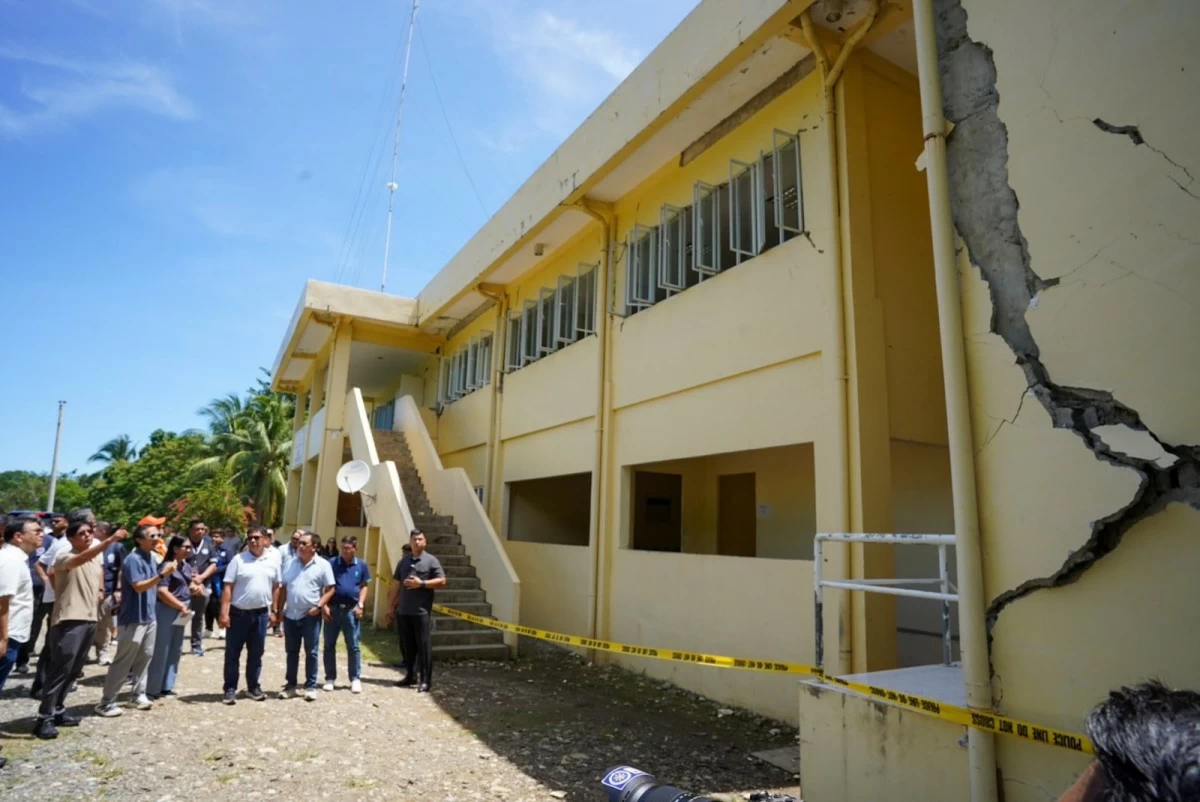
Senate President Pro Tempore Panfilo “Ping” Lacson said it is imperative to put safeguards in Senate Bill No. 1482, or the proposed Classroom-Building Acceleration Program (CAP) Act, filed by Sen. Paolo “Bam” Aquino IV, to ensure that construction of classrooms and school buildings will run smoothly even when non-government organizations (NGOs) are involved in the projects.
Aquino has been pushing for the passage of the CAP Act in a bid to address the country’s classroom backlog within a six-year period, noting how the Department of Public Works and Highways’ (DPWH) mismanagement and prioritization of flood control projects in recent years led to low classroom completion numbers.
SB No. 1482 primarily allows the NGOs to actively partner with the government in classroom and school building construction.
Lacson said that while he fully supports the initiative to accelerate the construction of classrooms and school buildings, there are issues on the extent of participation of NGOs and civil society groups (CSOs) that need to be resolved.
“If we involve NGOs and they will actively participate in bidding, monitoring, etc., (there is the) conflict of interest. Probably (we can include a) caveat, that provided they will not monitor themselves. At the proper time maybe we can use the proper language to clarify that particular issues,” Lacson said in his interpellation on Wednesday, Dec. 3 on Senate Bill 1482.
“But I have no objection to allowing NGOs to be active partners in the school building program of the government,” the senator said.
Lacson noted that under the Government Procurement Act of 2024 (RA 12009), NGO participation is limited - where the procuring entity may enter into an agreement with an NGO "when an appropriation law or ordinance earmarks an amount to be specifically contracted out to NGOs."
RA 12009 also limits the role of CSOs or people's organizations as observers throughout the procurement process to avoid conflict of interest, he pointed out.
“There goes the problem. Because if we involve CSOs in the construction of buildings, one way or another, directly or indirectly, and the definition of NGOs and CSOs are interchanged, we might have a Napoles situation. How do we resolve this issue?” he pointed out.
Lacson was referring to the pork barrel scam involving trader Janet Lim-Napoles, who in the 2010s used a network of fake NGOs as conduits to steal billions of pesos in public funds.
Also, Lacson sought clarification on the status of P54.883-billion remaining under the P91.279-billion Basic Education Facilities Fund (BEFF) from 2022 to 2025, as only P36-billion was spent for 7,172 completed and 4,962 ongoing classrooms during that period.
Under the BEFF, the construction, repair and rehabilitation of school buildings; fixtures and utilities including water and electrical utilities are covered.
In reply, Aquino noted that from 2022 to 2025, only the DPWH could build classrooms which is why his bill sought to remove this responsibility from the DPWH and allow local government units (LGUs) and participating NGOs to take on the task.
While the fund for 2025 can be realigned, Aquino said he can check the status of the fund from 2022 to 2024.
Aquino added that while the DPWH's standard cost per classroom is P3.5-million, LGUs can construct classrooms at P1.5-million to 2-million each, while CSOs can do it for P800,000 to P1.3-million.
Aquino also called the DPWH’s completion of only 60 classrooms for 2025 “completely unacceptable.”
“Honestly, I think it was mismanaged in the past three years. Napopondohan iyong mga flood control, iyong classroom na pinaka-basic sa ating bansa, hindi napopondohan (Flood control projects get funded but the classrooms which are very basic needs by our country, are not funded),” he told Lacson.
“To have accomplishments of 30, 40, or 60 a year is simply unacceptable, kaya dito po tayo pupunta (that’s why we’re going here)” he added.
Aquino assured that the CAP Act will help close the 165,443 classroom gap and address buffers for classrooms destroyed by natural calamities and annual increases in student population.
“We need to spend P90 billion every year for six years, with a price cap of P1.8 million per classroom,” he said, noting that this is significantly lower than the DPWH’s P3.5 million per classroom cost.
“Roughly, that’s about 39,000 classrooms per year to finish it within six years,” he added.
“Previously, only the DPWH is in charge of building classrooms, and that led to only 60 classrooms being finished for this year. So what are the different modalities? LGUs, CSOs, but LGUs will have a much bigger share,” Aquino explained, adding that public-private partnership (PPP) is also part of the modality.
“Let's try that and then let's monitor it. Every year, when we see what works, that's what we'll fund,” he said.
Aquino also clarified that the bill that not completely erase the DPWH out of the picture, as the Department of Education (DepEd) will still allocate a portion of its budget to the agency for classroom construction.