








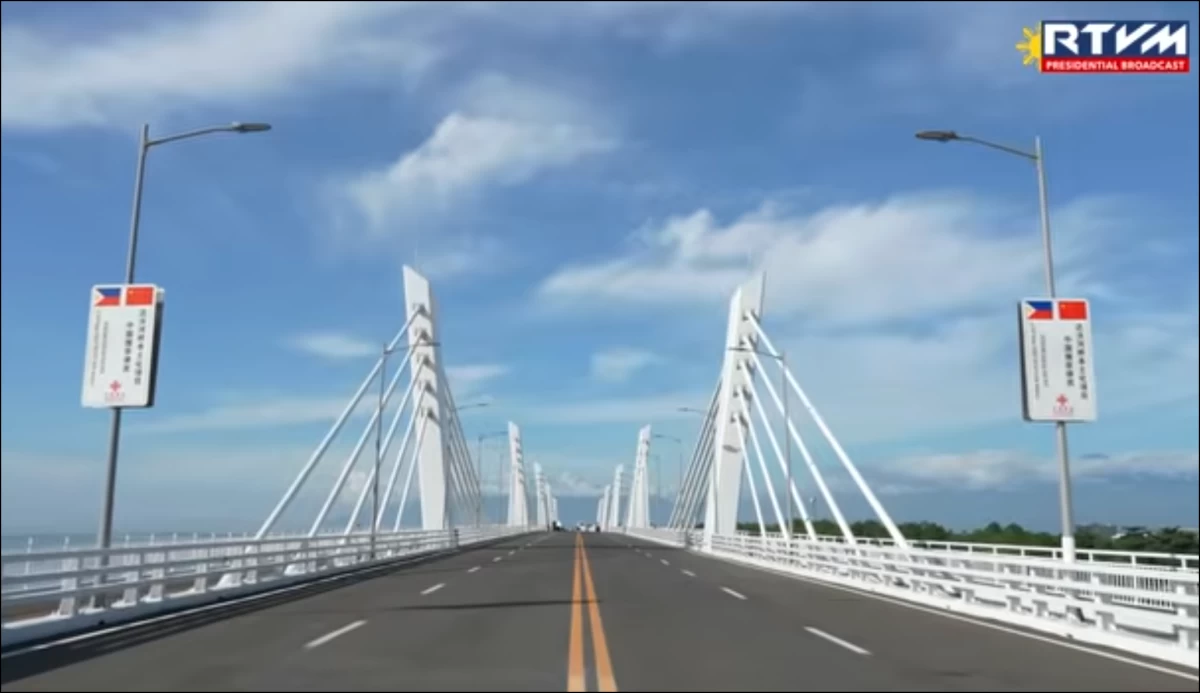
Marcos made the announcement when he conducted an on-site inspection of the newly-completed bridge, also known as the Davao River Bridge.
According to Marcos, the 1.3-kilometer bridge is expected to ease traffic congestion in downtown Davao City and spur economic activity in the region.
"Ito’y sinasabi ang estimate natin na ang biyahe na dati halos dalawang oras ay mababawasan, magiging mga 25 minutes, 20 minutes na lang (According to estimates, the almost two hours of travel will be reduced to just about 25 to 20 minutes)," Marcos said.
"Kaya malaking ginhawa, lalong-lalo na ngayon na magpa-Pasko tayo. Alam naman natin nangyayari sa traffic (So, this will really ease travel, especially in the coming Christmas season)," he added.
The P3.1-billion Bucana Bridge project will connect Barangay 76-A Bucana and Matina Aplaya, providing motorists a safer and faster alternate route. It can accommodate up to 14,000 vehicles daily.
The project began in late 2023, according to the Chief Executive, noting that the entire Davao City Bypass Project will be completed by December 2027.
“So, this is one of the four major projects that we – our legacy projects that we will be finishing in Davao and its environs. Marami na tayong nabuksan na section dito (We have opened many sections of this) And this will be now another major part of this bypass road,” the President said.
Marcos also commended the Chinese contractors, whose technology and efficiency contributed to the fast completion of the bridge.
Once operational, the bridge is expected to improve daily travel, accelerate regional development, and create new economic opportunities for Davaoeños.
Funded through China’s Official Development Assistance, the bridge features a 480-meter, six-span extradosed structure supported by 860 meters of approach roads. It is equipped with a pedestrian walkway and a shared-use path for cyclists, reflecting the administration’s push for safer and more inclusive infrastructure.