






Manila Bulletin
 Philippines
National
Angara calls on LGUs to boost reading programs, optimize Special Education Fund use
Philippines
National
Angara calls on LGUs to boost reading programs, optimize Special Education Fund use
Philippines
National
Angara calls on LGUs to boost reading programs, optimize Special Education Fund use
Angara calls on LGUs to boost reading programs, optimize Special Education Fund use
Published Dec 4, 2025 11:17 pm


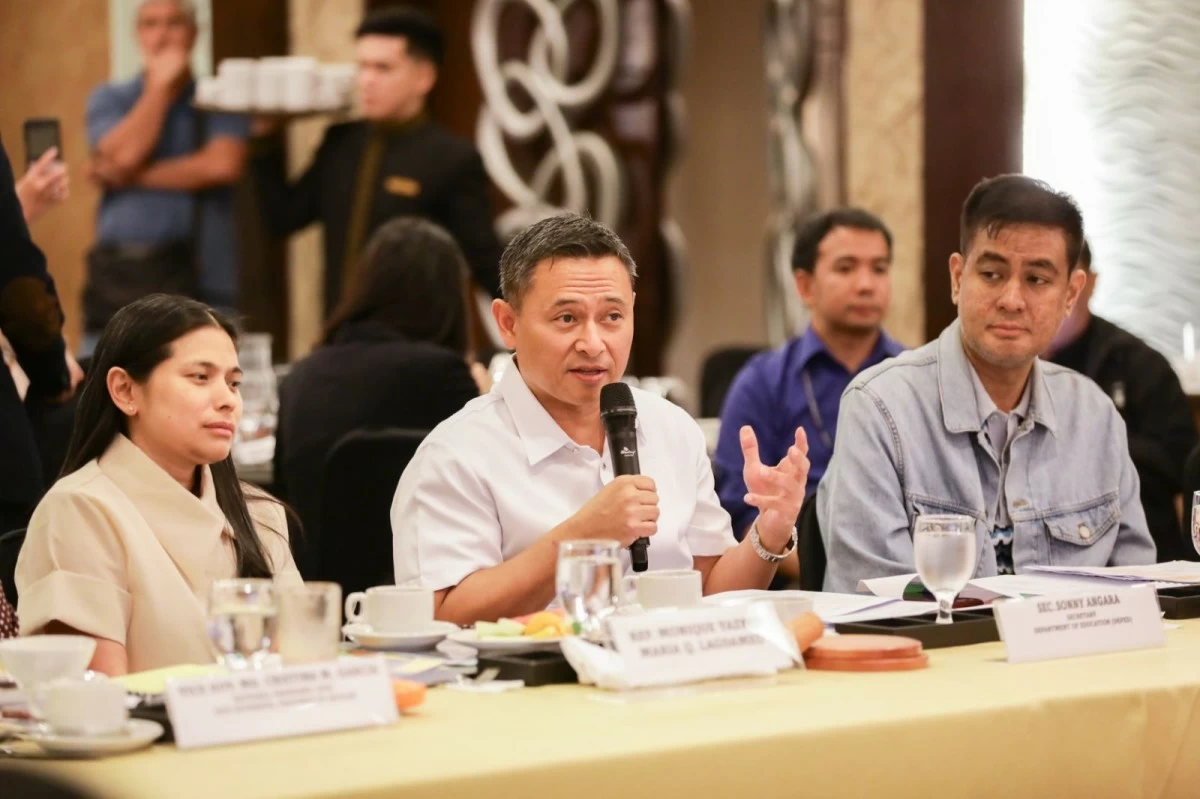
DepEd Secretary Sonny Angara urges local government units to strengthen literacy programs and optimize the use of the Special Education Fund under new DepEd guidelines, aiming to accelerate learning recovery and classroom construction nationwide. (Photo from DepEd)
Department of Education (DepEd) Secretary Sonny Angara on Thursday, December 4, called on local government units (LGUs) to play a stronger role in the learning recovery initiatives directed by President Marcos, as DepEd and four national agencies formalized new rules expanding the use of the Special Education Fund (SEF).
Speaking before the Union of Local Authorities of the Philippines (ULAP) during its National Executive Board meeting, Angara emphasized that LGUs hold a crucial role in addressing learning gaps, particularly through the SEF and other programs now allowed under updated national guidelines.
Updated SEF guidelines expand funding options
The Joint Circular (JC) on the Omnibus Guidelines for the Use of the Special Education Fund, signed by DepEd, the Department of Budget and Management (DBM), the Department of the Interior and Local Government (DILG), and the Department of Finance (DOF), revises previous issuances, including JC No. 1 of 2017 and JC Nos. 1 and 2 of 2020.
The updated guidelines allow LGUs to support early-grade literacy programs, school feeding initiatives, and academic recovery efforts under laws such as the Early Childhood Care and Development (ECCD) Act, the National Feeding Program, and the Academic Recovery and Accessible Learning (ARAL) Program Act.
“Dito tayo nakatuon kasi ito ang susi sa ating recovery: mga batang handang mag-Kinder; mas malusog na mga bata for 200 days sa school year; mga mag-aaral na natututukan ng academic tutors; at classrooms na handa sa 21st century learning (This is where we are focused because this is the key to our recovery: children ready for Kindergarten; healthier kids for 200 days in the school year; students guided by academic tutors; and classrooms prepared for 21st century learning),” Angara said.
The reforms also expand the allowable use of SEF to include digital learning tools, Alternative Learning System (ALS) programs, inclusive education initiatives, and parental-engagement activities.
Local School Board (LSB) membership is now broadened to include ALS implementers, parents of children with disabilities, and representatives from technical-vocational and higher education institutions.
Angara highlighted the need for well-supported, inclusive schools, especially in communities struggling with reading proficiency and foundational learning skills.
LGUs to play bigger role in classroom construction
He also stressed the critical role LGUs will play in classroom construction starting in 2026.
Under a proposed special provision in the General Appropriations Act (GAA), LGUs may directly participate in building new school facilities using national appropriations, cost-sharing arrangements, or local resources.
DepEd aims to efficiently utilize the P85.4-billion allocation for 25,500 new classrooms and school facilities to address the nationwide backlog.
“Malaki na rin ang magiging papel ng ating local government sa pagpapatayo ng classrooms dahil sa ilalim ng proposed special provision sa 2026 GAA, makakapag-participate na kayo sa pagbuo ng education facilities (Our local governments will also play a bigger role in building classrooms because under the proposed special provision in the 2026 GAA, you will now be able to participate in the development of education facilities),” Angara said.
“Malinaw po—prayoridad natin na ma-close ang 165,000 na gap sa classrooms (It is clear—our priority is to close the 165,000-classroom gap),” he added.
Long-term partnership
Alongside the Joint Circular, ULAP’s National Executive Board will issue a resolution supporting a long-term partnership with DepEd.
The resolution focuses on five priority areas: classroom and facilities development, community-based literacy and ALS support, school health and nutrition systems, digital learning and data-sharing, and strengthened SEF utilization through joint policy efforts.