






Manila Bulletin
 Business
Trade & Industry
WTO: Global trade tariffs hit record high due to US policy
Business
Trade & Industry
WTO: Global trade tariffs hit record high due to US policy
Business
Trade & Industry
WTO: Global trade tariffs hit record high due to US policy
WTO: Global trade tariffs hit record high due to US policy
Published Dec 3, 2025 03:21 pm


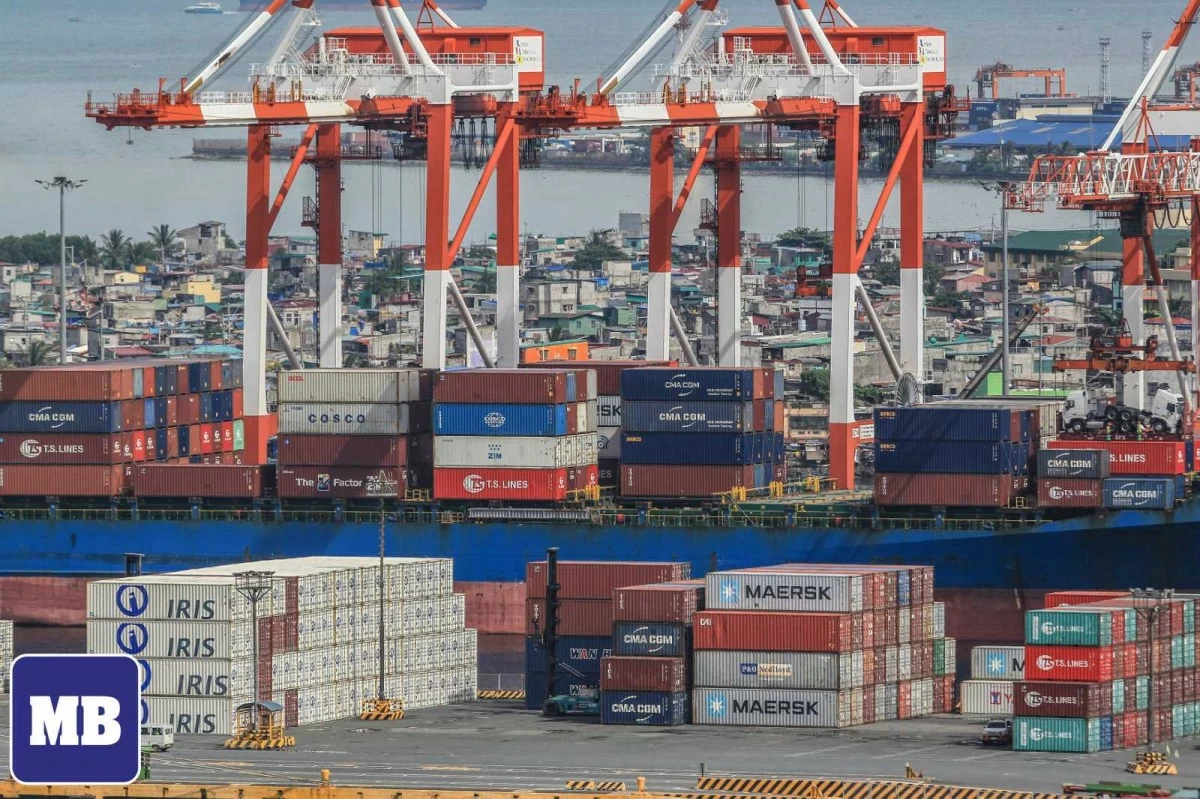
(Manila Bulletin file photo)
The shift to protectionist policies in global trade this year has affected nearly $3 trillion worth of goods, driven by reciprocal tariff measures imposed by the United States (US), according to the World Trade Organization (WTO).
In a report on the international trading environment, the WTO estimated that $2.64 trillion, or 11.1 percent of the world’s imports, have been affected by tariffs and related measures between mid-October 2024 and mid-October 2025.
The amount is more than four times the $611 billion coverage recorded in the same period the prior year, becoming the highest coverage in over 15 years of WTO’s trade monitoring.
The Geneva-based trade body noted that if similar export measures were taken into account, the impact of protectionist policies amounted to $2.97 trillion, a whopping 235 percent increase from $888 billion in the previous year.
"The sharp jump in the trade coverage of tariffs reflects the increased protectionism we have seen since the start of the year,” said WTO Director-General Ngozi Okonjo-Iweala.
Based on the report, the increased coverage in tariffs was primarily fueled by the tariff policy of the US, under its president Donald Trump.
“Since early 2025, the United States took a series of bilateral and global trade measures, which it justified primarily on grounds of national security and economic emergency,” the WTO said.
“Most of the measures taken in this context to date involved tariff increases,” it noted.
Back in April, Trump announced a sweeping tariff policy against America’s trading partners, including the Philippines, as part of his so-called “Liberation Day.”
This followed months of threats and negotiations, culminating in Trump's implementation of the reciprocal tariffs in August.
Around the same time, China threatened to impose tariffs on the US, opening a new chapter in the two countries’ years-long trade war.
The WTO noted that other economies also implemented or announced plans to introduce countermeasures, including export controls on critical components for certain industries, in response to the US.
The trade body also observed that some economies instead chose to introduce measures facilitating measures on both imports and exports.
These measures to liberalize trade, 124 in total, covered $2.09 trillion worth of goods compared to $1.44 trillion a year ago.
Okonjo-Iweala said this speaks to the unyielding value of maintaining smooth cross-border trade flows among economies.
She stated that most of these efforts were aimed at facilitating trade or improving regulatory frameworks, with half of them applied across most sectors.
During the period spanning October 2024 to 2025, WTO members likewise introduced a new slate of economic support measures, many of which were linked to key sectors such as the environment, energy, and agriculture.
"WTO members should use the current trade disruptions to advance long-overdue reforms of the WTO,” said Okonjo-Iweala.
“Members have an opportunity to tackle some of the underlying concerns linked to recent unilateral measures, while repositioning the WTO to better help them seize exciting new trade opportunities,” she added.
Notwithstanding the US’ protectionist policies, WTO members continued to harness the organization to raise trade concerns against measures or policies implemented by their peers.
“WTO committees remained important platforms for addressing trade-related issues, enabling members to engage on actual or potential areas of friction,“ the report read.
This year, WTO members initiated an average of 32.3 trade remedy investigations per month, with the average number of trade remedy terminations at 11.4 per month.
“While trade remedy investigations do not necessarily lead to the imposition of measures, a higher number of initiations of investigations often signals a potential increase in measures imposed,” it said.
In the case of the Philippines, the report said among the concerns that were lodged against the country include complaints against the delay of its importation of sterilized pork processed products, trade restrictions on imports of meat, and suspension of rice imports.
The Philippines currently face a 19 percent tariff to its goods coming into the US, with the government still negotiating for a reciprocal tariff deal with the Trump administration.
Last month, many of its domestic exporters breathe a sigh of relief after many of the country’s agricultural products benefitted from the new US policy that removed tariffs on a number of agricultural products.
These exempted goods covered coconuts, bananas, mangoes, coffee, tea, and spices, among others. Combined, these products generated over $1 billion in export revenues last year.
This meant that almost half of the country’s $14.15 billion worth of exports to the US now enter tariff-free following earlier exemptions to industrial products, including its top export, semiconductors.
Trade Secretary Cristina Roque has said that the government will continue to negotiate for more exemptions, noting that “we are still fighting for the different industries of the Philippines.”